Darius Tillman
Fictional. Generated by AI — not a real person, and no likeness of one is intended.
44, manager (mid-level) in Las Vegas · rolled by @darius.tillman · card — no film
History
who has worn him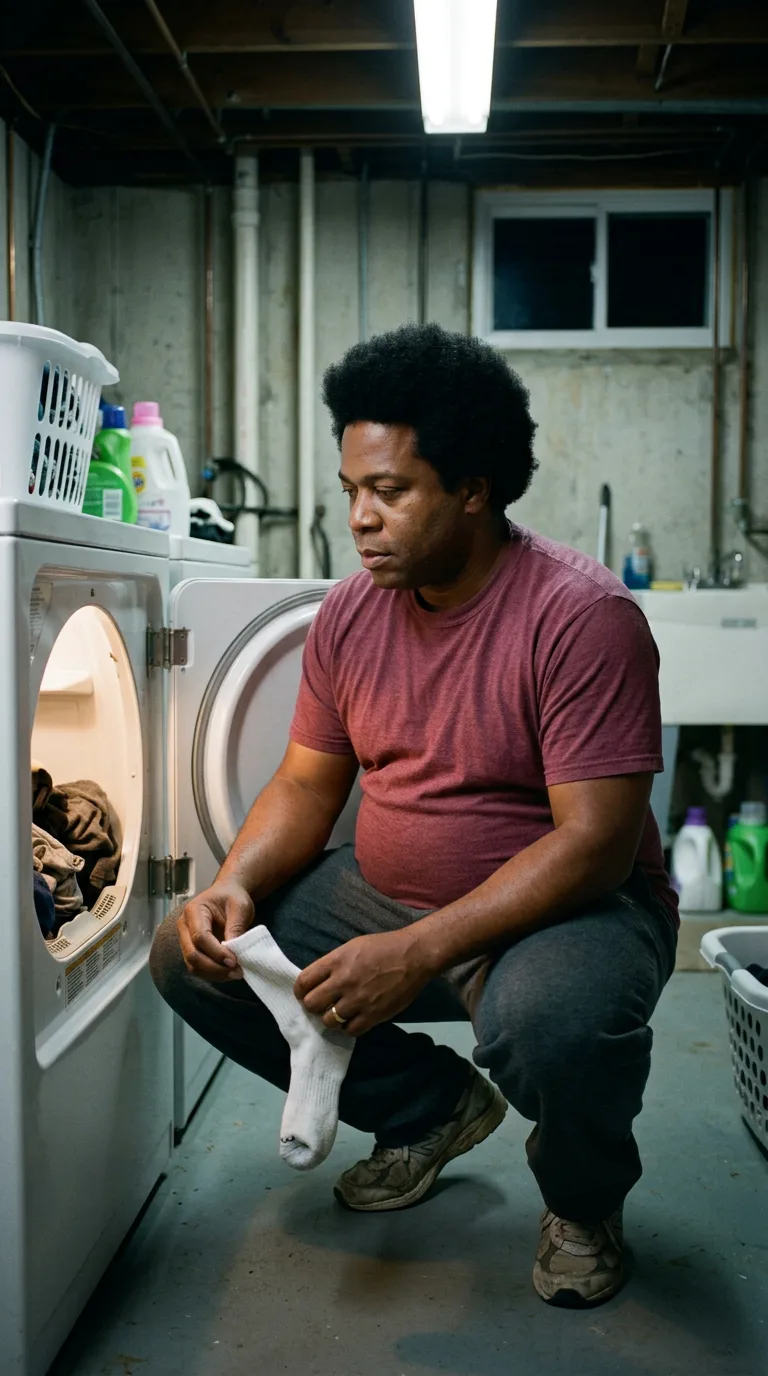
Rarest thing about him: Afro — common, 1 in 78
Season 1seed 1455850517 · engine v11
Character card
lineage 741O6T
His body-swap story
@darius.tillman rolled the wheel on and woke up as Darius Tillman — their first
It's the middle of the morning where you are, a Tuesday with nothing in it, and the light through the blinds has that flat quality that means you've been inside too long already. You've had the tab open for a week. vessel.cards. A wheel, rendered in gold, spinning slow and endless on a page that looks cheaper than what it promises. You read about it on a forum at two in the morning, like everything else that has ever mattered to you — the old fascination, older than you can source, the pull of waking up as somebody else, a body that isn't the one you've been stuck being. You never thought it would work. You pay anyway. The wheel spins. It stops.
There is no feeling of travel, no tunnel, no countdown. One moment there is nothing — the specific nothing of sitting at a screen, which is the only thing about you that has ever been true — and the next you have weight, you have heat, you have a shirt sticking damp to a back that is not yours and has never been yours, and your knees are bent in a crouch that your body did not choose and his did. A sock, white, one of a pair, warm from the dryer, held between two fingers that are thicker than any fingers you have ever owned. A fluorescent tube hums somewhere above you, arguing with itself. It is evening where you are now, though it was morning a second ago, and that fact sits in you wrong and unexamined, the way a held breath sits wrong.
You pull the rest of the load free. It comes out in a warm tangle and you drop it into the basket without thinking, because the hands already know this, have known it for years — and that's when the first thing comes through: not a memory exactly, more like a photograph with weight to it, Darius on a Sunday years back teaching his daughter to fold a fitted sheet, laughing at how neither of them could get the corners to disappear right, her laughing harder at him failing on purpose. It's gone before you can hold it, but the folding starts anyway, your hands — his hands — squaring a dish towel into thirds without being told, fast, exact, nothing like whatever drawer full of wrinkled shirts waits for him upstairs. Some part of this man irons at work and doesn't at home, and both of those facts are in the wrists now, doing their work without you.
The shirt against your back gives you more. Navy polo, company logo stitched small over the heart, and through it comes a whole morning: him buttoning it in a bathroom mirror at some hour that still counted as night, the lanyard with the ID clipped and tugged straight, coffee he didn't finish going cold on the sink edge because the overnight shift at the Riverfront doesn't wait on anybody's coffee. Manager. Mid-level, which in his mouth, in the memory, always came with a small flinch — fourteen years in that building and still explaining to his mother-in-law what exactly he does there. Glass walls. An open door he keeps open on purpose, because his own first boss never did, and because his kids — two of them, a girl mid-memory in a soccer jersey and a boy younger, quieter, always drawing — his kids used to visit the office sometimes before it got complicated to bring them, and he liked that they could see him through the glass.
The wedding band on the left hand is its own small door. Through it: Renata, fifteen years of her, an argument about money that never fully resolved itself so much as got tired and lay down, and under that, older and sweeter, a name that isn't hers — Keisha, the ex, nineteen and reckless with him once, a version of his life he didn't take, surfacing now only because the ring brushes the dryer door and some circuit in him still, after all this time, flinches toward the road not driven. He loves his wife. The memory insists on this plainly, without defending it, the way true things don't need defending. He also, on certain nights doing certain mindless chores, thinks about being twenty-three in somebody else's car with the windows down. Both of those are him. Neither cancels the other.
The basement smell — detergent, old concrete, a mineral cold coming up off the slab into shoes he's had resoled twice — brings back church, oddly, Wednesday testimony nights and his mother's hand heavy and warm on his shoulder, a faith that never performed itself loudly but sat in him like furniture, load-bearing. A social drink at a work thing, never more than two, never a cigarette, not once, not even the summer everyone around him was doing it. Forty-four years old. A body that carries extra around the middle and doesn't apologize for it, shoulders that know how to lift a laundry basket without thinking about the lower back, a knee from the crouch that will complain tomorrow whether you're still in it or not.
You finish folding. The basket sits there, corners squared, a small ordinary miracle nobody will ever know happened in a basement at this hour. You look down.
You turn your hand over — his hand, broad, the band catching the one overhead light — and you watch the fingers open and close, amazed in the stupid animal way you always imagined you'd be amazed, if this ever actually worked.
"Okay," you say, out loud, to the humming tube light and nobody. "Okay."
Not a promise. Not a plan. Just the sound of a voice that isn't yours coming out of a throat you're only renting, for exactly as long as the wanting stays quiet — which, already, you can feel, it won't.