Danny Reséndez
Fictional. Generated by AI — not a real person, and no likeness of one is intended.
30, physical therapist in Houston · rolled by @connor.waskiewicz · card — no film
History
who has worn him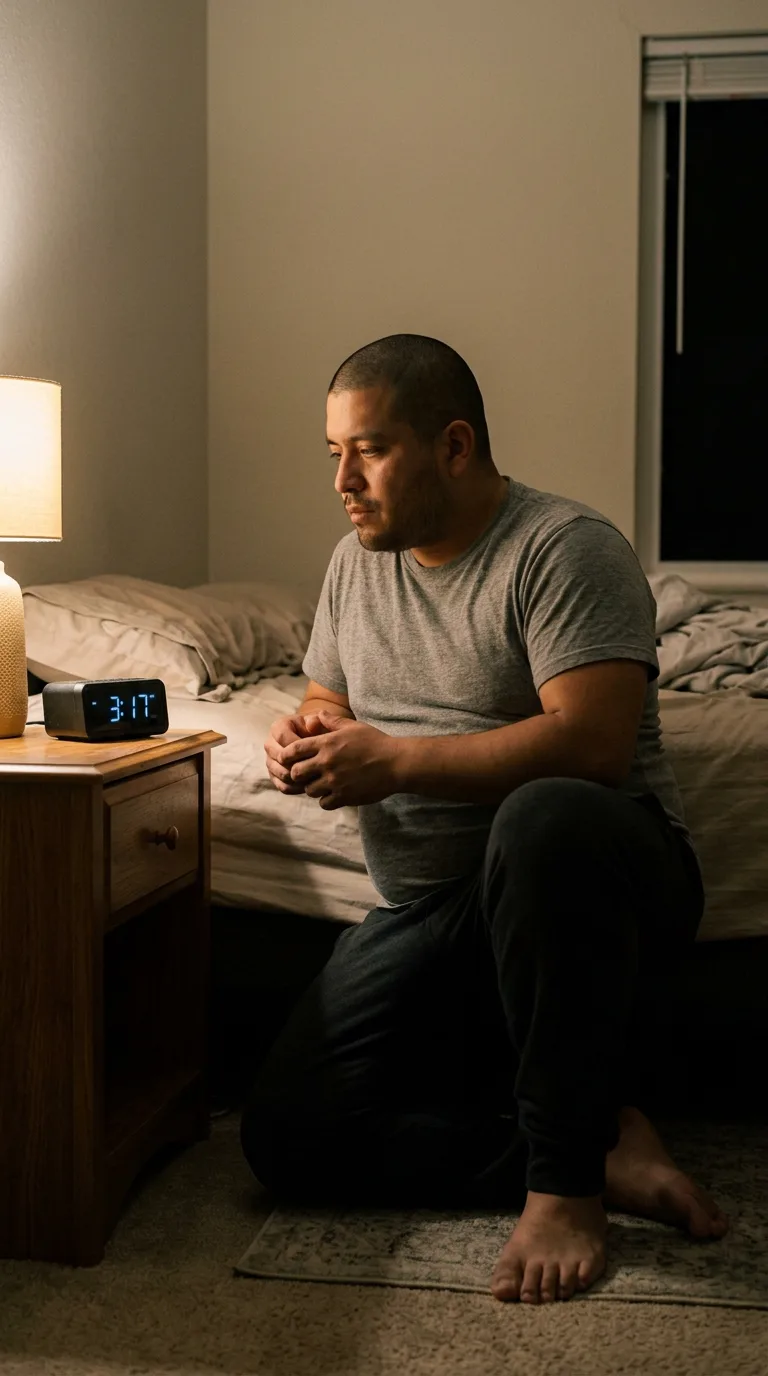
Rarest thing about him: Physical therapist — uncommon, 1 in 839
Season 1seed 443028592 · engine v11
Character card
lineage 2NZHHJ
His body-swap story
@connor.waskiewicz, wearing Marcos Villareal, rolled the wheel on and woke up as Danny Reséndez, spent under a minute in him, then spun the wheel and woke up as Wendell Ratliff
Marcos Villareal's phone is face-down on a job site invoice on the kitchen counter, and it is 954 spins deep, and it is the second call from the credit union in three days. That's why. Not the collections letter itself — Marcos never opened those, that habit was already worn smooth — but the specific sound of a debt that belongs to a body you didn't spend and don't get to walk away from just by leaving it. Skinny arms, a goatee that itches, a house that smells like sawdust and something gone sour in the fridge two days too long. You did not do this to him. You inherited a hole somebody else dug and you are not staying in it a second longer than you have to. Small-town Ohio, the middle of the night, everybody asleep, and you are standing in his kitchen in his boxers deciding, again, that the fix for being one man's problem is to become somebody else's for a while. You go to the site. You spin.
The knees hit the bedspread before you're all the way inside him — his knees, already down, already there — and the amen is halfway out of a mouth that isn't asking you first. You feel it land wrong: a laugh starting in the chest, a body rising to stand, and then not standing, folding back down onto both knees like something reached up and took the strings. Forehead to the bedspread. Dark outside the blinds. A clock on the nightstand you didn't choose to look at but are looking at anyway, red numbers doing nothing, a lamp throwing yellow across a hand you don't recognize as a hand yet.
It comes in through the shirt first — gray, soft, worn thin at the collar — and it's not a thought, it's a Tuesday: him pulling it over his head this morning, if morning is even the word for whenever a man wakes up to go stand twelve hours in a rehab gym telling a sixty-year-old stroke patient to reach, reach, one more inch, good, good. Weekend overnight shift covering for somebody, that's why it's the middle of his night and he's still up praying instead of sleeping — thank you for getting through the shift, thank you for Elena's shift ending on time so she could text back before she crashed, thank you for the guy at the parallel bars taking three steps today instead of two. Not very serious praying. The kind you do out of habit more than hunger, mumbled fast so you can get horizontal.
The sweatpants against your knees carry the parking lot: the humidity you can still feel in the fabric's memory, dusk light orange and thick over cracked asphalt outside the strip mall, walking to his car after a double, feet aching in a specific, permanent way — plantar fasciitis he's had two years and never gotten looked at because physical therapists are the worst about going to physical therapists. The weight comes with it, all of it, heavy through the shoulders and the gut, a build that's spent thirty years being the strong one, the one who lifts patients when the aide can't, the one whose forearms are stronger than they look under short sleeves. Calluses along the palm from gait belts, from the parallel bars' cold steel, from a life spent bracing other people's falling.
The nightstand under your open eyes gives you Elena — not a name yet, just warmth, just a laugh from a phone speaker three nights ago, just a plan for Sunday lunch at his mother's that he hasn't told her about yet because he wants to see her face when she finds out his mother already likes her. Church memories come in through the posture itself, the kneeling, an old habit from a boy who used to get pinched by his abuela for fidgeting through the rosary and grew up Baptist instead and never quite lost the shape of getting down on the floor to talk to God, even half-asleep, even not really meaning it, because meaning it every time was never really the point.
The debt comes too, distant and blunt — a truck repair, a semester of night classes that didn't finish, numbers he doesn't look at directly, the specific tiredness of being thirty and still catching up. It doesn't frighten you. It's not yours to carry any longer than you decide to.
You look at your hands — square, brown, a callus riding the base of each finger, a groove worn into the third from a gait belt buckle that isn't there yet tonight and won't be for another year. Not your hands. Not yet not your hands. You turn them over on the bedspread like you're checking they're real, and something in his face — your face now, whoever's face this is at whatever hour — breaks into a small, disbelieving almost-laugh.
"Okay," you say, to the dark, to the clock, to nobody. "Okay, that's — new."
Outside, Houston keeps its heat in the walls. Somewhere a phone with Elena's last text is still lit up on a dresser. You don't know how long you keep him. Nobody does.