Danny Osako
Fictional. Generated by AI — not a real person, and no likeness of one is intended.
44, freight handler in Eastern Kentucky · rolled by @danny.osako · card — no film
History
who has worn him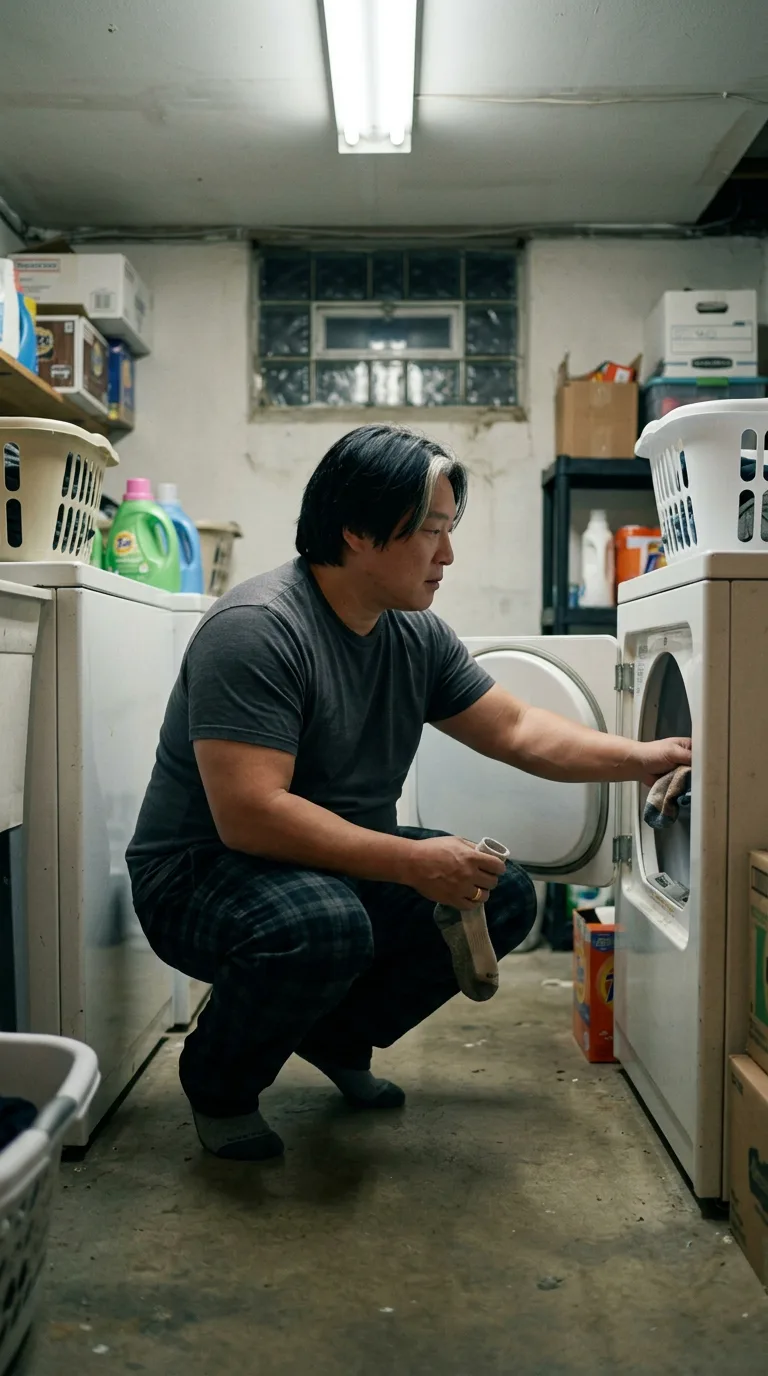
Rarest thing about him: A white streak in the hair — uncommon, 1 in 164
Season 1seed 708813577 · engine v11
Character card
lineage G30BDV
His body-swap story
@danny.osako rolled the wheel on and woke up as Danny Osako — their first
The site loads slow on a nothing evening, the kind where the scroll has gone in circles three times already and found nothing worth stopping for. A wheel, rendered a little too shiny, sits in the middle of a page that looks like it was built by someone who believed in what it sold. You have believed in this for years — not this site, but the idea under it, the one you've chased through forums and movies and half-finished stories since you were young enough to still think it might literally be true someday. You pay. It does not feel like much money. The wheel spins the way wheels spin in dreams, too smooth, no clatter, and then it just stops, and there is no ceremony to the stopping at all.
There is a basement. There is a dryer door swinging open on its hinge, warm air rolling out of it, and a sock in your hand — his hand — damp at the toe, heavier with lint than it should be. Fluorescent light buzzes thin and white overhead. You are crouched, knees complaining in a way knees do at forty-four and not before, weight settling into a body with real mass to it, shoulders wide, gut solid, the particular tiredness of someone standing at the tail end of a long day that is also, somehow, the start of another one. You pull the load free. It drops into the basket between your — his — feet, and your hands are already moving before you've caught up to them, pulling a shirt loose, snapping it once in the air, folding it in thirds with corners that land square without being told to.
That's the first thing that comes through: not a thought, a motion. The hands know this. Sleeve to sleeve, fold, collar tucked. You didn't do that. He did, ten thousand times, standing in this exact spot at this exact hour, because the warehouse runs him graveyard and midnight laundry is the only quiet he gets, the only hour the house isn't full of three kids and a wife and the television going. The shirt in your hands is a gray T-shirt, soft from wear, and touching it gives you an afternoon — him pulling it on at five p.m. before a shift, the window upstairs still bright, his wife Mia calling down that dinner's at six if he wants it hot, and him calling back that he'll be gone by then, laughing a little because it's the same joke every night and it still works. The shirt remembers his arms going through the sleeves faster than thought, the practiced tug at the hem, the half-second check in the mirror by the stairs where he isn't vain, just making sure the white streak in his hair is lying flat because his second kid likes to point it out like it's new.
The plaid pajama pants against your legs now — his legs, thick through the thigh, a dull ache riding one knee from fourteen years of pallet jacks and concrete floors — give you something slower, something that isn't a morning but a year. A warehouse outside Hazard, roll-up doors, the particular cold of Kentucky November coming through a loading dock at four a.m., a foreman who doesn't know his name right and calls him "Dan-o" like it's a kindness. The weight of a box held wrong for one second and the twinge that followed him home. He has hated parts of this job the entire time he's had it and has also never once not shown up, because showing up is the whole architecture of what he believes a man is for.
The wedding band on the left hand is the deepest one. It comes with church on Sundays half out of faith and half out of Mia's mother watching from the second pew, with a honeymoon he can't afford to remember in detail anymore so he doesn't try, with three — maybe four, the memory won't settle the number, there might be a fourth coming or already here, small and recent and still mostly represented by a car seat he keeps meaning to move — kids whose names arrive in a warm tumble without order: a girl's laugh at something on a tablet, a boy's cleats by the door, somebody's fever at 2 a.m. and Mia's hand finding his shoulder in the dark asking is he up for this one. He is a man who loves without much ceremony about it. The nose ring surprises you when you notice it's there at all — it came from a bet with his brother twenty years back that he never bothered undoing, too stubborn and then too used to it.
The cold concrete under his sock feet tells you about the smoking he quit eight years ago, cold, the week his first kid was born, and never missed as much as he expected to. The basement smell — bleach, must, the box of browning Tide on the shelf — just says home, plainly, the unglamorous kind, the kind with a mortgage he worries about more than he says out loud, the kind where money is always a little short and nobody starves and that is the whole deal and he has made peace with the whole deal.
Your — his — leg starts bouncing where you're crouched, heel drumming the concrete without any permission from you at all. That's just him. That never stops.
You look down at the hands. Thick fingers, a plain band of gold, a sock still damp at the toe, folded now without you choosing to fold it. You turn the hand over once, like it might answer something, and it doesn't, it's just a hand, broad and lined and someone else's entirely.
You lift your eyes toward the one small window up near the ceiling, dark glass block, nothing behind it but night.
"Who's up," you say, to no one, in his voice, because somewhere above you a kid is probably not asleep yet — and the question sits there unanswered, the dryer still ticking as it cools, the wheel somewhere far off and patient, and no way yet to know if you'll be the one who answers it.