Danny Mun
Fictional. Generated by AI — not a real person, and no likeness of one is intended.
51, barista in Philadelphia · rolled by @danny.mun · card — no film
History
who has worn him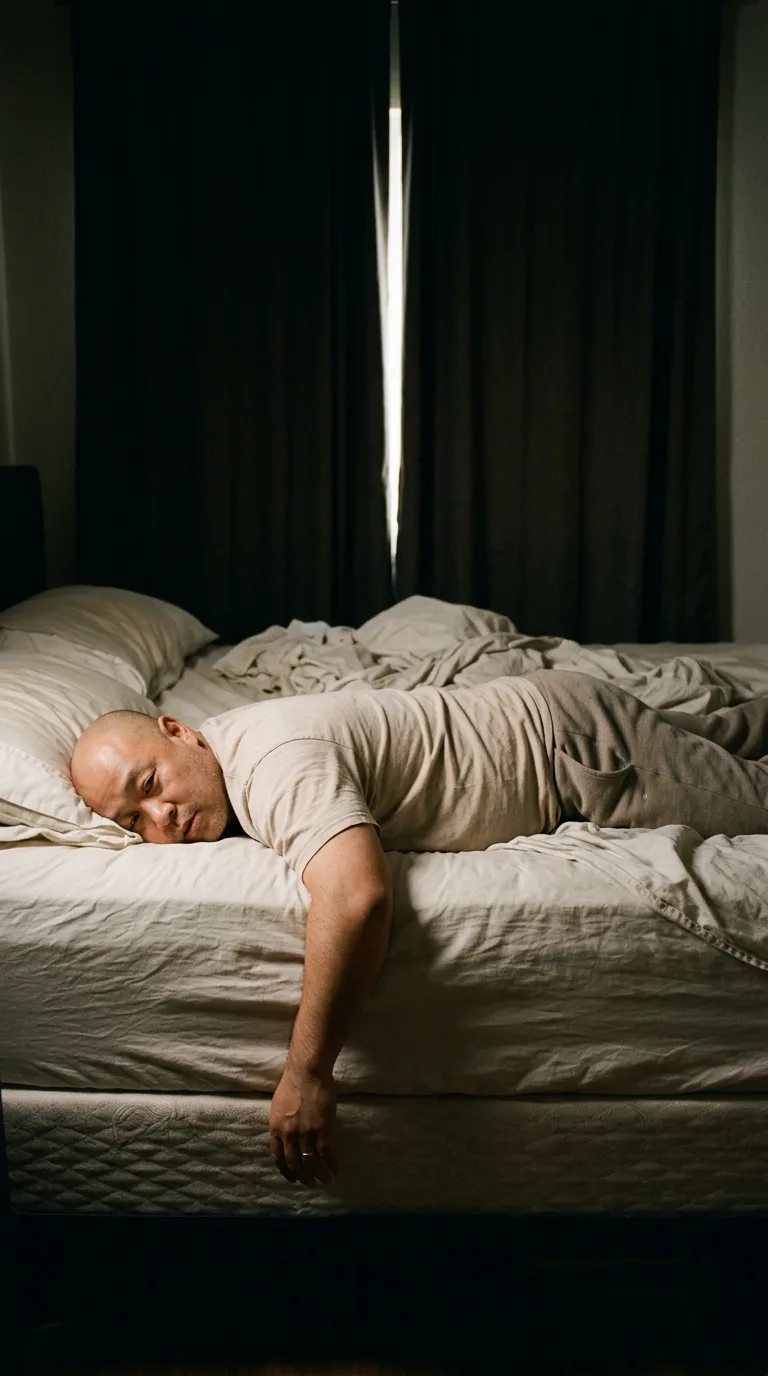
Rarest thing about him: A gap between the front teeth — rare, 1 in 25
Season 0seed 1105350656 · engine v10
Character card
lineage E9E0B9
His body-swap story
@danny.mun rolled the wheel on and woke up as Danny Mun — their first
You have been staring at this site for eleven minutes before you pay it anything.
That is the part nobody would believe, if you told them, which you won't: not the wanting, which is old, old enough that you don't remember its beginning, some childhood thing about mirrors and other rooms and what it would be like to be looked out of by somebody else — but the waiting. Eleven minutes of scrolling past it, back to the feed, back to it. The evening is nothing, the kind of Monday that ends before it starts, and you have had a hundred of these and let them close over you without a mark. Not tonight. Tonight there's a wheel on a screen, vessel.cards, plain as a raffle, and a button that says SPIN, and a price that is not nothing but is not a reason to stop either.
You pay it. You spin it. You do not believe it will do anything.
It does something.
There is no falling, no tunnel, none of the things the stories promised you. There is a breath that is not the one you meant to take, and it goes in through a mouth you don't own, deep and slow, and comes out even. You are lying on your back. You did not lie down. Your arms are folding themselves up onto a chest that is wider than any chest has ever been yours, softer, warmer, and there is a full second where the only thought in the whole world is: I am here now. Not whose. Just here.
Streetlight comes through a gap in the curtain in a knife-thin line and lays itself across a ceiling you have never seen, and it is early morning by that light, gray and starting, though somewhere behind you — behind the you that isn't a you anymore, that is only a want with a place to stand — it had been evening a second ago. It doesn't resolve. It doesn't need to. You're not there. You're here, in a body with a gap-toothed mouth and a shaved head going faintly cool against a pillow, and it is breathing on its own now, easy, like it always breathed like this.
The sheets are cheap cotton, softened by years of washing, and touching them gives you nothing — sheets don't remember anybody. But the shirt does. It's twisted half up your side from the sleep, an old gray T-shirt gone thin at the collar, and the second your — his — hand brushes the hem of it, something opens.
Morning. Not this one — an old one, a Tuesday, the alarm at four forty going off under a pillow because Mei-Lin sleeps two more hours and the kids sleep longer than that. He's standing in the dark pulling this exact shirt on, one arm and then the other, the fabric catching a little on the growing belly it never used to have to account for, and there's no complaint in it, none at all, just the plain animal motion of getting dressed for the third decade in a row. He likes this shirt. He has three of it. His wife jokes that he'll be buried in it and he tells her not yet, and she laughs, and the sound of that laugh comes through the cotton like a radio signal from very far off, and it is not your memory, it will never be your memory, but it sits in your chest anyway, heavy and real, his in every fiber.
The mattress under you gives another flash — twelve years on this bed, replaced once, the frame the same, the wife's shape worn into her side of it deeper than his because she reads later than he sleeps. He gets up first. Always has. Four forty, four forty-five, out the door by five-twenty, down worn white marble steps that have held the weight of this whole block for a hundred years before he ever touched them, walking the six blocks to the shop in a cold he stopped noticing sometime in his thirties.
The shop comes through next, though nothing here is touching it — it comes anyway, riding in on the shirt, on the smell of yesterday's espresso still ghosting the collar. Small place, room for maybe four tables, a machine older than he'd like that hisses like it's angry about something every time he pulls the steam wand. He's good at this. His hands — this body's hands, wide, a little thick in the fingers, the left one carrying a plain band he has never once taken off in eighteen years — know the weight of a pitcher of milk without looking, know the sound the foam makes right before it's ready, a small dry hiss that means stop now. Twenty years of getting up in the dark for people who barely look at him has worn a groove into him as deep as anything, and there is no bitterness in the groove, just weather, just a life shaped the way water shapes stone.
Three kids — a flash of a girl in a graduation gown too big for her, a boy sullen and fifteen at a dinner table, a third one small enough to still ride on a hip that isn't young anymore — come and go too fast to hold, gone before you can ask them to stay, the way most of a man's whole life is gone before he thinks to ask it to stay. Money's never been easy. There's a year in there, thin and hard, that the shirt gives you only the edge of — a shut-off notice, a fight in a kitchen kept quiet for the kids' sake, and then, later, easier, not fixed but breathing again.
The body itself is telling you things now that have nothing to do with memory at all: fifty-one years sitting heavy and specific in a low ache along the lower back that four hours on your feet will wake by seven, a softness at the middle that used to not be there and that his hands rest on sometimes without meaning to, like checking on something. Blood moves too hard behind your eyes in a way that isn't pain yet, just a fact, a pill on the counter downstairs he takes with the first coffee he doesn't remember tasting anymore, twenty years of the same cup drunk without noticing. No drink in him ever, no smoke ever — a body that was never given the excuse to blur any of this, and took none of it anyway, out of something that isn't virtue exactly, just the settled decision of a much younger man who is still in here, keeping the same promise.
You lie there a second longer inside all of it, this stranger's whole worn ordinary weather, and it is the fullest a few seconds have ever been.
Then you lift the left hand off your chest and hold it up against the thin gray light, and turn it, slow, the ring catching what little there is to catch, the knuckles thick, a small burn scar pale on the side of one finger that the shirt never told you about and never needed to — some things a body just has.
You bring your eyes up off it, into the room, toward wherever the day is about to start without him in it.
"Okay," you say, in his voice, low and rough with sleep, gap-toothed and unhurried. "Okay. Let's see."