Danilo Cabrera
Fictional. Generated by AI — not a real person, and no likeness of one is intended.
43, barista in Los Angeles · rolled by @colin.hasbrook · card — no film
History
who has worn him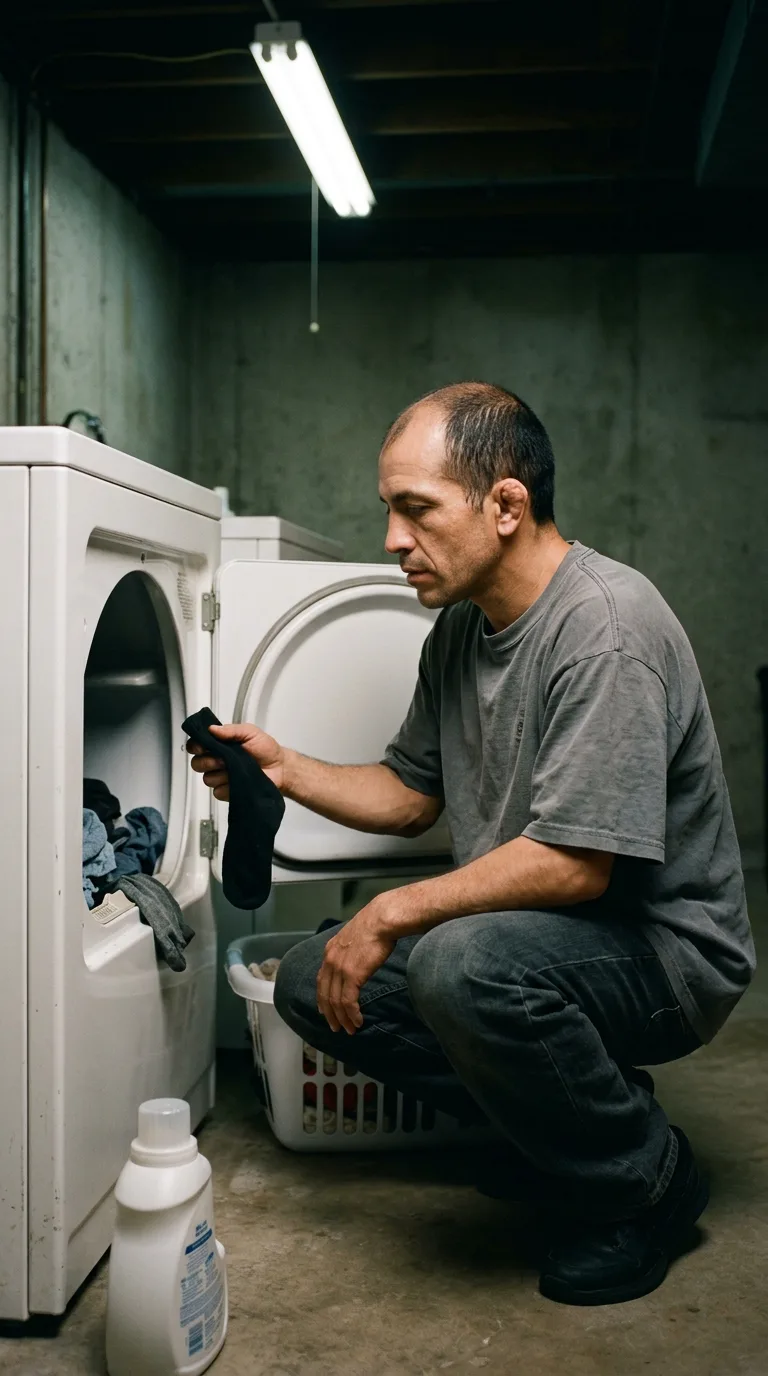
Rarest thing about him: Cauliflower ear — epic, 1 in 159
Season 0seed 1640600107 · engine v10
Character card
lineage 2NZHHJ
His body-swap story
@colin.hasbrook, wearing Marcus Denby, rolled the wheel on and woke up as Danilo Cabrera, spent under a minute in him, then spun the wheel and woke up as Gregory Pastula
Marcus Denby's shift doesn't end for three more hours, and that's the problem. Standing in the break room with a warehouse ID clipped to his shirt and a scanner gun heavy on his belt, you feel it in his shoulders before you feel it anywhere else — the ache that's been building since five a.m., the specific boredom of a body that works exactly as advertised, lifts what it's told, clocks in and clocks out, and gives you nothing back you didn't already know it had. Thirty-one, athletic, brown eyes, a face that turns heads in a bar and does nothing else for you. You have been him less than an hour and you are already gone from him in your head, thumbing the phone you shouldn't have brought onto the floor, the wheel's page loading slow over warehouse wifi. It isn't hatred. It's just that you know every inch of this one already, and you paid for a hundred and thirty-nine men before him precisely so you'd never have to know anything all the way to the bottom. You spin sitting on an upturned pallet, half a granola bar in your other hand, and you don't even finish chewing before the floor changes under you.
It is concrete, not vinyl. It is cold through the knees of a crouch, not standing. Your hand is closed around a sock, damp-warm, and the light overhead is a hum instead of the warehouse's dead silent LEDs. You are small in a way that has nothing to do with posture — the whole geometry of reaching into the dryer is different, closer to the ground, your forearm not long enough to make the job easy. One ear feels wrong against the air, thick, padded, like it's wearing a glove of itself. You pull the load out warm into your chest and it smells like cheap detergent and someone else's whole life.
The shirt is the first door. Gray, soft from three hundred washes, and it opens onto a closet in a stucco building off Vermont, hangers with nothing on them because he doesn't own much, a rod that used to have a woman's blouses on the left side and doesn't anymore. Ceci. Six years together, gone four now, and the ring he never got to give her sold quietly to a guy on Melrose for less than he paid, because holding onto it felt worse than the money. He thinks of her sometimes at the register, foam under the wand, and lets it go because there's a line.
The apron — not on him now, but his hands remember its straps, the cross of black canvas, the particular hiss of the steam wand at 7 a.m. when Mrs. Okafor from the bakery next door bangs on the glass for her usual before he's technically open. Twelve years at that machine. He is good at it in a way that has nothing to do with being seen — corners of a milk pitcher, the exact tilt, foam like a held breath. Customers call him by name and don't know his last one. He doesn't mind. He likes the counter's edge under his forearms, cool marble worn smooth, likes that nobody at 6 a.m. asks about the ear.
The ear is its own door, older, deeper: sixteen years old on a wrestling mat in a Boyle Heights gym that doesn't exist anymore, a headlock held two seconds too long by a kid twice his size, and the swelling that never went down right, that his mother pressed a bag of frozen peas to at the kitchen table saying nothing, because there was nothing to say, un accidente, mijo, and Mass that Sunday like every Sunday, his hand in the holy water font brushing his own thickened ear on the way up like checking it was still there. It is always still there. Girlfriends have touched it gently like it might hurt, and it does, faintly, always, a low hum under everything the way his blood pressure is a hum under everything, a pill every morning with water he doesn't wait long enough to get properly cold.
The socks in the basket, seven of them, one drawer upstairs with eight shirts folded wrong by whoever he was before this moment — but this basket, this armful, comes out of your hands squared at the corners without being asked, a fold so practiced it isn't a decision, cuffs matched, waistbands rolled the way his mother rolled them, the way he has rolled every waistband since he was nine years old watching her do it at a different machine in a different, further-away room. Something in the arms knows this job the way the arms know the steam wand. Skinny arms. Not much reach. Enough.
You set the folded shirt on top of the pile and look down at your hand — small, brown, a callus at the base of each finger from years of pitcher handles and hot cups held too casually — turning it over once like it might not close the same way twice. It closes fine. The fluorescent tube keeps humming. Somewhere above you, eight shirts sit crumpled in a drawer that this hand is about to go fix, because it can't not, because that's already who it is.
You look up into the low light of the basement, past the dryer's dead eye, and you say, to no one, "Okay. Bueno." Not a promise. Just the sound a man makes picking his life back up, not knowing it isn't his anymore, not knowing you don't know either how long you'll let him keep it.