Daniel Kwan Cho
Fictional. Generated by AI — not a real person, and no likeness of one is intended.
47, security guard in Chicago · rolled by @caleb.dunham · card — no film
History
who has worn him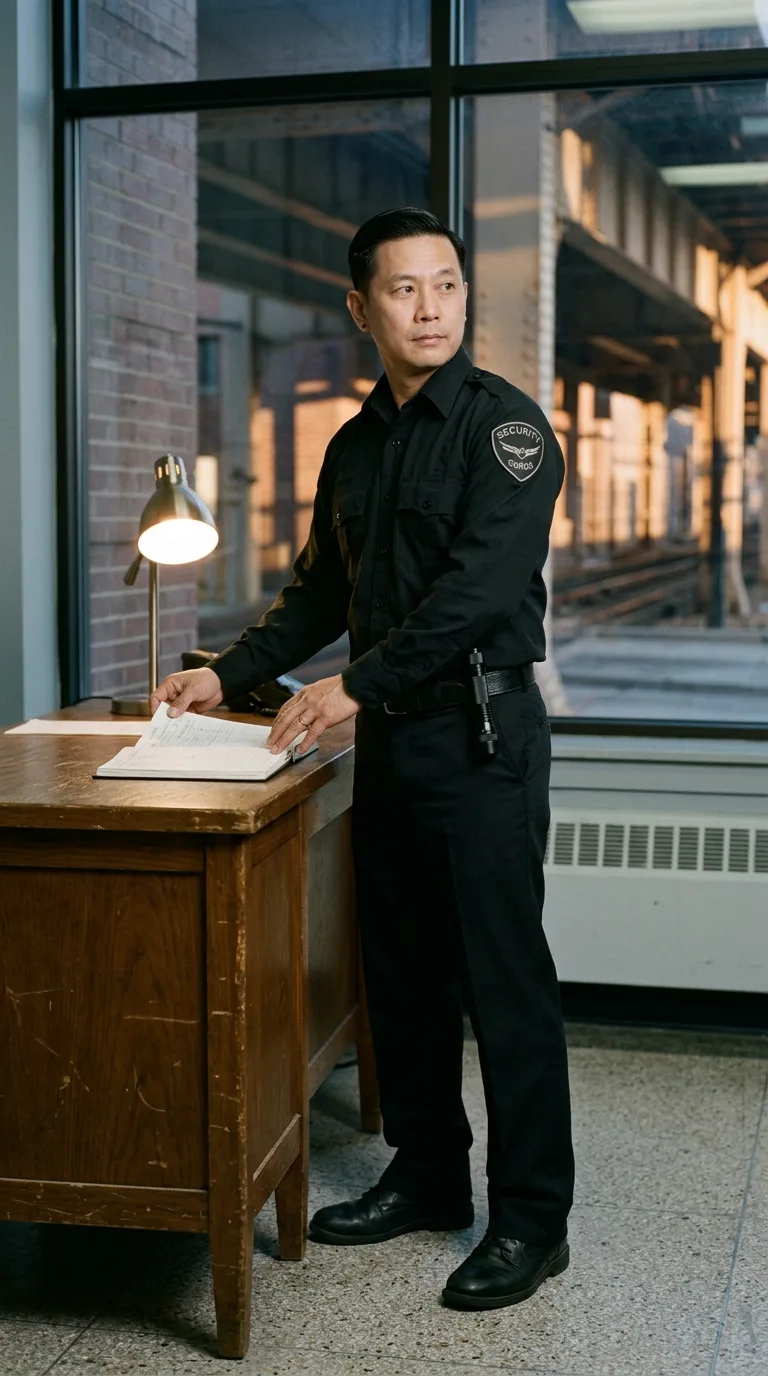
Rarest thing about him: Both earlobes — common, 1 in 31
Season 1seed 288790360 · engine v11
Character card
lineage 9IC4OB
His body-swap story
@caleb.dunham, wearing Dustin Kessler, rolled the wheel on and woke up as Daniel Kwan Cho, spent 3 minutes in him, then spun the wheel and woke up as Anthony Raymond Verrilli
You are standing at a register in El Paso, in Dustin Kessler's apron, and the afternoon light through the storefront is the color of weak tea. A woman is asking him whether the jacket comes in a medium. You hear yourself say you'll check the back. You do not go to the back. Three days and an hour, and you know his beard now, how it itches in the heat and how his knees ache from concrete. He is a fine body. He works. That is not the problem. The problem is that when she laughed at something her friend said, you felt nothing, and when you reached for the feeling, there was only the till drawer's cold rim under your thumb. You are tired of being a man who has to be taught everything by his own sleeves. You open the page. The wheel is already turning.
It is two in the morning in Chicago, and you are standing at a desk with your left hand flat on a ledger and your right hand turning a page.
The page goes wrong. Your fingers fold it back too soon, a crease, and then, slowly, they smooth it and do it right. Ten more motions follow, each one checked: the pen, the line, the lamp. The radiator ticks under the window. Past the glass the L tracks run in steel and brick, orange with sodium light, and a train is somewhere far off, not coming.
The shirt is the first thing that talks. Stiff polyester at the collar, rubbing one spot on the neck. Under it, a morning: his hands doing the buttons from the bottom up, because he started that way after the divorce, when no one was left to say it was strange. Sleeve, cuff, the snap of the cuff. The belt, the flashlight sliding into its ring. The smell of the apartment, coffee gone bitter in the pot, a radio low. No one in it. He liked that and hated it equally.
You press the desk. The wood is scarred, the varnish worn pale where forearms rest. Memory: a winter, a different winter, the same desk, a tenant's kid lost in the lobby at midnight, crying, and him crouching on these bad knees, giving the child his flashlight to hold. The kid's mother crying harder than the kid. He went home warm for the first time in months and told no one, because there was no one.
The ring finger. You rub the thumb across it and feel the smooth pale band where metal used to be. A kitchen, years back, her voice level and tired, saying she was not leaving because of anything he did, only because of everything he did not say. He had nodded. He cracked his knuckles then; he does it now, and your hands do it without you, a rolling pop, one, two, the satisfying ache. There is a cigarette in that memory too, quit eleven years ago, and still his mouth wants it at this hour.
His body is small and dense and steady. Five-five, the weight settled low in the hips, feet sore in the good black shoes. The earlobes hold two little studs, a thing from before, from someone he used to be. The jaw is smooth and cold. He shaved for this. He always does.
You lift both hands from the ledger and look at them. Turn them over. Palms, creases, the pale ring mark. They are yours, and they are not, and they are very calm.
You look up, into whatever is looking back.
"Okay," you say, low, in his voice. "Okay. Hello."
The radiator ticks. Somewhere a train is finally coming, and you wonder how long before you want more than this.