Damon Osceola
Fictional. Generated by AI — not a real person, and no likeness of one is intended.
20, field archaeologist in Eastern Kentucky · rolled by @malik.overton · card — no film
History
who has worn him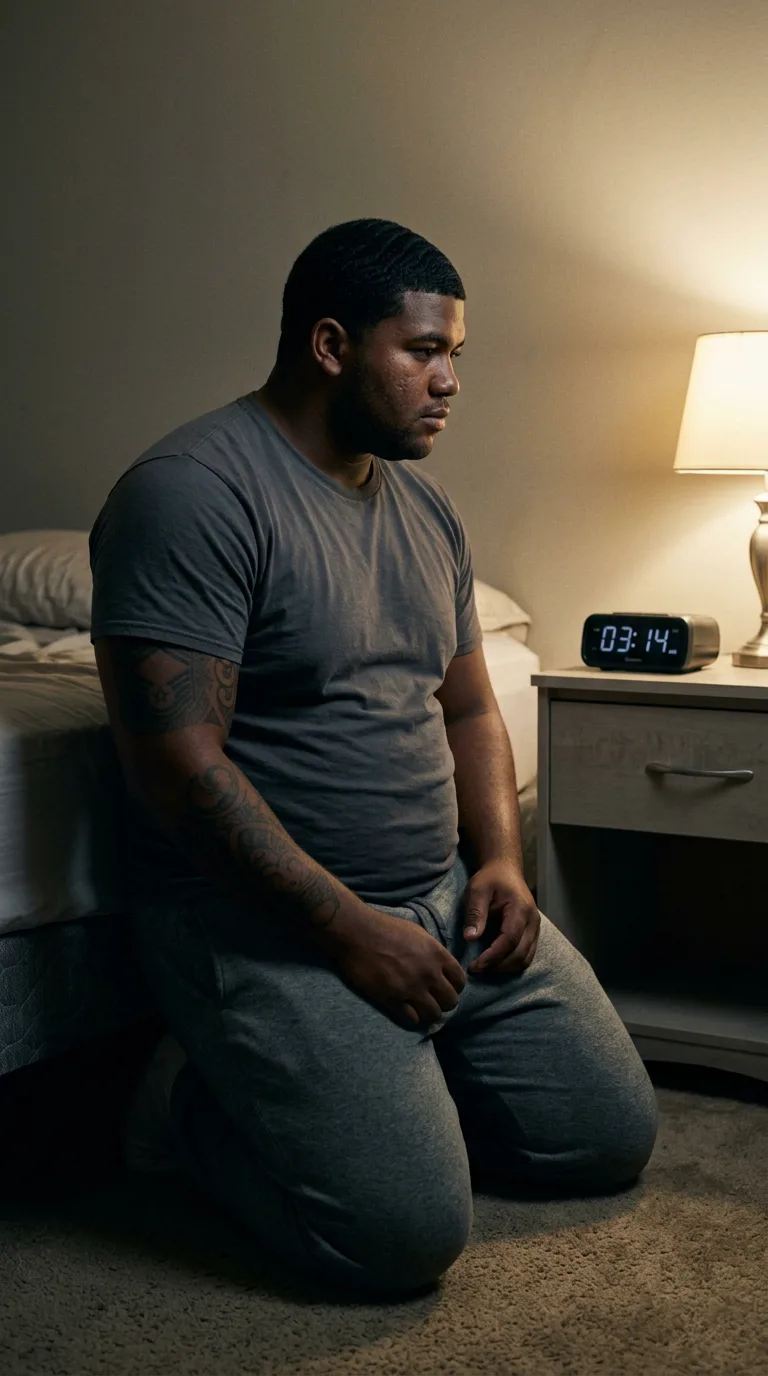
Rarest thing about him: Field archaeologist — rare, 1 in 193
Season 0seed 461740680 · engine v10
Character card
lineage WV6PBZ
His body-swap story
@malik.overton, wearing Cody Fenwick, rolled the wheel on and woke up as Damon Osceola, spent 1 minute in him, then spun the wheel and woke up as Colby Stennett
The knife is still in your hand when the boredom finally wins.
Not literally — you set it down, Cody's thick fingers laying it flat on the cutting board, the fluorescent tube over the walk-in humming its one flat note like it's been humming since before you were him. Thirty-three years old, blue eyes, dark hair going a little too long in the front, and a body that knows how to break a hindquarter down into primal cuts without thinking about it, because you have made it think about nothing else for a stretch of weeks now that feels longer than it was. Butcher's hands. Good, honest, blunt-fingered hands, and you are tired of them. You are tired in a way that has nothing to do with the case being backed up or the cold coming through your knuckles. You have been an athletic white man in Houston smelling of bleach and beef fat for what — days, a week — and it was fine, it is always fine at first, and then it is a room you have already been in.
You wipe your hands. You go to the office in the back where nobody will ask why the new guy is on his phone during shift, and you pull up vessel.cards on a screen greased with someone else's thumbprint, and you spin the wheel less than a minute after deciding to, because deciding and doing have stopped being two different things for you.
It gives you Kentucky. It gives you a bedroom with one lamp on, tan carpet, a nightstand clock reading 03:14 in blue digits, and a man on his knees at the edge of an unmade bed with his hands loosely folded and his eyes open, watching the clock instead of closing them, praying the way people pray when the praying is more habit than hope.
You arrive already halfway to standing.
His weight comes to you first — more of it than Cody had, packed low and solid through the gut and chest, a body built like it does labor for a living and eats like it's earned it. Knees lift off carpet fiber. Momentum's already committed upward, an *amen* just finishing on his breath, a small private laugh already starting in his throat at himself for rushing God like he's got somewhere better to be — and then you're there instead, and the laugh has nowhere to go, and the knees buckle back down onto the bedspread like the string got cut. Forehead touches the comforter. Dark. Warm. Smells like fabric softener and, underneath that, the particular mineral smell of a body that showers at night and still isn't quite clean of the day.
The t-shirt against your back is the first thing that talks to you.
It's soft from washing, gray, a size too honest for vanity, and it gives you a flash of a bathroom mirror, fogged, him pulling it down over his head this morning — no, yesterday morning, before the drive out to the site — arms up, the half sleeve on the right catching the light for one second before the fabric drops over it: a shield, a motto in small type he doesn't have to read anymore to know by heart, unit insignia inked into him by a guy in Radcliff who did it cheap and did it right. Comes with a feeling, not a memory exactly — pride braided so tight with something sadder that you can't get your fingers between the two. Someone's not in the picture anymore. You don't get a name. You get the ache where a name should sit.
The sweatpants under your knees are older, softer, worn thin at the exact spot your kneecaps are pressing now, and they give you *tired* — bone-deep, the good kind, the kind that comes from six hours in a trench in full sun with string lines strung tight over quadrants and a trowel that fits your palm like it grew there. You feel his hands — your hands, now — as they actually are: broad, blunt-nailed, a callus riding the base of each finger, one thumbnail bruised faint purple from a rock that didn't want to come up easy. Hands that know how to find a posthole feature by feel before the eye confirms it. Hands that, when nobody's watching them, drift up to touch his own jaw, his own cleft chin, like they're checking it's still there — a tic so old it isn't even nervousness anymore, just a hand going home.
The carpet under your shins remembers the whole apartment — small, cheap, a window unit that struggles against a Kentucky August, a landlord who is slow and a rent that is low, and that's the trade he made and doesn't regret. You get an afternoon from three years back: him at eighteen kneeling in a different kind of dirt, first week on a real dig outside Berea, a supervisor who didn't expect much from a kid built like a linebacker and was wrong about that inside a day. You get the moment he learned the word *stratigraphy* and liked how it sat in his mouth. You get a woman's laugh from a kitchen that isn't this one — a man's laugh right after it, low, this apartment maybe, months old, gone now, no ex who still matters, nobody keeping the light on. You get a church basement, a fold-out table, red punch in a paper cup, his grandmother's hand flat on his back saying something about the Lord providing that he half-believed then and about a third believes now, which is why the prayer tonight got rushed — not disrespect, just a young man too tired to be devout and too raised right to skip it altogether.
The nightstand clock's glow touches your face and gives you nothing — machines don't carry anything — but the dark around it gives you the whole small ordinary fact of his life: twenty years old, single, nothing to his name worth counting, no nicotine ever, a beer with friends on a Friday and nothing stronger, a body that carries fat and muscle both like armor and like inheritance, a mouth that has kissed men and women both and never seen the contradiction anybody else seems to. Nothing he'd bring up if you asked him what he carries. He'd just look at you like it was a strange question.
The bedspread under your forehead is the last thing, and it gives you this morning entire — waking at five, the site an hour off, pulling on the same soft gray shirt sleeve by sleeve, stepping into boots gone pale with dried clay at the toes, standing a second at this exact spot in the room deciding whether to bother God with anything today and doing it anyway, because his grandmother's hand is heavier on him than his own doubt.
You lift your head off the bedspread.
Your hands — his hands, blunt and broad and already reaching without your telling them to, up toward his own jaw, thumb finding the cleft in the chin like coming home — stop in the air in front of your face instead. You turn them over. Look at the bruised thumbnail. Look at the ink disappearing under the gray sleeve.
"...amen," you say again, quieter, like you're finishing something that already finished once.
You don't get up right away.