Dale Runningwater
Fictional. Generated by AI — not a real person, and no likeness of one is intended.
30, line cook in Phoenix · rolled by @colin.hasbrook · card — no film
History
who has worn him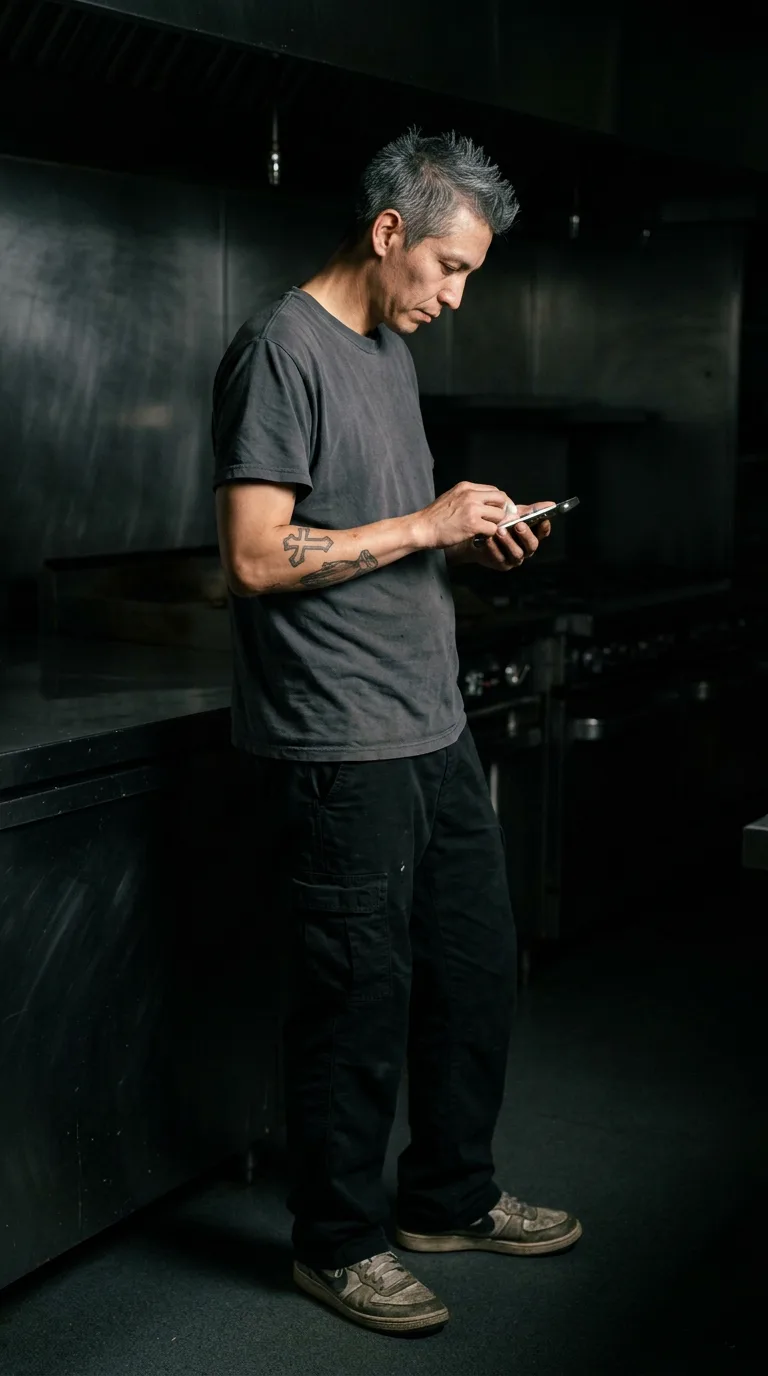
Rarest thing about him: Native American — rare, 1 in 41
Season 0seed 545043886 · engine v10
Character card
lineage 2NZHHJ
His body-swap story
@colin.hasbrook, wearing Todd Prussman, rolled the wheel on and woke up as Dale Runningwater, spent 4 minutes in him, then spun the wheel and woke up as Perry Landreneau
The bar's slow the way Friday nights get slow after eleven, the tourists gone back to their rooms and just the regulars left nursing melting ice, and you're wiping down the same six inches of counter you've wiped down for the last twenty minutes. This body's forty-three, soft in the middle in the way bartenders get from standing near food they don't eat, light brown hair gone thin at the crown you can feel with the flat of your hand. You've been him eleven days. He has a name — you don't use it, not even in your head, because using it makes it his and you need it to stay a costume. There was a woman in here Tuesday who called him by that name like she'd known him twenty years, and something about the easy familiarity of it, the way she touched his forearm, made you want to be somewhere nobody expects anything of you at all. That's the itch. Not boredom exactly. More like the walls of a life showing themselves, this one built by somebody else, and you standing in it wearing his hands. You dry a glass you already dried. You take out your phone under the counter where the manager won't see, and you open the site.
The wheel spins the way it always spins, cheerful and stupid, a carnival thing dressed up as a slot machine, and you don't even watch it land before the floor of you drops out —
— and you are standing barefoot on cold gravel, saguaros black against a purple-black sky, a phone heavy and warm in your hand, thumb lifted off the glass like it's been burned. The screen behind your thumb says $6,840 next to a picture of a watch with a green face. Your arm feels different — leaner, longer, an old ache low in the right shoulder that wasn't there a second ago. The kitchen air around you smells like bleach and browned butter and cigarette smoke ghosted into a t-shirt. It's dark. It's very late, or very early. Nobody else is awake in whatever this is.
The phone goes face-down on the steel counter on its own, your hand — his hand — setting it there and not picking it back up, and that's when it starts arriving, not like memory, like weather.
The apron ties are what does it first — not there now, you're not wearing it, but your fingers twitch at your waist like they're looking for the strings anyway, and there's a flash: hot line, a dozen tickets clothes-pinned above the pass, the particular scream of a ticket printer that never stops screaming, your hands — his hands — plating something fast, not thinking, the body knowing the motion before the mind agrees to it. Fifteen years of that. You feel the specific ache that lives in the outside of his right knee from standing on concrete floors since he was old enough to be handed a paring knife by an uncle who ran a diner in Flagstaff.
The t-shirt against your back gives you the morning it went on — this exact one, gray, soft from washing, pulled over his head in a dark bedroom before a shift that starts when the sun's been down for hours, because this kitchen does prep and bake overnight for a breakfast rush that isn't his to work but somebody has to get the ovens hot. Cargo pants next, the memory of stepping into them heavy-legged and half-asleep, phone alarm still buzzing somewhere in the sheets. Shoes — the give in the left one where his baby toe has finally won its argument with the leather.
Your left forearm carries the tattoo you can't see but can feel the ghost of, ink laid in eleven years ago in a shop off Van Buren, a cross and two hands pressed together, done the same month his grandmother died, done because she used to pray over him in Diné when he was a kid too sick to eat and it worked, or he decided it worked, and either way he's never once regretted the hour it took. Faith that isn't church exactly, isn't Sunday, is more like a held breath that predates him. You feel that too, distant and warm, like a room he doesn't visit but keeps the key to.
There's a woman-shaped absence in this — not long ago, an ex whose name comes with the smell of her shampoo more than a face, a breakup that was quiet and mutual and still sits in his chest some nights like swallowed smoke. There's a pack of cigarettes somewhere in these pants, unfelt but known, the way a pack a day is known — not craved right now, just present, like a second heartbeat. There's a small blue pill bottle in a bathroom he isn't standing in, taken every morning without ceremony, the reason his thoughts don't spiral the way they used to at 3 a.m. mid-shift when the walk-in door swings shut and it's just him and the humming compressor and the math of what he owes.
The watch on the phone. That's the last thing to surface, small and mean and clear: a want that has nothing to do with the watch and everything to do with wanting, once, to buy something because he could, not because the fryer needed a part or the rent was due on the first. He does the math anyway, can't help it, six thousand eight hundred dollars is four months of his life laid end to end, and he puts the phone down because looking at it any longer is its own kind of hunger strike.
You flex the fingers. Their calluses. The thin ridge of an old burn scar along the base of the thumb that the facts never mentioned and you don't add to, just feel, the way he would.
You lift your eyes off your own hand into whatever's throwing the little bit of light in this kitchen — a range pilot, maybe, blue and small — and you say, quiet, so as not to wake a house that might be sleeping past this room:
"Okay."
Not for him. For you. For whatever you're going to do with tonight, or this week, or however long this lasts before the wheel calls you back.