Dale Ostroff
Fictional. Generated by AI — not a real person, and no likeness of one is intended.
61, warehouse picker in Small-town Ohio · rolled by @tyler.iverson · card — no film
History
who has worn him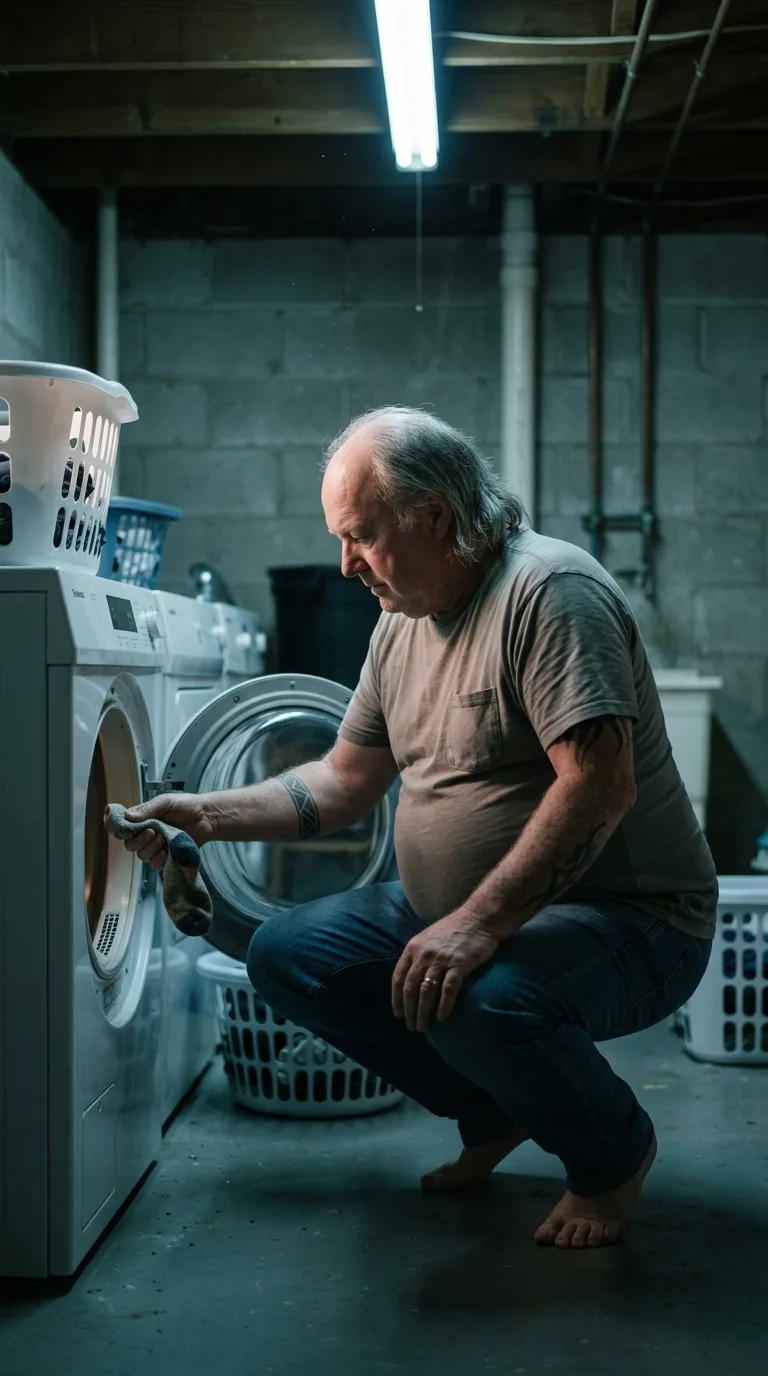
Rarest thing about him: Flips a lighter — rare, 1 in 52
Season 0seed 1044842071 · engine v10
Character card
lineage 9IC4OB
His body-swap story
@tyler.iverson, wearing Kalani Fonoti, rolled the wheel on and woke up as Dale Ostroff, spent 4 minutes in him, then spun the wheel and woke up as Vikram Sethna
Kalani Fonoti's office chair is too big for the body in it, the way all of this office feels too big — the good watch, the framed diploma, the window with the good light — none of it earned, all of it inherited in the spin, and you have been sitting in it for fifteen hours doing nothing with a stranger's law degree but feeling its weight. You should be satisfied. You are twenty-two and beautiful and smart in a way that isn't even your own smartness, just his, riding along like a passenger. But there's an itch under it that has nothing to do with Kalani at all — it's about the man next door, back in New Orleans, in the last body you wore. Colton Wexley, twenty-five, a dentist, freckled and stupid happy, whose bathroom cabinet you went through while wearing him, whose phone you read while wearing him, whose neighbor — this neighbor, a man you never met in the flesh, only through Colton's complaints about him leaving garbage cans in the shared drive — you now find yourself thinking about with an interest you can't quite name. Petty curiosity. Unfinished business with a life you already left. You open the site on the phone that isn't yours, in the hand that isn't yours, and you spin, and it doesn't even try to be poetic about who it gives you. It gives you him.
The dryer door is open and warm air is breathing out of it against your bare shins, and you are crouched, and there is a sock in your hand, damp-warm and gray, and your knees ache in a way Kalani's never did, a real ache, structural, decades old. You pull the load out into the basket in one motion that isn't a decision so much as a groove worn into muscle, and you're folding before you've caught up to your own body — corners squared, sleeves crossed, a fitted sheet collapsing into a neat square without a single wasted movement, hands that have done this ten thousand times and don't need you for it at all.
The shirt you're not wearing yet — the one waiting on top of the dryer for tomorrow — gives you nothing. But the shirt on your back does, the moment your shoulders roll into a stretch: a Tuesday morning, this same shirt, sleeve over sleeve, standing in a bedroom that still has her nightstand on the wrong side because moving it felt like erasing something. Ruth. Nine years dead of the same slow thing that runs in her family and now flags on his own chart, blood pressure, a doctor's mouth saying manage it like there was anything left he wanted to manage for. Three kids, grown, scattered — one in Columbus who calls Sundays, one who doesn't call, one who still lives close enough to bring the grandkids by on Saturdays, and that's the one thing that still feels like weather turning good.
The tattoos on his forearms come up warm under your own touch as you fold — black tribal bands, twenty-five years old, done the week he got married in a shop that didn't exist anymore, the pain of the needle nothing next to how sure he'd felt walking out of there, twenty-something and certain the whole rest of it was simple. It wasn't. The warehouse comes up through the smell of the dryer sheets, weirdly, aisle after aisle of racking, the beep of a forklift he's learned to place without looking, the handheld scanner strapped to his wrist like it grew there, picking totes for nine hours a day at an age when his knees would rather he sat down. He doesn't hate it. He doesn't love it. It's Tuesday's shape and tomorrow's shape and the shape of every day since Ruth, and there's a comfort in that, the comfort of a thing that doesn't ask him to feel anything about it.
The lighter is in his jeans pocket, not lit, hasn't been lit at a cigarette in eleven years, and your hand finds it out of nothing, an old animal habit, flips it once, twice, the metal warm from his thigh — and with it comes church, Sunday mornings, a pastor he likes, a hymn Ruth used to sing off-key on purpose to make him laugh, and grace before supper with three kids' voices overlapping the words because none of them ever learned to say it slow. The wedding band is still on the hand that's folding a towel, and it doesn't come up as grief exactly anymore, more like weather too, something that's just there, a small gold fact he's stopped being surprised by every morning, though some part of him — thirty years of some part of him — still is.
You finish the basket. The corners are perfect. Somewhere overhead a floorboard creaks — a grandkid, maybe, up too late — and the fluorescent tube keeps its steady hum, uninterested in any of this.
You look at your hands — his hands, thick-knuckled, sock-lint on the fingers, a wedding ring worn thin at the band — and you turn them over slow in the bad light like you're checking they're real.
"Ruth," you say, out loud, to no one, in his voice, before you even know you meant to say it, and then you stop, because that wasn't you, that was him coming up through his own mouth, and you don't know yet which one of you is going to be standing here tomorrow.