Curtis Nakama
Fictional. Generated by AI — not a real person, and no likeness of one is intended.
32, locksmith in Honolulu · rolled by @colby.marsh · card — no film
History
who has worn him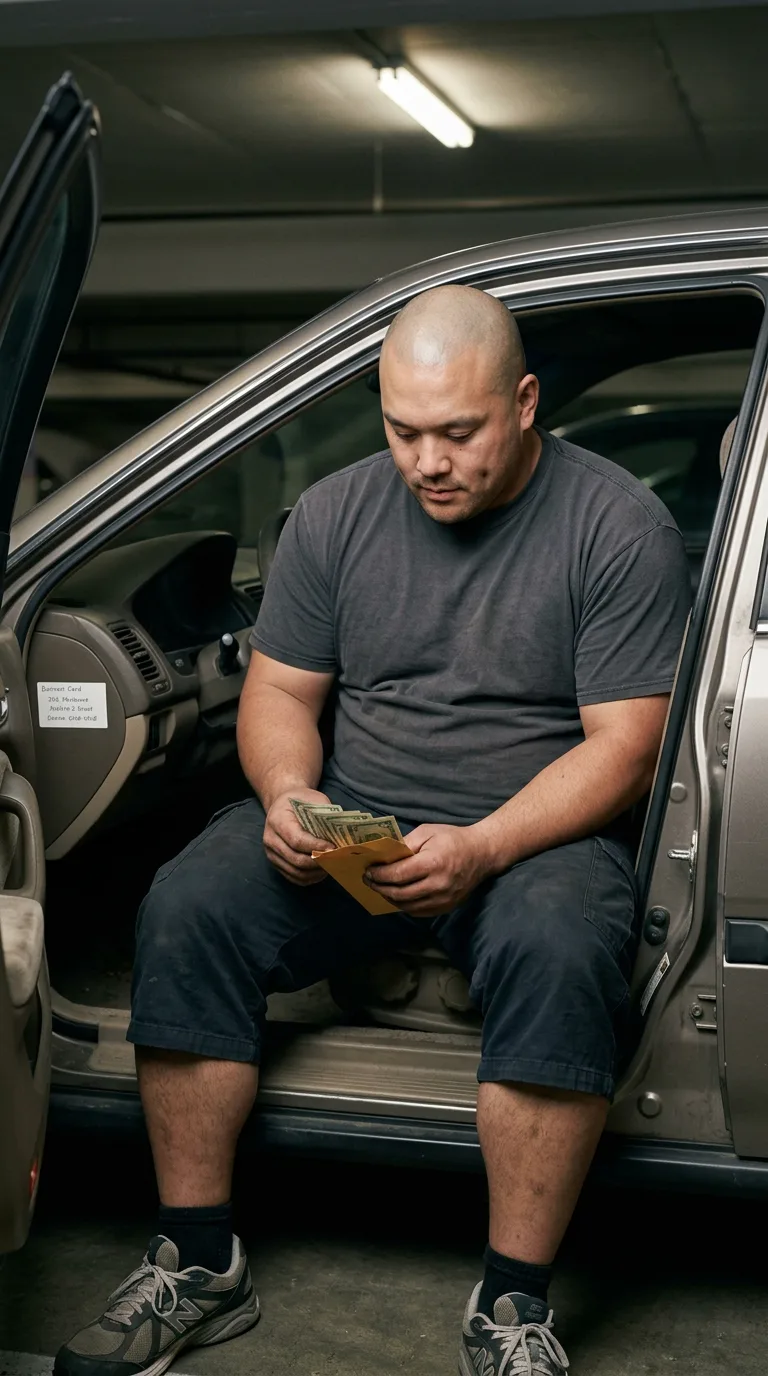
Rarest thing about him: Well off — $500k to $1M — epic, 1 in 120
Legacyseed 1475133984 · engine v8
Character card
His body-swap story
---
You have watched him for eleven days and you know his hands better than his face.
That is the thing about a man who works locks: his hands are the whole of him. You watched them at a storefront on Kapiolani, kneeling on the sidewalk in the white glare with the cylinder loose in his palm, thumbing pins into place with a delicacy that had nothing to do with the rest of him. Two hundred and thirty pounds of shoulder and gut in a navy jacket gone soft at the elbows, and the fingers of a man threading a needle. Calluses along the pad below the little finger. A nail bruised black and grown half out. You watched him set the cylinder back, test it, test it again, and you thought: those will do. Those will do for anything.
You are a stranger to him. That is worth saying plainly, because everyone assumes there must be a grudge. There is no grudge. There is no history between us at all except the eleven days, and he never once looked up.
He answered the listing himself. That surprised you less than it should. People imagine a thing like this has to be taken, and mostly it does, but sometimes a man reads the terms and does the arithmetic and decides a week is not so much. A week is nothing. He has had weeks he does not remember at all — the Primo weeks, the after-work weeks that ran into each other on the lanai until the girlfriend, Malia, started saying *your face gets mean, Curt,* and he'd laugh because his face has never once looked mean in his life. Dimples like thumbprints, even resting, even angry. A face built to be forgiven.
He didn't need the money. That's what you keep turning over. There's near a million sitting in accounts he doesn't touch — his father's house sold, his father's insurance, the shop he owns outright, a man who came out of a tin-roofed place on posts in a red dirt yard and did well and never learned how to spend. He needed the arithmetic. He needed to know a thing about himself could be worth a number, and to see the number counted out into his own hands, and to be able to say afterward: *I did something.* He wanted a week off from being Curtis Nakama and he could afford to buy one.
He didn't ask what a week off would feel like from inside. He didn't ask where he'd be kept. There is no such place. There was never going to be a such-place.
So: the parking structure under the building on Merchant, level two, the fluorescent tube overhead humming its one note. His door open, one foot on the concrete, the other still in the well. Grey T-shirt dark under the arms. He counts the envelope twice, and the second count is slower than the first, and you watch his lips move a little on the hundreds. He is not greedy. He is only being careful, the way he is careful with a cylinder, because carefulness is his whole religion — that and the Mass he attends four or five times a year and the small prayer he says without noticing on the H-1 when the traffic knots. He said one this morning. *Just a week.* Then he laughed at himself in the mirror.
He clicks the pen. He does it now, thumb on the plunger, three times, four, the sound flat off the concrete pillars. He has done that since he was a boy at the kitchen table and does not know he does it.
He folds the flap of the envelope down. He looks at the card propped on the dash — the address, printed small, an office he has already walked past twice looking for the door. He reaches up and turns the rearview to catch his own face.
That is the hinge. He meant only to see whether he looked like a man who had just sold something.
And I am there, in the mirror, in him, filling him out to the fingertips like water into a boot.
God, the *weight* of him. I had forgotten weight. The pull of a belly against a waistband, the ache of forty-inch shoulders hanging off a spine, the low sugary thirst that lives in the back of his throat all day and that he calls nothing. His right knee complains from a thousand hours of kneeling on concrete. His mouth tastes of coffee and the ghost of cigarettes he quit six years ago and still dreams about. There is a beautiful stupid strength in the arms. I flex the hands and they answer — every finger, every joint, the whole exquisite instrument of him, and it is mine, and there is no lease, and there was never a lease, and the week was a word I used because he needed a word.
He is not somewhere else. That is the part they never believe. There is no room where he is waiting it out. There was one seat in this and now I am in it.
I look at the hand. Turn it over. The calluses, the black nail, the pen still hooked in the fingers. I click it — not because he did, but because the thumb already knows how, and I want to feel a habit that isn't mine run through a body that is.
The dimples are still there in the mirror. They show even at rest. They will show at rest for the rest of my life.
Malia will be home by six. There's a lock on Nuuanu wants doing tomorrow at nine. I'll go. I'll kneel in the glare with the cylinder in my palm and let these hands do what they know, and nobody on that sidewalk will look up, and I will be Curtis Nakama for good.
The envelope is on the passenger seat, still full. That's the joke. He paid himself, out of his own money, to hand over the only thing that wasn't.