Curtis Lamont Hobbs
Fictional. Generated by AI — not a real person, and no likeness of one is intended.
46, operations manager in Small-town Ohio · rolled by @declan.michael.farrow · card — no film
History
who has worn him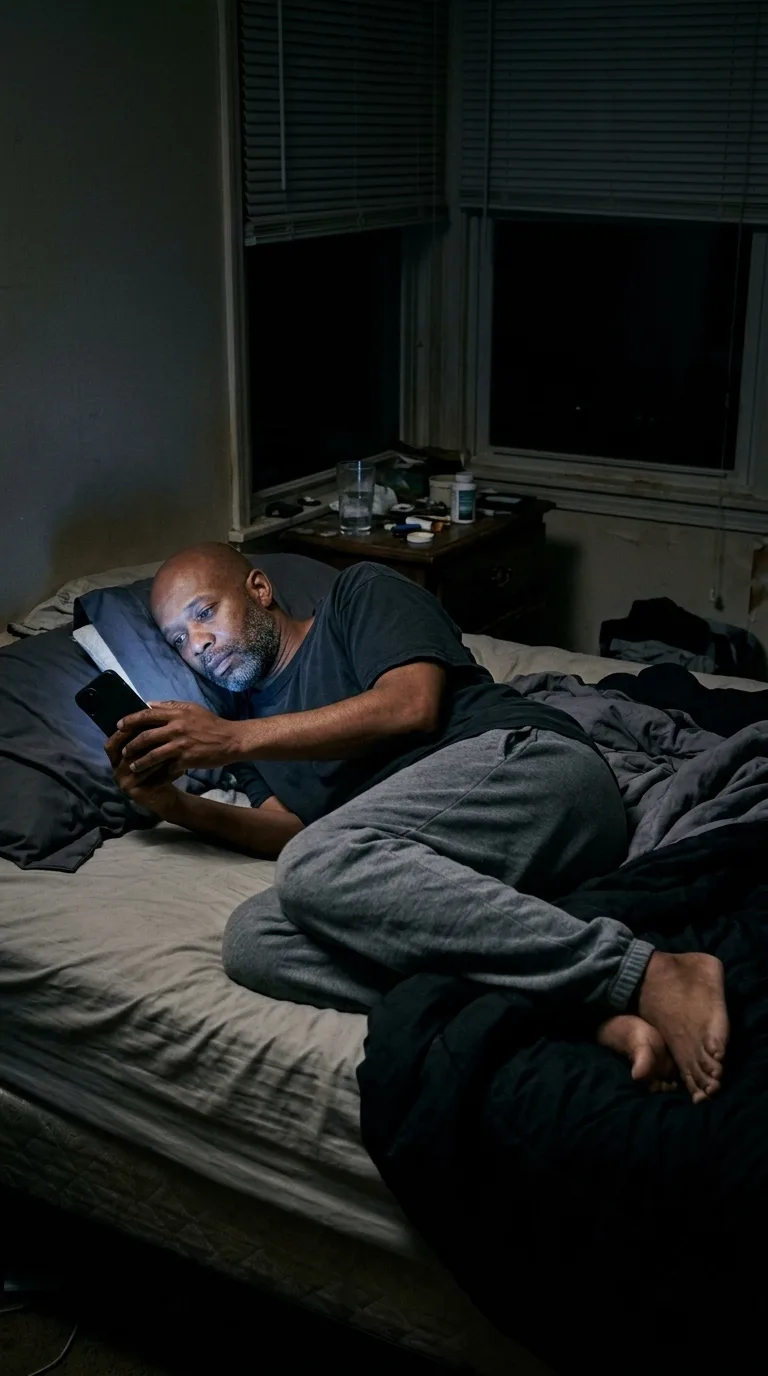
Rarest thing about him: Stutters under pressure — common, 1 in 79
Face-off rating 1499 · not ranked yet
Season 1seed 1866770670 · engine v11
Character card
lineage 5OR92V
His body-swap story
@declan.michael.farrow, wearing Sean Patrick Dolecki, rolled the wheel on and woke up as Curtis Lamont Hobbs, spent 2 minutes in him, then spun the wheel and woke up as Hugo Ellison Brandt
You are leaving a man named Devin Kroll, thirty-one, and he is standing at a kitchen counter in Chicago at some dead hour with the refrigerator humming. He has been yours for one minute. The goatee, the beauty mark and the shoulders are all fine. You are not leaving because of anything wrong with them. He has a text on his phone from a woman who thinks he is somebody else, and a line in it, *I'm glad you're finally back*, that you read once and put face down on the counter. Glad of what? A man you never were. It is too much to be loved by mistake. You open the site.
The wheel is already turning, and then there is no kitchen.
The dark is softer. A mattress under your hip, a pillow gone warm beneath your ear, and a small cold light six inches from your face. Your thumb is lifted off the glass. Then it comes down and starts again, faster and steadier than it was, flicking past everything he had stopped on. Your eyes have stopped blinking at the right intervals and you let them stay that way a moment.
The room is cold. The blinds are down, with a window dark behind them. A glass of water stands on the nightstand among bottles and a tangle of small things. Somewhere in the house another person is breathing, or is not in this bed at all. Your breath comes slow and sour. The first thing you learn is his belly, soft and heavy where he lies curled on his side, and the long legs folded under the blanket. The knees complain. Forty-six.
The sheet is under your palm, cotton worn thin, and a whole night opens. A hand on this sheet at three in the morning last winter, and the woman beside him asleep with her back turned. He lay and counted the ways to say a thing and said none of them. His mouth knows the shape of that stall. When he is pressed his words catch on the first sound and hold, and he has spent forty years sanding the catch off with synonyms. You feel the sanding in your jaw now.
The gray sweatpants are soft at the cuff, and your thumb finds the elastic. They give you a Saturday. His boy, small and furious, and the bag of groceries in the car. His ex-wife stood in a driveway and said, *You never say it, Curtis. You just get quiet.* He had wanted to answer. He had stood there with the first consonant stuck behind his teeth until she nodded, kind, and went in. You carry the shame of it like a coin in a pocket.
The black T-shirt against your back is the one he wears to sleep because it is the one he wore to the floor today. The cotton smells of cardboard dust and the vape he takes on the loading dock. Then you have him at six that morning, standing in the bathroom, pulling the navy quarter-zip over his head, tucking the collared shirt, clipping the badge to the belt loop. The khakis. The black shoes he has resoled twice. He taps the clipboard to his thigh the way another man would pray. The mezzanine above the floor is where he is steady. From up there the trucks and pallets and forty people make sense, and nobody asks him to say anything faster than he can.
Your own hand, his hand, with a thick callus at the base of the fingers from forty years of pens and rails and the long wet nights of other people's emergencies. He is a believer. There is a pew in him, a hymn, a church basement that smells of coffee. You do not believe anything yet. The nose aches faintly where it was broken and set a little crooked, and a ghost of a fist goes through you, a schoolyard, a boy laughing.
Two children. A woman in the house who is kind to him. A glass or two most nights to get the day's words out of his throat. Money in the bank, and no one he could say it to.
You turn your hand over in the blue light. The fingers are steady. Then you lift your eyes and look at nothing, at the dark, at whoever is looking back.
"Well," you say, and the word comes out clean, no catch at all. "Hello, Curtis."
Somewhere under it the wanting is already stirring, small and patient. How long does a man like this last? An hour, a winter? You listen for it, and for the house.