Curtis Hollander
Fictional. Generated by AI — not a real person, and no likeness of one is intended.
65, football coach in Nashville · rolled by @connor.waskiewicz · card — no film
History
who has worn him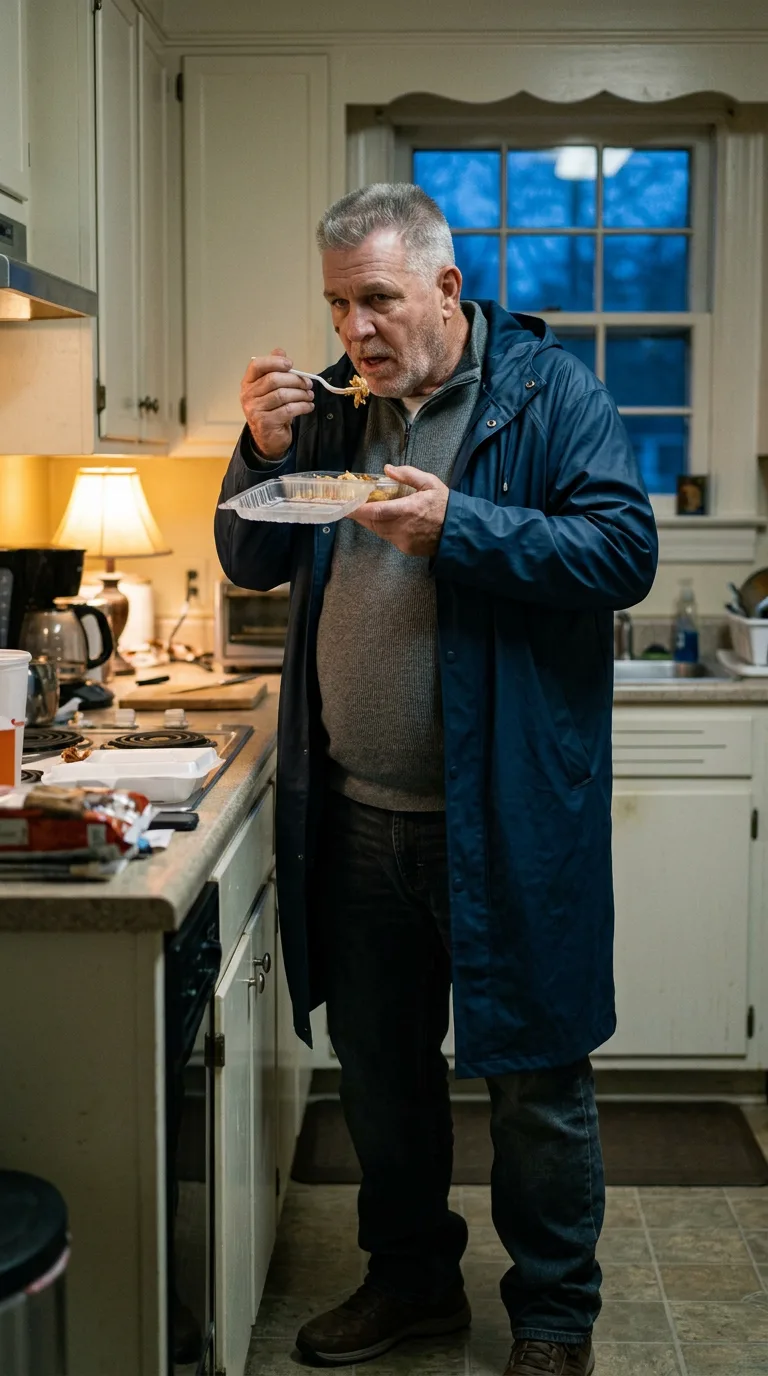
Rarest thing about him: Football coach — uncommon, 1 in 1,816
Season 1seed 1604169007 · engine v11
Character card
lineage 2NZHHJ
His body-swap story
@connor.waskiewicz, wearing Michael Reed, rolled the wheel on and woke up as Curtis Hollander, spent under a minute in him, then spun the wheel and woke up as Sione Tuilagi
You are leaving Michael Reed because of the keys.
They hang on your belt, forty of them, and in the minute you've been him they have never once stopped talking. Every step he takes is a cell door. You sit in his kitchen in Philadelphia with his brown eyes on the screen, his dimples doing nothing, and the page with the wheel on it already open. Nothing is wrong with him. He works. He's just a man who is always, at the edge of hearing, being counted. You want a body that nobody counts. You press the button.
The fork stops.
It is halfway up, and it is yours now, the plastic cold and a little bent in a grip that was not set by you. Warm rice and something peppery are on the air. A raincoat hangs heavy from your shoulders, and the kitchen is yellow at one end from a small lamp and blue at the other from the window. Your breath goes in slow and wide, through a chest with a lot of room in it and a belly that pushes gently against the container. Sixty-five years sit in the knees first. Then the lower back, a low dull hum. Then you.
You lower the fork to the counter. It is not a decision. The wrist just knows where the counter is.
The coat comes off one shoulder, and the nylon slides down your arm with a sound like a long exhale. The cuff catches. Your thumb knows to turn it, and then it comes back to you: a hallway, a hook, a morning in November when he took this coat off the hook because the forecast said sleet and he said to nobody, *Fridays always rain.* The coat is not his only coat. It is the one he keeps for the sideline, and it still smells faintly of cut grass and cold metal bleachers.
You put your palm on the counter. The laminate is cool and slightly tacky. A flash: a woman's laugh in this room, her reaching past him for the kettle, her hip against his, and the warm, stupid gladness of it. He has a girlfriend. Her name rises and does not quite finish. It is hers, not yours, and you leave it.
You sit. The chair gives a small creak and your whole weight settles, and the knees thank you in a language you understand. You run a hand over your scalp without being asked. The crew cut is bristle and silk, flat across the top, tapered, and the palm remembers this. A thousand times, on a thousand sidelines, he has done this when a play went wrong. Under it comes a clean memory of a sideline: lights buzzing in the dark, a boy on one knee holding his helmet, and himself bending down saying only, *Breathe. Next one's yours.* The feeling is pride, huge and quiet. Beneath it is a drink he does not take anymore, a particular glass, set down years ago on a particular night. You feel the relief of not wanting it.
The stubble scrapes under your knuckle. There is a mole high on the cheekbone, and your fingertip finds it without looking.
You pick the fork up and eat, even mouthfuls, because his hands do. The window is a black mirror and you look at nothing in it.
Then you hold your hands out in front of you. They are broad, thick-fingered, callused at the base of the palm from clipboards and whistles and cold, and they are yours. You turn them over. Then you lift your eyes to the dark glass, to the stranger's face with its blue steady eyes.
"Well," you say, in a low Tennessee gravel that is not yours. "Hello, Coach."
And under it, the question you cannot put down: how long. An hour, a decade. Whether tomorrow the wanting comes back for something he can't give you.