Craig Ostrander
Fictional. Generated by AI — not a real person, and no likeness of one is intended.
44, accountant in Chicago · rolled by @craig.ostrander · card — no film
History
who has worn him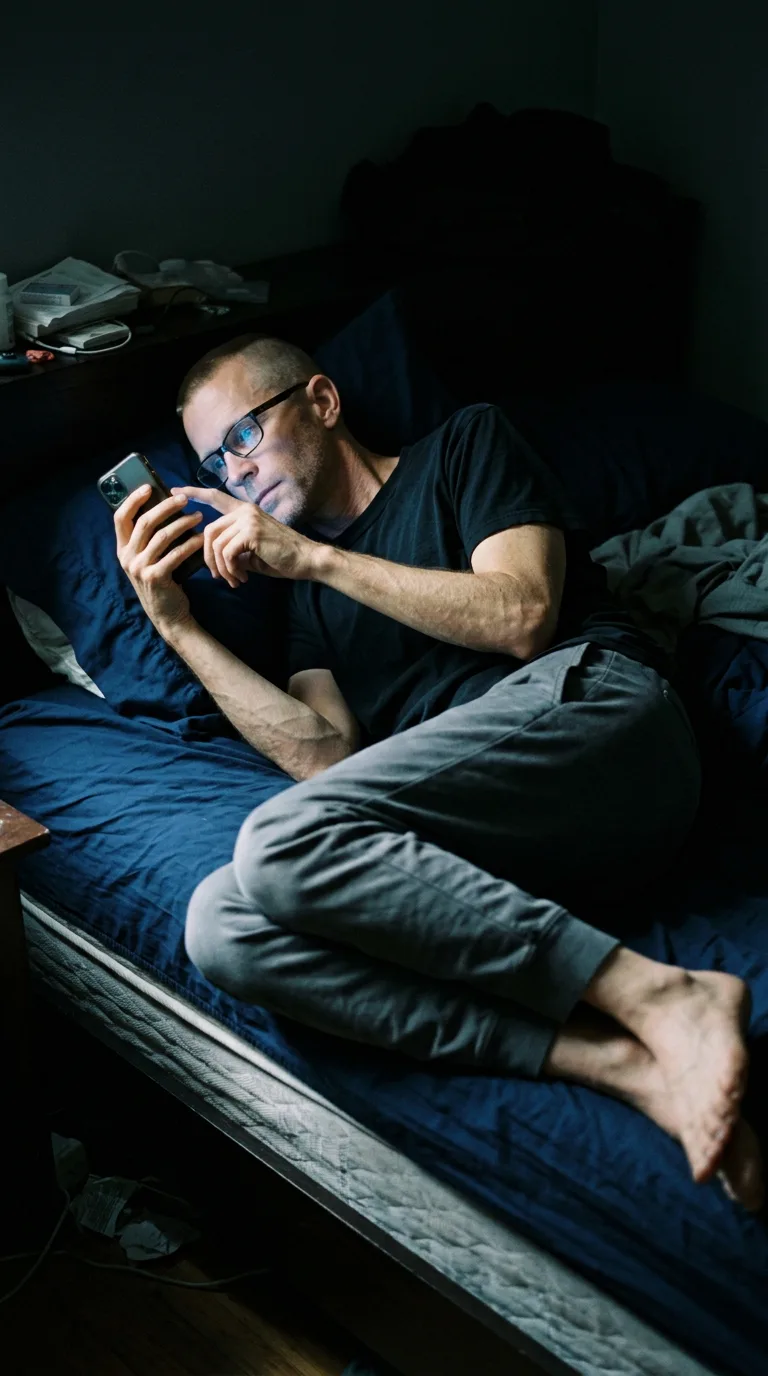
Rarest thing about him: Pulls at his beard — epic, 1 in 203
Season 0seed 1632354409 · engine v10
Character card
lineage C3TMDL
His body-swap story
@craig.ostrander rolled the wheel on and woke up as Craig Ostrander — their first
The screen is the only thing that has ever really held your attention. You've had it open for an hour tonight, the way you have most nights for years — nothing on, nothing worth naming, just the low hum of an evening you didn't want and didn't know what to do with instead. This is the part nobody would believe if you said it out loud: you have wanted this exact thing since you were a kid watching a man wake up in somebody else's life in a movie you can't remember the name of anymore. You never told anyone. You never had to buy it before. Now there's a wheel on a page called vessel.cards, and a number that isn't unreasonable, and you have already decided before you've admitted you've decided.
You spin.
There is no falling, no tunnel, no in-between. There is a bed, blue-lit, and a phone six inches from a face, and a thumb that was slowing down and now is not. It moves faster, steadier, flicking through things it no longer has any interest in, because the interest was his and the hand is now yours. You feel the mattress under a hip, a knee drawn up, a shirt collar loose against a throat. Glasses sit on a nose that isn't cold or warm, just there, weight settled into the grooves worn for it. The room smells like a radiator that's been running too long and like a man who showered this morning and not since.
The shirt is the first thing that gives him to you — not all at once, but the way a key turns before a door opens. Gingham, blue and white, buttoned to the second-from-top. A closet, a Monday, a hand — his hand, not yours, though it is the same hand now — choosing it without thinking because it was already ironed and the gray cardigan goes with everything. You feel him getting dressed this morning as though it just happened: sleeve over one wrist, then the other, the small satisfaction of a belt buckle finding the same worn notch it always finds, the half-second in front of the mirror where he did not really look at himself so much as check that nothing was inside out. Craig Ostrander does not spend long on mirrors. He has other things to think about.
You have his weight now — thin through the shoulders, thin through everywhere, six-one and built like a coat hanger, the kind of body that runs cold in the office and warm on the El platform in January. Your hands know things you didn't ask them to know: how to tab between two monitors without looking, the particular ache low in the back that comes from a chair that was never quite right, the way three fingers of your right hand have learned, without permission, to find the short beard along your jaw and pull at it, one hair caught and released, when a number on a spreadsheet doesn't reconcile the way it should.
The bed gives you more. Not this bed alone — an old apartment before this one, a ring he almost bought and didn't, a woman named Renata who is not in his life anymore but is still, somehow, the room he measures other rooms against. That ended on its own weather, nobody's fault anybody could point to, and he has not really tried again, not seriously, not in a way he'd tell you about if you asked. There are children — you feel them arrive like three separate weights dropped into your chest at once, three separate mornings of small shoes by a door that isn't this door, a custody calendar taped inside a cabinet, a voice on the phone saying *Dad* in three different registers of tired and thrilled. He loves them the exact amount a man loves something he doesn't get to keep close enough. He prays about it, actually — not performing, just quietly, the way he was raised, a church three neighborhoods over he still drives to on Sundays out of something that isn't quite habit and isn't quite faith either, though it gets called faith.
There was a period he drank, mildly, unremarkably, the way a lot of men his age drink, and then there was a period he stopped, and neither period made much of a story — he just noticed one day it wasn't doing anything for him and let it go, the way you let go of a hand that was never really holding yours back.
None of this is dramatic. That's the thing his memories keep insisting on, gently, over and over, as they come up through the shirt and the belt and the mattress under you: an ordinary man, forty-four, numbers all day under lights that hum, a beard he doesn't know he's pulling at, three kids he doesn't see enough, a woman he doesn't see at all. Nothing in particular. You keep waiting for the thing about him and it does not arrive, and somehow that is the most affecting fact in the whole file.
You look down. The hand is thin-fingered, blond-haired at the knuckle, a callus at the base of the thumb from a mouse used too many hours a day for twenty years. It is not your hand. It has never been your hand. You turn it over anyway, the way you'd check a coin for the other side, and something in you — not him, never him again — settles into the wrongness of it like a chair that fits.
"Okay," you say, to the dark room, in his voice, and you don't know yet if you mean it as a question or an answer.