Corey Ashworth
Fictional. Generated by AI — not a real person, and no likeness of one is intended.
35, streamer in Miami · rolled by @colin.hasbrook · card — no film
History
who has worn him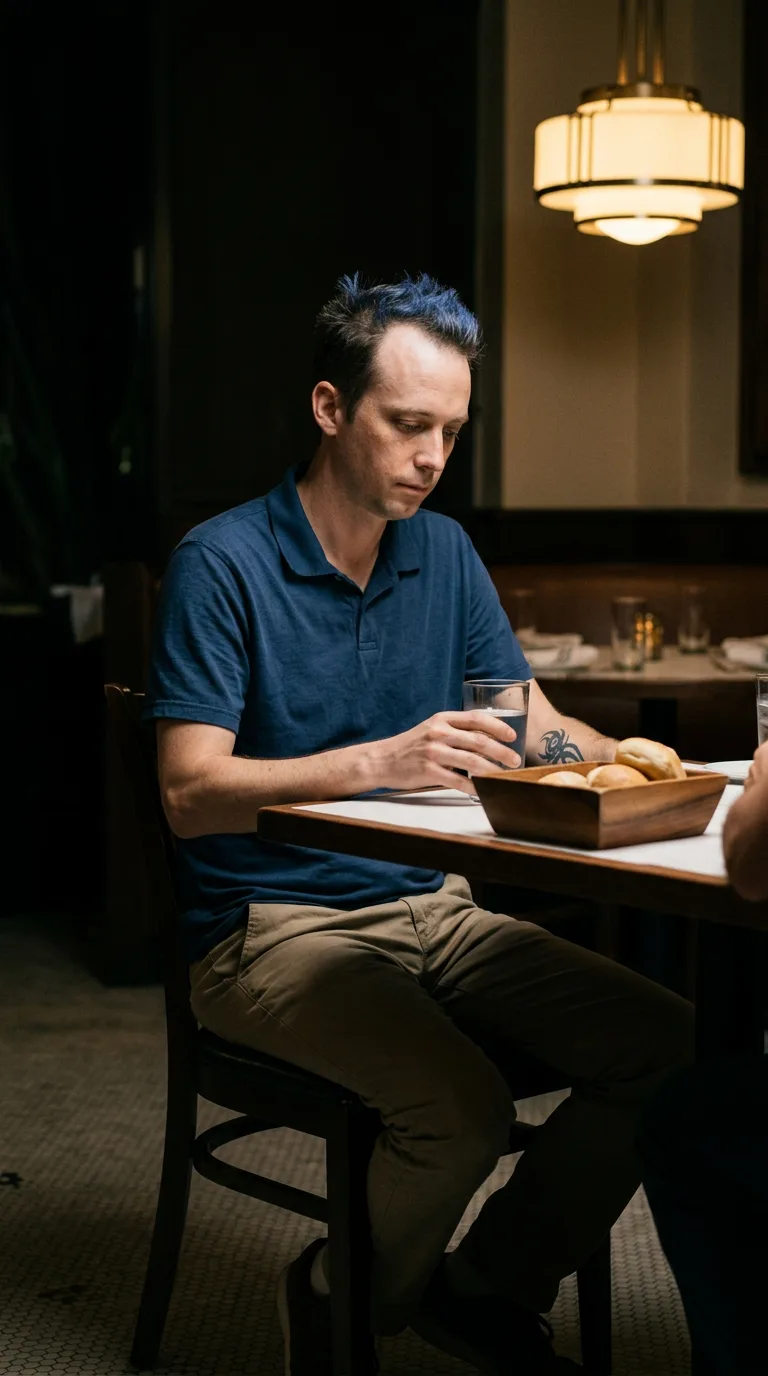
Rarest thing about him: Fashion color — legendary, 1 in 100
Season 0seed 1345910836 · engine v10
Character card
lineage 2NZHHJ
His body-swap story
@colin.hasbrook, wearing Ronald Petrakis, rolled the wheel on and woke up as Corey Ashworth, spent under a minute in him, then spun the wheel and woke up as Marlon Whitehorse
Ronald Petrakis has been a badge for less than a minute and already the radio on his hip feels like somebody else's joke. You did this fifty-three lives ago, learned early that the first sixty seconds in a new man tell you everything: whether his knees work, whether his back has an opinion, whether the world hands him respect or makes him ask for it. Ronald's knees ache going down stairs. Ronald's holster sits heavy in a way that says thirty years of sitting exactly like this, hip cocked, waiting for a call that matters. You stand in the break room doorway holding a coffee that is not yours, in a body that is not yours, and think: I already know how this one ends. Gray hair, freckled forearms, a pension somewhere down the road you will never walk. Ninety-three men behind you and this is the first one that felt like arriving somewhere instead of leaving somewhere. That's the problem. You don't want steady. You spin because steady is exactly what you're running from.
You reach for your phone — his phone — pull up the site out of habit more than hunger, the wheel already spinning under your thumb before you've decided anything, the way a smoker's hand finds the pack.
The restaurant noise arrives before you do — a low clatter of forks, a hostess laughing somewhere behind glass — and then you are sitting, and there is a glass of water rotating a quarter turn under your fingers before it stills, and a voice that was yours a half-second ago is still leaving your mouth: "—and I really am sorry, I just get like this sometimes, I didn't mean for tonight to—" too loud, carrying two tables over, a woman in a green dress glancing up mid-bite. The date across from you blinks, unreadable. Your hand is thin-fingered, blue-veined at the wrist, tattoo curling black up the inside of the forearm. Not your hand. Hasn't been in fifty-three bodies.
The shirt is what opens first — polo cotton, worn soft at the collar, and it comes back to you in his feeling: standing in front of a closet at six that evening, holding this exact shirt and a black one with a screen-printed anime kid on it, holding both up to the mirror like the choice mattered more than it should, because it did, because dates always feel like auditions you can't rehearse for. He put the polo on because it says trying without saying too much. He buttoned it wrong once, redid it, laughed at himself alone in the room — a small private laugh that nobody else will ever get to hear, and you get it now, secondhand, like reading somebody's diary over their shoulder.
The chair under you is the next thing — hard wood, a restaurant chair, and with it comes a whole gallery of chairs like it: folding chairs in front of a ring light, the good chair, the one with the lumbar support he bought after eight-hour stream days wrecked something in his lower back at thirty-two. You feel that ache now, low and familiar, a body that has sat too much and moved too little, soft where it used to be lean, the specific tiredness of a man who works with his voice and his hands and nothing else. Skinny fat, he'd call himself on stream, self-deprecating, good for a laugh, chat spamming emotes.
The water glass gives you the last of it, cold glass against fingers that have held a hundred glasses like it, first dates that went nowhere, an ex — Marcus, always Marcus, the one whose name still shows up mid-sentence uninvited, the one who left for Atlanta and a nursing degree and didn't ask him to come, the one Corey still measures every date against without meaning to. That's why tonight is going badly. Not because this man across the table did anything wrong. Because Corey keeps finishing his sentences and hearing Marcus's silences instead.
There's more, threaded through his forearm ink, tribal black etched on a dare at twenty-two with a friend who's since moved to Tampa and stopped texting back; through the ghost-weight of headphones that should be resting on his collarbones right now but aren't, off the clock, off the desk, off the RGB glow that paints his walls purple and green four nights a week for people who know his voice better than his face. Church every few Sundays when the guilt outpaces the sleeping in — his mother's voice more than God's, if he's honest. A pill bottle in the bathroom cabinet, taken most mornings, some mornings forgotten. A bank account that never quite fills past a few thousand and never quite worries him enough to fix it.
None of it is much. All of it is his.
You lift the water glass again — a quarter turn, deliberate this time — and look down at the hand around it. Thin wrist, black ink climbing out of the sleeve, a faded blue spike of hair falling into the eyeline. Not Ronald's hand. Not the hand from ninety-three men ago either. You turn it over slowly, like checking it's real, and the man across the table watches you do it with the particular patience of somebody already composing the story he'll tell his friends about tonight.
You look up into his face instead of finishing the apology.
"Sorry — where were we," you say, and you have no idea, none at all, how long you get to ask.