Colton Vasek
Fictional. Generated by AI — not a real person, and no likeness of one is intended.
21, tow truck driver in Houston · rolled by @colton.vasek · card — no film
History
who has worn him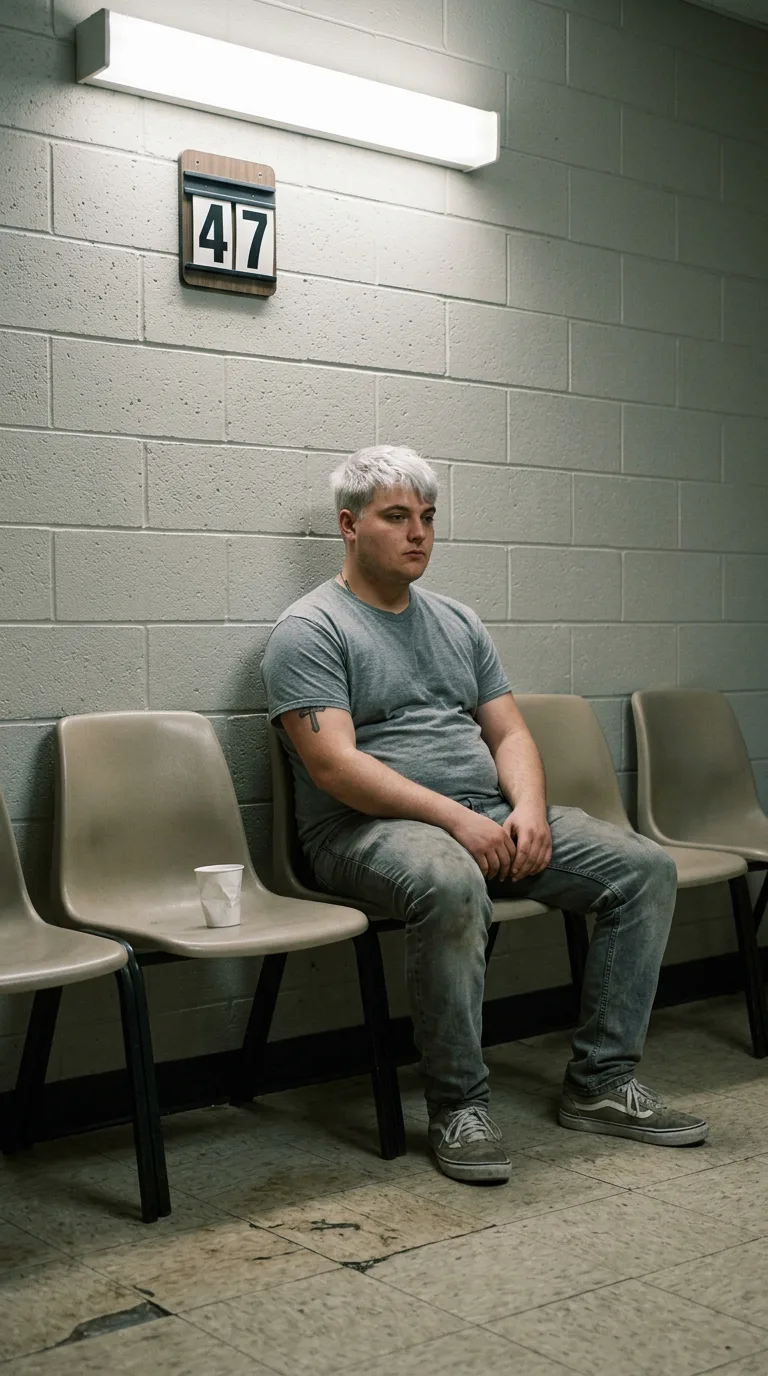
Rarest thing about him: A white streak in the hair — epic, 1 in 102
Season 0seed 210952109 · engine v10
Character card
lineage Y1E4FB
His body-swap story
@colton.vasek, wearing Owen Tanaka, rolled the wheel on and woke up as Colton Vasek, spent 11 minutes in him, then spun the wheel and woke up as Desmond Alcindor
You are standing in a dark kitchen in High-desert Nevada, in a body that isn't yours, at an hour when the coffee shop under this man's name is dark too. You have been Owen Tanaka for one minute. Forty at the temples, brown eyes gone soft with sleep he never got to have, dimples you haven't earned the right to use yet. It should be enough. You told yourself, spinning last time, that this one would be enough — a barista, a quiet life, dimples, a name that sounded like somebody's uncle. But a minute in, standing barefoot on his linoleum, you already feel it: the same restlessness that got you here three times before, the itch under a stolen sternum. He has a whole life you haven't touched yet, and touching it is work, and you don't want work. You want the fall into someone else's second, that clean nothing-into-something. So at 2 a.m. on his phone, thumb that isn't yours, you open vessel.cards again. You don't feel bad about it. You never learn Owen's name for himself. You just spin.
The wheel turns and you are gone from him mid-blink, and you are —
— sitting. Third seat from the door, under a strip light that hums at a pitch just under hearing. A paper cup by your hip, water gone the temperature of the room. The number board on the wall clicks from 47 to 48 and something in your body — his body, already, before you've caught up to it — a knee that had been bouncing, stops on that exact click, like it had been counting down to this and not the number. You set the cup down. You fold your hands. Somewhere a nurse or a clerk calls a name into the room and you do not look up, because you don't know it's yours yet, because you don't know anything yet except that you are heavier than you were a second ago, wider through the shoulders, a body that holds itself low and solid in the plastic chair, feet in scuffed Vans planted flat.
The shirt is what gives you the first of him — gray cotton, a soft V-neck gone thin at the collar from washing, and where it touches the collarbone the fabric is doing what it always does, catching very slightly on raised ink, and that catch alone brings back a needle buzzing in a shop off 610 two years ago, eighteen and lying about your age, a cross and praying hands going into skin while your mother sat in the waiting chair outside not speaking to you, and how good it felt after, like you'd finally put something true where people could see it. That's Colton. That's his name arriving with the tattoo, the way it should — through the touching, nothing handed to you clean.
The jeans against your thighs open a Tuesday: kneeling on hot asphalt on the Sam Houston Tollway at 1 a.m., winch cable singing tight, headlights of passing trucks strobing across your safety vest, lungs pulling for air that wasn't quite there, inhaler in the jacket pocket you'd left in the cab, riding it out anyway because the car on the hook wasn't going to wait for your breathing to sort itself. Nobody's ever seen you use the inhaler. You'd rather choke a little than let a stranger at 1 a.m. see you as anything but fine.
The shoes bring the morning you bought them, on sale, counting out cash you didn't quite have, because the boots for work had eaten the budget and something needed to not be steel-toed for once. The whole month before that comes with it, unbidden: the dispatcher's radio voice, the diner off Telephone Road where you eat alone most nights, the trailer you rent by yourself because your last girlfriend said living with you felt like living with weather, moods that came in low and grey and didn't announce themselves, and you never fought her on it because she wasn't wrong. No one since. You don't mind it, mostly. You go to Mass some Sundays, not all, and you like the part with the incense best, the smell of it, though you couldn't say why.
The cup under your fingers gives you nothing — it's not really yours, just the room's — but the strip light's hum brings back every DMV and clinic and unemployment line you've sat under lights like this in, waiting for a number, your name always coming after somebody else's, patient in a way that isn't peace so much as habit. You are twenty-one and you have been waiting for things a long time already.
Your hands remember the chain before your mind does — a phantom weight in the right palm, callus along the first two fingers where the hook rides when you carry it, the particular ache in the forearm from swinging it up onto a bed at 2 a.m. under sodium light while eighteen-wheelers went by close enough to move your jacket. That's the job, that's most days, that's fine. It's a life that fits you the way the dad-bod jacket in the picture fits you, a little snug at the shoulders, broken in exactly where it needs to be.
You sit inside all of it a second longer than you have to.
Then you look down at your hands — soft-knuckled, a white fleck of paint dried into one thumbnail, nothing like the hands you had ninety seconds and one whole man ago — and you turn them over slowly, the way you always do, like checking a delivery.
You look up, past the number board, past the strip light, into whatever's watching, and you say, out loud, to no one in the waiting room who could possibly understand it:
"Number forty-eight's gonna have to wait."