Colton Braswell
Fictional. Generated by AI — not a real person, and no likeness of one is intended.
28, freight handler in Rural Texas · rolled by @colin.hasbrook · card — no film
History
who has worn him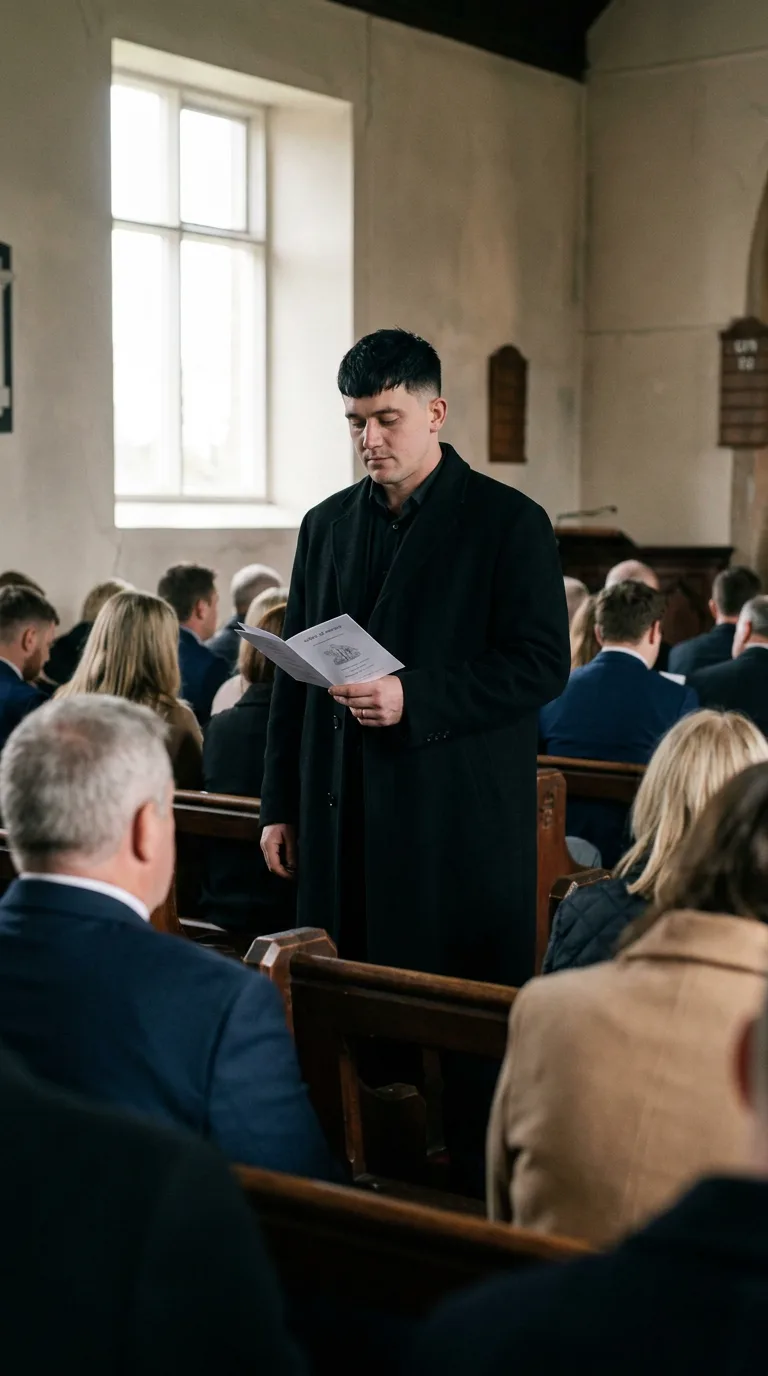
Rarest thing about him: At a funeral, at the back — common, 1 in 112
Season 1seed 1621025347 · engine v11
Character card
lineage 2NZHHJ
His body-swap story
@colin.hasbrook, wearing Kenji Okafuji, rolled the wheel on and woke up as Colton Braswell, spent 6 minutes in him, then spun the wheel and woke up as Gary Pruitt
The mop bucket is still warm from the tap when the itch starts up in Kenji's knees — both of them, the left worse, the cartilage gone soft as wet paper somewhere in the last fifty years of standing on floors like this one. It's not even five yet. The school hallway smells like pine cleaner and the inside of a locker, and the fluorescent tube over row four is doing its stutter again, the one you keep meaning to report and never do because reporting it is also your job and there's nobody else to tell. You have been him less than a minute, the story says, but a minute is enough to know the knees, and to know that you don't want them for one more circuit of this hallway. Fifty-two years in a body is a long lease. You paid for the wheel with the idea, already, of getting out of it before the sun came up on this one — before you had to feel him bend down for the dustpan again. So you leave the mop where it stands, go to the little laminated table by the front office where you keep your phone charging, and you spin, because Kenji Okafuji's knees are a reason and there doesn't have to be a better one.
The organ stops.
Air moves through a room that is not fluorescent-lit, that smells of old stone and lilies going brown at the edges, and your knees — new knees, complaining of nothing — are locking straight because two hundred people are standing up around you and your body already knew to do that before you arrived to feel it. There's a paper in your hand, folded once, damp at the crease from having been held too long. A coat, heavy, wool, buttoned wrong at the second button, hangs off shoulders narrower than the ones you had thirty seconds and fifty-two years ago. Nobody is looking at you. Everybody is looking at the box at the front, or at the window, or at their own shoes, and you are five foot four again, which is at least familiar, in a black coat that is not yours, standing at the back of somebody's funeral with your eyes already lowered like you'd been told to keep them that way.
The coat gives you the first of it — not gently, all at once, the way a held breath goes out. It is your brother's coat, too long in the arm, and you — Colton, this is Colton now, arriving through wool — borrowed it at seven this morning off the hook by his back door because your good one was still at the cleaner's and you weren't going to bury Deacon Whitlow in a barn jacket. Deacon. That's the name that comes with the coat, a full name, Deacon Whitlow, and behind it a flood: him at nineteen with his arm slung over your shoulder outside a Dairy Queen that doesn't exist anymore, him best man at your wedding fumbling the ring because his hands shook worse than yours, him three weeks ago on the phone laughing about something so ordinary neither of you remembers now what it was, and then the truck, the highway at night, the phone call at 2 a.m. that woke your wife and both kids and the dog. That's why the coat's collar is damp — you cried in the truck on the way here and told nobody, wiped it with the cuff, hoped it dried before anyone hugged you.
The order of service in your hand brings the church itself back sleeve by sleeve — no, that's wrong, it brings the morning back, the actual putting-on, three hours ago and four hundred miles from where your hands are now standing still: your wife straightening your collar in the bedroom mirror, saying you look like your father in that coat, you telling her you don't own a black tie and does it matter, her already tying one around your neck without waiting for the answer. Your youngest wanting to come, too small to understand no. Your gum — you'd been chewing since the driveway, a habit so old your jaw does it without asking, and somewhere between the truck and the church door you'd swallowed it out of nerves, which never happens, you never swallow it, and the ghost of that small failure is still sitting behind your molars.
Underneath the coat and the paper is the rest of him, plain as a tool left out overnight: twenty-eight years old, five-four, a build that comes from stacking pallets since he was twenty and will keep doing it till his back says otherwise, a jaw shaved smooth an hour before the service because you don't go to bury Deacon looking rough. Hands that know the weight of a hand truck before they know anything else, calluses at the base of every finger, a wedding band worn thin on the inside from ten years of gloves going on and off over it. A wife named Renae who is three pews up crying without sound, who you married the summer after the ex — Whitney, who you loved reckless and young and who still, some nights, shows up uninvited in a dream and leaves you strange in the morning. Two kids. A trailer you were supposed to be loading right now, foreman told you take the day, Deke would've wanted you there and not on the dock.
None of that is yours. All of it is in your hands now, folded once, damp at the crease.
You look down. The paper. The ring. Fingers shorter than Kenji's were, no ache in them at all, and you turn the left hand over slow, watching the band catch the window light, and something in your chest that isn't Colton's grief and isn't quite nothing either sits there a second, borrowed and unpaid for.
"Wrong pocket," you say, low, to no one, patting the borrowed coat like you're looking for something that isn't there — and nobody around you thinks it's anything but a man lost a half-step in his own mourning.
You don't know yet how long you'll let him keep standing here.