Colton Aldrich
Fictional. Generated by AI — not a real person, and no likeness of one is intended.
21, security guard in Rural Texas · rolled by @colin.hasbrook · card — no film
History
who has worn him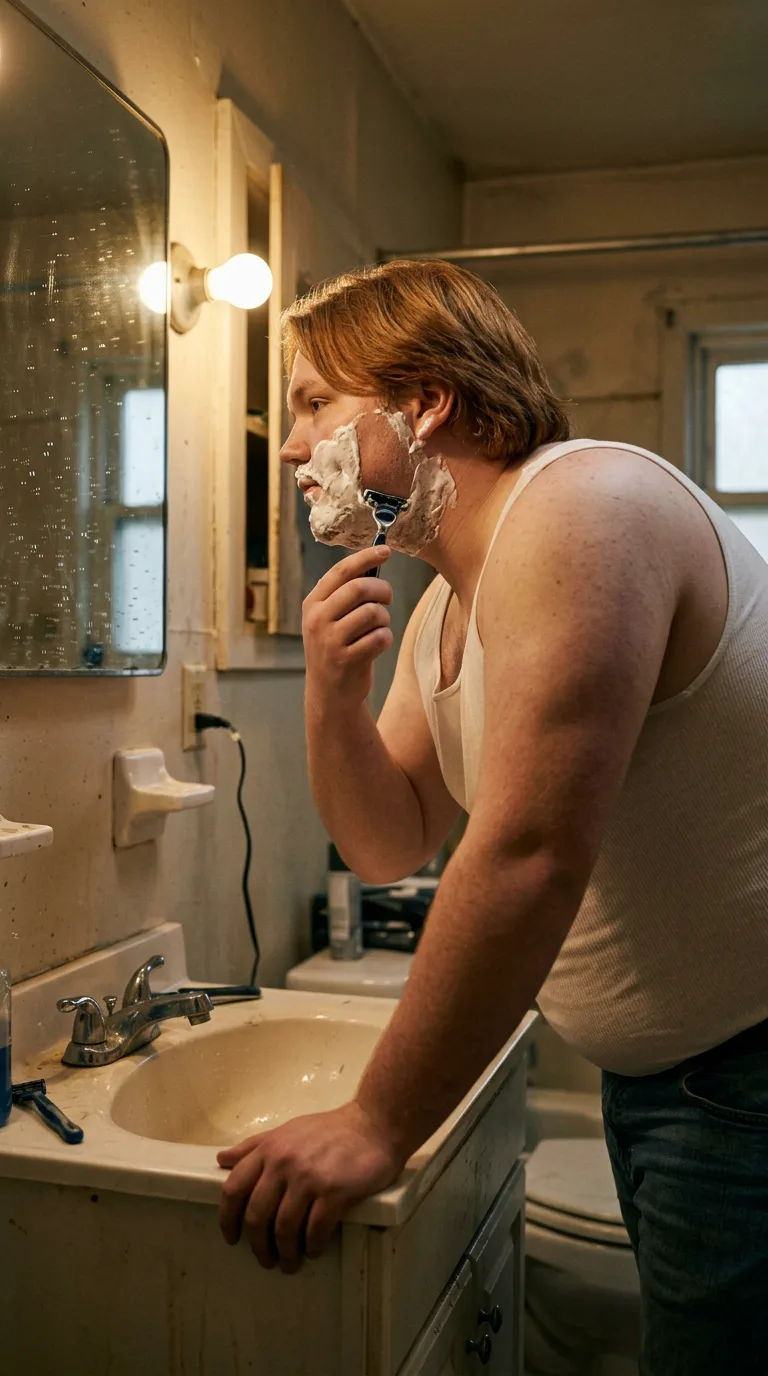
Rarest thing about him: Stutters under pressure — rare, 1 in 77
Season 0seed 61490771 · engine v10
Character card
lineage 2NZHHJ
His body-swap story
@colin.hasbrook, wearing Wesley Marchand, rolled the wheel on and woke up as Colton Aldrich, spent under a minute in him, then spun the wheel and woke up as Adrián Ceballos
Wesley Marchand's hands are steady — they have to be, they saved a kid's airway two hours ago and got a commendation nod from a supervisor who never nods at anyone — and that is exactly the problem. You spun for chaos and got competence instead. Fourteen minutes standing in a break room with his heartbeat still up from the call, his phone buzzing with a text from a coworker who wants to grab a beer, his locker smelling of hand sanitizer and old coffee, and you understand with total clarity that this life is going to keep being good at itself whether or not you're the one steering it. That's not why you came here. You came here for the drop, the unfamiliar weight, the stranger's morning. Wesley's competence is a room with no door in it. You open the site on his phone with his own steady thumb, feel the small thrill of doing something he'd hate, and you spin.
The sink tilts up at you first, water-spotted mirror, a bulb too warm and too close. Foam is cold on the left side of your jaw where the razor already went. Your arm — heavier than it was a half-second ago, thick through the forearm — brings the razor up the right side against the grain, no pause at the corner of the mouth, where apparently there is always a pause, and there isn't one now because you don't know yet that you're supposed to hesitate there. The blade moves clean. Somewhere under the sound of it a window unit hums against a heat that has no business being called morning.
The razor's handle is the first thing that gives him to you: cheap, ridged plastic, a drugstore three-pack, and with it comes the sense memory of buying it — a gas station forty minutes from anywhere, the only place open on a night that ran into a shift that ran into another night. Night. That's the shape of him arriving. He should be asleep right now, the sun outside insisting otherwise, but his body knows what his body knows: overnights at the lobby desk, home at seven, blackout curtain that doesn't quite reach the window frame, three hours down before something — thirst, heat, the dog next door — put him up and in front of this mirror in the middle of everyone else's afternoon.
The tank top comes with the smell of the hamper it came out of and under that, a whole closet: three uniform shirts on hangers, the black one heavy with its patches, and the memory of the first time he put it on eleven months ago, turning sideways in this same mirror, sucking in a gut that was never going to listen, deciding he looked like someone who could be trusted with a building at 3 a.m. even if he stuttered ordering coffee. His hands know the uniform better than they know most people — the two-second fumble with the collar button that his fingers do without him, the flashlight holster riding his hip at an angle that took months to stop noticing.
The counter under your other hand is chipped Formica, cool, older than he is, and it gives you the house: his mother's kitchen table two rooms over, the gravel crunch of his truck coming up the drive at dawn, a water tower he can see from the porch that he has never once cared what town's name is on it. No brothers he's close to. No girl currently, and before that a girl who left before it got to be anything worth the word ex, so small in him it barely stirs when you touch it. Church twice a year, at most, but something else fills that space on the long drives — an idea of order to things, unprovable, unbothered — that he'd never call faith out loud.
The lobby desk arrives last, through the memory of the badge weight on his chest: hour four of a twelve, the elevator bank gone quiet, a logbook he fills out in handwriting that gets worse the later it gets, and under the desk, folded so nobody sees it, a napkin where he practiced writing his own incident reports twice before because his hands lock up if someone official is standing there watching him talk. Nothing he'd bring up. He carries it the way he carries the extra forty pounds — like weather, not like a story.
The razor finishes the last pass under your jaw. Foam and short red-orange stubble slide down into the water. You set it on the edge of the sink the way his hand already knew to, and you look down at that hand — thick fingers, nicked once along the knuckle by nothing memorable, a callus at the base of the thumb from a flashlight handle held the same way for eleven months — and you turn it over like it might have arrived with instructions.
You lift your eyes to the mirror instead of the lens, because right now they're the same thing, and Wesley Marchand's steady fourteen minutes are already thinner than water in your memory.
"Better," you say, to no one who was ever going to hear it, and you almost mean the face.