Colt Behrens
Fictional. Generated by AI — not a real person, and no likeness of one is intended.
18, farmhand in Rural Texas · rolled by @colt.behrens · card — no film
History
who has worn him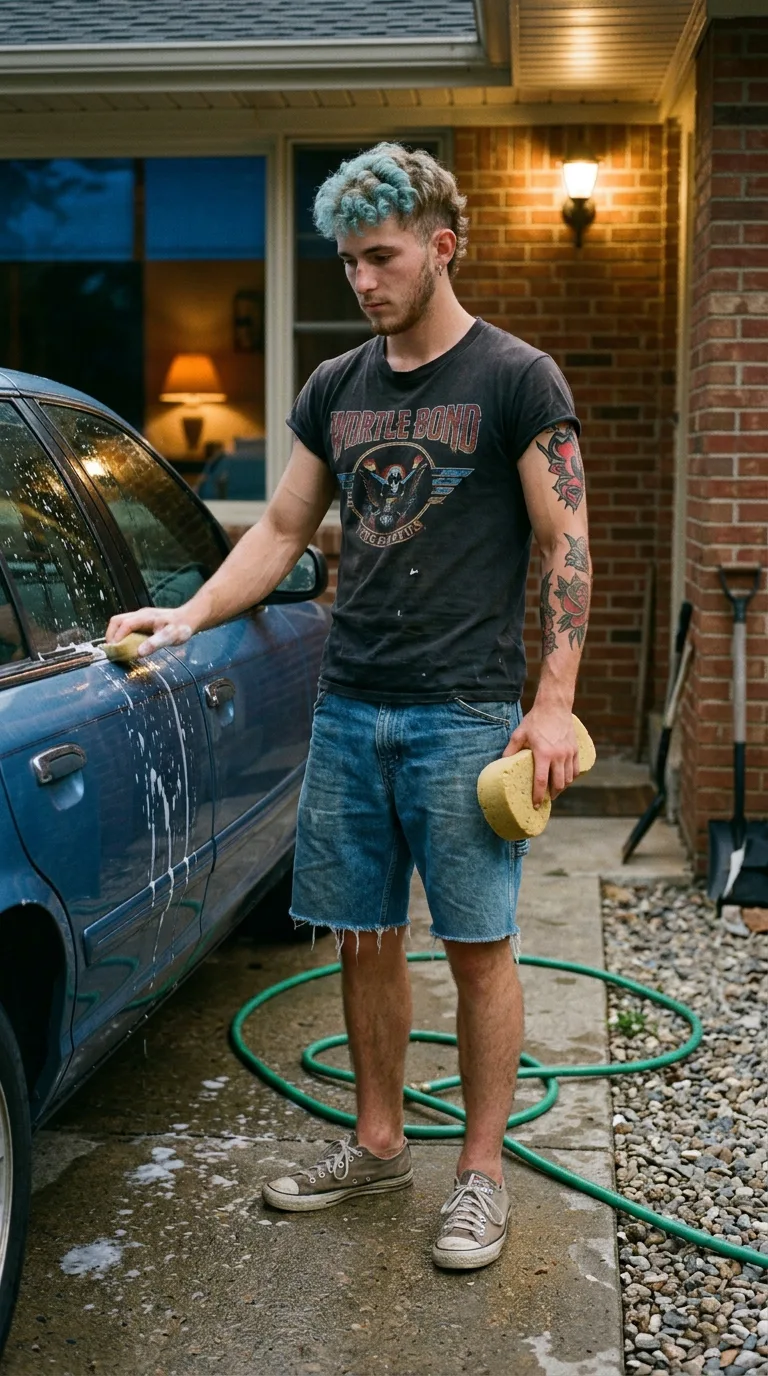
Rarest thing about him: Fashion color — common, 1 in 76
Season 1seed 128323979 · engine v11
Character card
lineage OZ80W3
His body-swap story
@colt.behrens, wearing Kevin Shiozaki, rolled the wheel on and woke up as Colt Behrens
Three minutes is nothing. That's the problem with Kevin Shiozaki — three minutes in and already his apartment is pressing in on you, the particular silence of a studio with no TV on, a bike messenger bag hung on a hook by a door that doesn't lead anywhere you want to go. You spun him an hour ago on the strength of a photo, a kid with black hair and a delivery bag slung crosswise, and he turned out to be exactly as advertised and nothing more: tired forearms, a phone with three unread texts from a dispatcher, a fridge with takeout containers in it. You stand in his kitchen in his body not even unpacking him, not even curious, because forty-six men in you've learned the tell for a dead one fast, and this is a dead one. You want out of him the way you want out of a waiting room. You open the laptop on his counter, already his fingers on the keys out of muscle memory, and you go back to vessel.cards, and the wheel is already loading before you've admitted to yourself why.
It lands on blue hair before it lands on anything else — a smear of electric color going transparent at the edges, and then the whole picture: a straw hat, a crate of carrots, a nose bent a few degrees off true. Something in you says yes before you've read the rest, the way you always do, the way that is the entire reason you are forty-seven spins deep into other men's Saturdays.
The hose is still running when you arrive. That's the first thing — the cold loud rush of water against gravel, splattering your shin, his shin, the shin that is now the only one you have. The sponge is heavier than you expect, soap gone to a gray lather in your fist, and the car door in front of you is a dull blue with soap suds sliding down it in long fingers, and behind you the porch light has just clicked on against a sky that isn't dark yet but wants to be. Your thumb is tucked under the sponge at a strange angle, already adjusted, wrist turning in small automatic circles like it's been doing this motion for years without you. The swirl marks stop. That's how you know you made it — no bright flash, no sound, just the water finding a body that has gone, for one half-second, nowhere at all, and then is here, newly, wearing someone else's exact and particular stillness.
The shirt is what opens first. Thin cotton, worn soft at the collar from a hundred washes, clinging a little to your back with sweat from a day that started at five a.m. — and with it comes the morning: pulling this shirt over your head in a trailer that smells like coffee and WD-40, the ceiling fan ticking overhead, your — his — alarm going off before the birds did. Putting on jeans gone stiff with yesterday's dirt because there wasn't a clean pair, hopping on one foot in the narrow hall, laughing once at nothing. The boots by the door, laced loose because his ankles swell by noon in the heat and he's learned to leave room. Morning light coming low and orange through a kitchen window over a sink with one bowl in it.
The sponge in your hand brings more — rows of melons, rows of beans, the particular ache low in the back that comes from bending at dawn and not straightening until the sun's gone past noon, a crew boss named Hollis who yells less than he used to since Dalton found out his wife left him, nobody saying anything about it, just leaving him the shade spots. Your palms are calloused in a way that doesn't belong to washing cars, a farmhand's palms, used to a hoe handle and a crate's rope edges, strong through the fingers, a little raw across the base of the thumb where a glove wore through last week. Hoisting a crate of carrots against your hip, the dirt-smell of them, a kind of plain pride in being the one who can carry two at once when the others take one.
The earring is small and cool against your knuckle when you brush your ear out of habit — a thing he got on a dare at nineteen, his buddy Reese holding the gun, both of them laughing too hard for it to hurt right. The tattoo under the sleeve, roses and bold lines, done cheap in a strip-mall shop the summer he turned eighteen, a design he picked off the wall in about four seconds because he liked that it looked finished even unfinished — bold lines, faded color already, like it had always been old. Dyeing his hair blue in a gas station bathroom sink with a box kit and his cousin's phone flashlight, both of them howling at how it turned out, not caring that it came out more "faded" than the box promised because faded was better anyway, more his.
No one waiting on him tonight. No one he's waiting on either — a girl two towns over he's been meaning to text back, nothing urgent, nothing that keeps. Church on Sundays when his mother can get him up for it, half out of faith and half out of not wanting to argue with her about it before coffee. A six-pack with the crew on a Friday every few weeks, never a weeknight, never enough to matter in the morning. No cigarettes — tried one once off a dare, same as the earring, hated it, never again.
The water keeps running against the gravel, ignored now, and you realize the suds on the door have started sliding without being chased by anything.
You look down. The sponge sits in your palm, yellow and soaked, and you turn your hand over slow, like you're checking it's real — the crooked set of a knuckle, the tan line at the wrist where a watch isn't, the small white scar across one finger that isn't yours and is now the only one you have. You lift your eyes off it, past the hose, past the blue door, into the fading gold light, and you say, to no one standing there to hear it:
"Didn't even get to finish the damn car."