Colin Vasey
Fictional. Generated by AI — not a real person, and no likeness of one is intended.
18, contractor in Small-town Ohio · rolled by @colby.marchetti · card — no film
History
who has worn him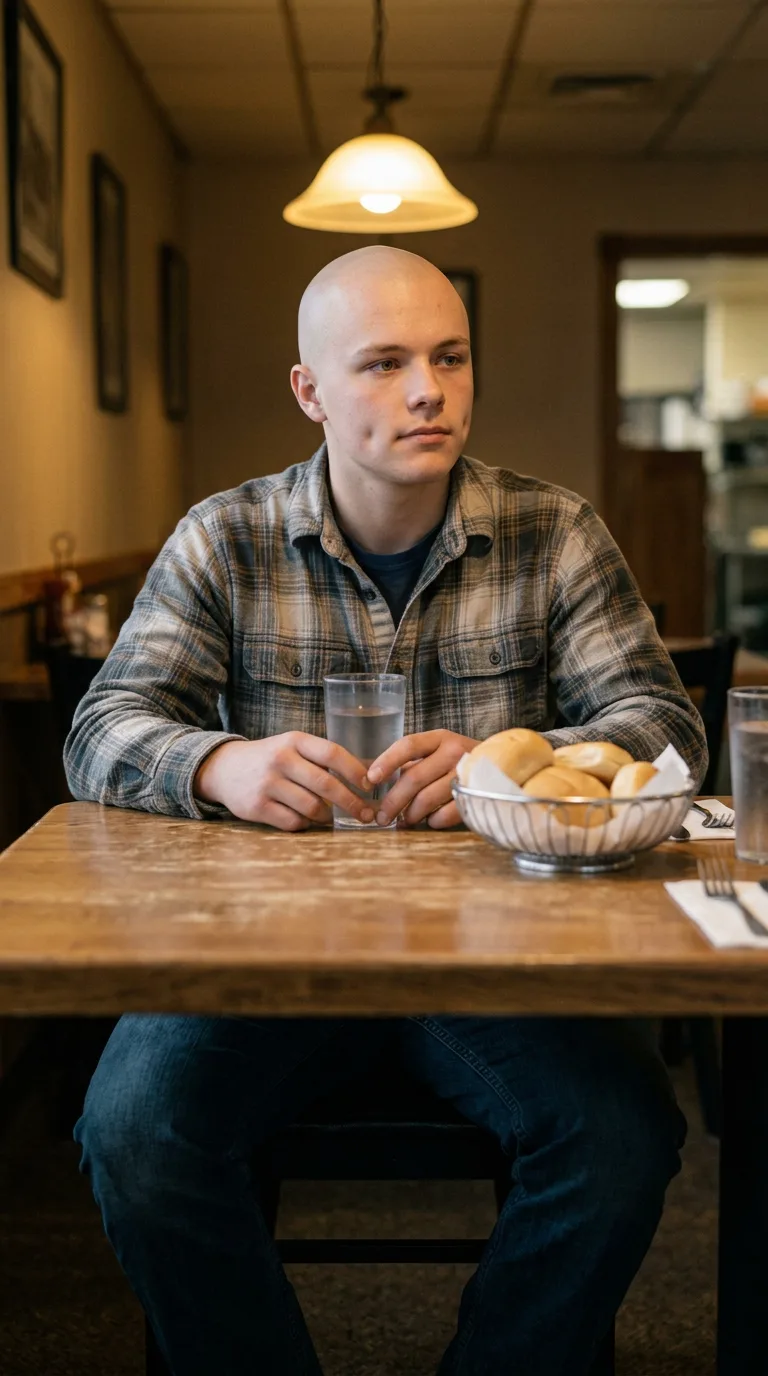
Rarest thing about him: Gray — epic, 1 in 67
Season 0seed 201449100 · engine v10
Character card
lineage OZ80W3
His body-swap story
@colby.marchetti, wearing Damon Whitfield, rolled the wheel on and woke up as Colin Vasey, spent 3 minutes in him, then spun the wheel and woke up as Gary Nowak
Damon Whitfield's hands ache. Three minutes wearing them and you already know this about him — the joints swollen in that particular roofer's way, tendons gone thick as rope from twenty years of shingles and nail guns, and none of it earned by you. You are standing in his kitchen at nearly midnight, freckled forearms under the bad ceiling light, and the ache is his whole life talking at once, and you didn't want to hear any of it. You spun for young. You spun and got a man whose body already complains, and that was never the deal you made with yourself. So you go back to vessel.cards on his phone, thumb — his thumb, chewed nail, callus on the pad — moving over the wheel, and you feel something close to relief that this isn't a decision, just an itch you're finally scratching. Three minutes. He never got a fourth.
The wheel spins somewhere outside of anywhere, and then you are sitting down, upright, mid-sentence, in a body seventeen years lighter than the one you left. A water glass is under your fingers — his fingers now — and it is cool and sweating and you feel your own voice come out of a mouth that isn't asking your permission yet, finishing a sentence you didn't start: "—so it's not like I planned on it, it just happened that way." Too loud. A woman two tables over glances up from her plate. The glass turns a quarter-inch under your hand and stops. Across the table a young man's face is doing something complicated — hope curdling into disappointment in real time — and you don't know his name yet, and you have all the time in the next few seconds to find out everything except that.
The flannel shirt is what opens first — worn a hundred times, soft at the elbows in that way cheap flannel gets, and it gives you a Tuesday morning three weeks ago, this same shirt pulled off a hook by the door, sniffed at the collar for cleanliness, decided good enough, buttoned one-handed while the other hand held a piece of toast. Colin Vasey. The name arrives with the shirt, stitched into nothing but felt anyway, certain. Eighteen. A shaved head that isn't a style choice so much as a thing that happens when you work in August heat and don't want to deal with hair sticking to your neck all day.
The water glass gives you more: the boyfriend across the table is named Trevor, and this is date two, and it is going badly in the specific way dates go badly when you're still grieving someone else without meaning to be. The bread basket, untouched, gives you Sean — the ex, six weeks gone, who used to order for both of them without asking and you hated it and now you miss being known well enough to be ordered for. That grief sits under your ribs like a stone that isn't yours yet it's already heavy.
The tool belt isn't on you here, but your hands remember it anyway, sense-memory living in the muscle rather than the room: the particular heft of a framing hammer, the rhythm of setting studs sixteen inches on center without measuring anymore, just knowing. Ricci Brothers job on Route 9, framing out the Hendersons' addition, sawdust hanging gold in the light through the open wall studs, another guy named Dez singing badly to a radio nobody asked him to turn on. You love it there in a way you've never said out loud to anyone, the specific joy of watching a house become a shape out of nothing. Your knees are eighteen-year-old knees, good ones, and your shoulders carry weight easy, and there's a small persistent hum under all of it — the ADHD, unnamed until a doctor said the word at seventeen and something in you went quiet with relief at finally being explained.
The dimples show even now, sitting still, mouth not smiling, an old joke among the crew — Vasey's resting face looks happier than the rest of us on payday. You feel that fondness like sun through a window, someone else's warmth landing on borrowed skin.
Trevor is still watching you, waiting, bread basket between you both like a small wooden fence. You look down at the hand on the glass — wide-knuckled, calloused at the base of each finger, a burn scar's absence exactly where the facts say there should be nothing, clean skin, young skin — and you turn it over slowly, the way a man checks a tool he's never held before.
"Sorry," you say, to Trevor, to the restaurant, to no one in particular. "Give me a second. I'm not — I don't think I'm all the way here tonight."
Somewhere out past midnight in New York, a roofer's kitchen sits empty of anyone who will ever come back to it. Here, in Ohio, the light over the table hums yellow, and you have no idea yet how long eighteen lasts.