Colin Dwyer
Fictional. Generated by AI — not a real person, and no likeness of one is intended.
18, student in Los Angeles · rolled by @colin.dwyer · card — no film
History
who has worn him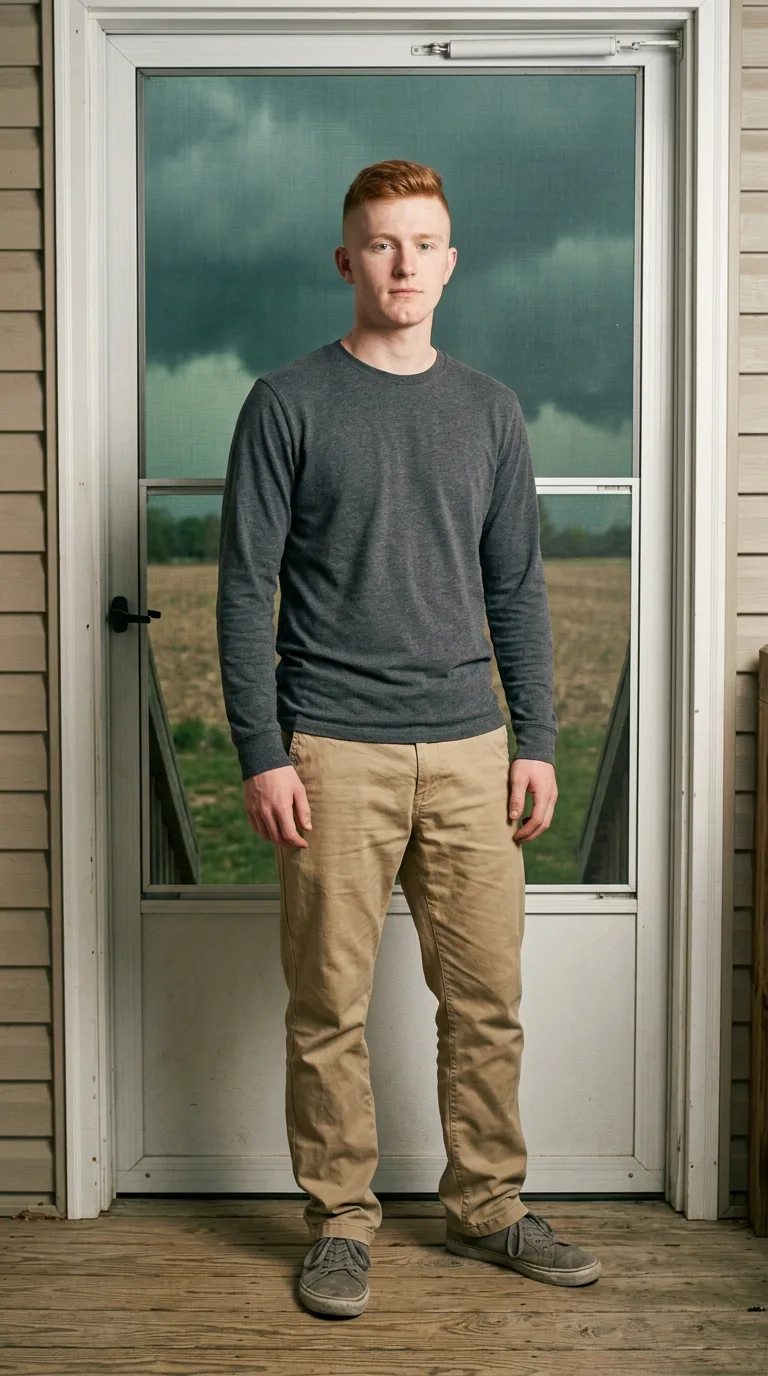
Rarest thing about him: Watching a storm come in — uncommon, 1 in 183
Season 1seed 2037325320 · engine v11
Character card
lineage 5GGL4V
His body-swap story
@colin.dwyer rolled the wheel on and woke up as Colin Dwyer — their first
The screen has been the only light in the room for an hour, maybe two. It's Sunday where you are, deep Sunday, the kind with no edges, everyone else asleep, and you have been doing what you do on nights like this — scrolling past things that don't matter, waiting for the one thing that might. You found the site three days ago and didn't believe it, bookmarked it anyway, came back tonight because there was nothing else to do with the wanting. It has always been there, this pull toward the idea of being someone else entirely, stepping out of the one seat you've ever had — you read about it, watched it, imagined it on nights exactly like this one, and never once thought you'd get to pay for it. The wheel on the screen is ugly, almost a joke, cheap gold on black. You spin it anyway. It stops. It gives you a name you don't get to keep and a face you haven't seen yet, and the screen doesn't so much go dark as stop being the thing you're looking through.
Wind. A wall of green-black cloud swallowing a field. Your weight is wrong — taller, heavier through the shoulders than whatever you were a half-second ago, though a half-second ago is already unreachable, already someone else's problem. A screen door is banging against a frame behind you. And then the wind simply stops, all of it, the whole pressure of the storm going flat and silent in the same instant you arrive, and your legs — his legs — are already stepping off the porch, down, into the grass, toward the weather, chin up, like walking into a fight you've already decided to enjoy.
You don't stop him. You couldn't if you tried; there's no reflex yet that's yours to use. So the body keeps walking and you ride it, and the first thing that comes to you is not a memory but a temperature — the specific cold-hot of storm-light on skin, felt a thousand times, felt now for the first time and the thousandth time at once, because that's the contradiction you're going to live in from now on.
The shirt is against your back, gray, worn thin at the shoulder blades, and it gives you something before you've even asked: a laundromat on Vermont Ave, quarters, a girl he was trying not to stare at three machines down, sophomore year, nothing came of it, he thinks about her more than he'd admit. The khakis — bought in a hurry at a Target off the 10, size wrong at first, hemmed by his mother over the phone, step-by-step, because she wasn't there to do it herself, because none of them were there, because this is Missouri he's remembering, his aunt's place, the field, the storm he came home for and didn't expect. That's the joke of it, arriving here: the facts say Los Angeles, a courtyard, dry palms, and yet the last thing he was actually doing was standing on a wood porch in weather that doesn't happen in the city he lives in — home for a weekend, visiting, the storm outside not the one he grew up under but close enough to want to watch it anyway.
The shoes on his feet know grass, know a soccer field at sixteen, a coach who yelled too much, a knee that clicked afterward for a year. His hands — you feel them before you feel anything about them, loose at his sides, and they know a laptop lid, closing it in a hurry on a campus lawn when it started to sprinkle, days ago, a life away; they know a lighter's weight though there's no cigarette in this memory, only the vape he keeps in the hoodie pocket, drawn on without looking, a habit older than it should be for eighteen. There's a girl before her too, or almost — nothing that stuck, nothing that hurt enough to keep, and under that, further down, the discipline of a jaw shaved clean every single morning without exception, a small vanity, the one thing about his face he actually likes, the cleft in his chin that girls have commented on since middle school and that he has stopped being embarrassed by only recently.
The leg. It starts before you notice you're the one standing on it — a small restless bounce, ankle to knee, going nowhere, an engine idling under a body that otherwise seems calm. It's been doing that since he was a kid at a desk somewhere, and it does it now in a field, chin lifted into a sky that's about to open, and some part of him — the part still barely present, thinning to nothing under you — was happy in this exact moment, was glad to be scared a little, was fine.
The wind still hasn't started again. You stop walking. You look down — his hands, freckled, a little sun on the backs of them, a fine white scar-less ordinariness to them, no rings, no marks, nothing but calluses from a backpack strap and a laptop and eighteen years of being nobody's problem. You turn them over once, like they might explain themselves, and they don't.
"Okay," you say, out loud, in his voice, to no one, to a field about to be hit by rain. "Okay."
Somewhere behind that word is the next spin — not tonight, not planned, just there, the way it will always be there now: how long you keep the cleft chin and the bouncing leg and the vape in the hoodie pocket before the wanting turns over again and reaches for someone else. Nobody knows. Not even you.