Colby Whitfield
Fictional. Generated by AI — not a real person, and no likeness of one is intended.
31, nurse in Eastern Kentucky · rolled by @colin.tarwater · card — no film
History
who has worn him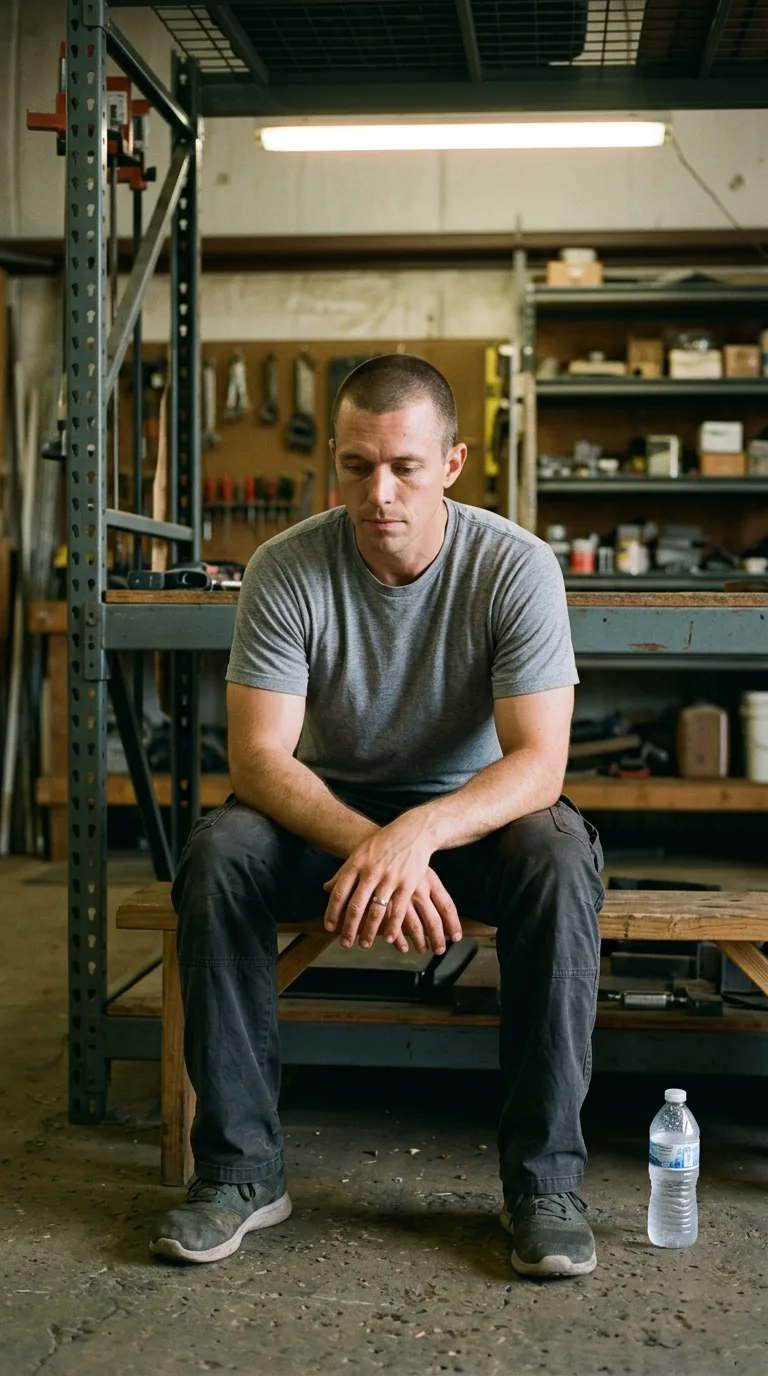
Rarest thing about him: Dip or chew — rare, 1 in 40
Season 0seed 1463623486 · engine v10
Character card
lineage COEU7T
His body-swap story
@colin.tarwater, wearing Liam Osterhoff, rolled the wheel on and woke up as Colby Whitfield, spent 3 minutes in him, then spun the wheel and woke up as Gary Sechlin
The smell gets you first, in Liam's nose — the sanitation garage, diesel and old banana peels sweating in a hopper somewhere behind you, and the ache in his lower back that never really leaves, that you have carried for less than a minute and are already tired of. You have been Liam Osterhoff for forty seconds. Forty seconds ago you were somebody thinner, somebody who did not have this gut or these knees, and forty seconds felt like enough. It is not the body. The body was never the problem, not really — 24 of them in, you have stopped pretending you're shopping for comfort. It's that nothing happened in it yet, and nothing ever does in the first minute, and you already know exactly how the rest of tonight goes: truck, route sheet, a thermos gone cold, a wife on the other end of a phone call you are not going to make because she is not your wife. You are sitting on a folding chair against a chain-link locker with a name tape that isn't yours, and your thumb — his thumb — finds the phone in his own pocket out of habit, and you think: not this. Not one more shift breathing this. You open the site on the cracked screen instead. The wheel is already spinning before you've decided anything, the way it always is, because deciding was the part you skipped twenty-three times ago.
The gym floor comes up under a body that fits, for once, like it was measured — 5'5", compact, forearms already trembling faintly from the last set, hands already gripping a barbell two inches wider than they've spaced it all year, for reasons that are his and not yet yours. Fluorescent tube light, mirrored wall, the tinny gym radio playing something with too much bass. Weight in the shoulders, weight in the bar, a breath he was about to blow out through his teeth cut off mid-hiss. You feel his chest lock, feel legs that know exactly what a squat costs and pay it anyway, slow, controlled, no grimace, because that's not what this face does on a last rep — you learn that as you're doing it, muscle memory arriving before knowledge does. The bar goes up. Nobody in the mirror notices anything happened. That's the part that never stops being strange: how clean the seam is.
Rack the bar, and his hands come off the knurling and it starts — small, first, the way it always is: the callus pattern under your palm, the exact place his grip sits worn shiny into the bar's texture, and with it a flicker of another gym, years back, a spotter who isn't there anymore, a max he hit the month before his wedding and told nobody about because bragging felt like something other men did. You breathe, and the breath comes with the smell of hand sanitizer and cafeteria coffee, a hallway of pale green linoleum, a call light going off three doors down, a chart he left half-signed to come do this exact set because his preceptor once told him lifting kept him sane and he believed her completely. Colby Whitfield. Thirty-one years. Corbin, Kentucky, more or less — a creek, a footbridge strung on cable that sways when the boys race their bikes over it, sycamore shade going gold-green in June, and a house close enough to walk to it.
The scrub top is not on him now — he's in a t-shirt, gray, gone soft with washing — but the memory of scrubs comes anyway, riding in on the badge reel looped over the gym bag strap at his hip: the retractable clip, the plastic card with his photo on it looking younger than he feels most days, and under it, sleeve by sleeve, the actual morning he put them on — standing in the bathroom light before six, the elastic waistband already loose from a year of losing weight he didn't need to lose, the shirt going over his head static-clinging to a chest that does forty pushups most mornings out of restlessness more than vanity. Her voice from the bedroom, still mostly asleep, telling him to bring cream on the way home. The ring, already on, because he doesn't take it off for anything, not showers, not lifting, not the patients who ask why a nurse still wears jewelry on the hand that's in everybody's IV lines — he tells them it doesn't come off, which isn't strictly a rule, just a fact about him.
His body under your hands, standing here at the rack: 5'5" and dense with it, shoulders built for a job that is half strength and half not flinching, buzzed hair with the scalp showing through under gym light, a face that has learned to be calm at people's worst moments and carries that calm around like a tool he forgot to put down. Lower back sound. Knees sound. A dip can riding somewhere in a gym bag he hasn't opened since this morning, tin outline against canvas, the taste of it a phantom at the back of the throat he hasn't reached for yet today. Underneath all of it, quieter, a thing he doesn't advertise: two years of an SSRI he takes without shame at 9 p.m. every night because a therapist and his wife both insisted, and it worked, and he tells almost nobody that, not because he's ashamed anymore but because it stopped being interesting once it stopped being a crisis. He is, by the measure that would surprise every person who works a floor next to him for scrubs pay, worth more than most of the doctors he charts for — an inheritance he never talks about, invested and left alone, a number that would change nothing about how early he gets up.
You look down. His hand — your hand now — has gone, without being told to, to the ring, turning it once around the finger the way he does a hundred times a shift without noticing, an old tell that isn't yours yet but already feels load-bearing. The water bottle sweats on the floor by the bench. The bar sits in the rack, still ticking faintly from the plates.
You say, out loud, to the mirror, in his flat unhurried drawl: "Two more sets."
You don't know yet if that's true. You don't know if it's you saying it tomorrow.