Colby Marchetti
Fictional. Generated by AI — not a real person, and no likeness of one is intended.
20, student in Coastal Maine · rolled by @colby.marchetti · card — no film
History
who has worn him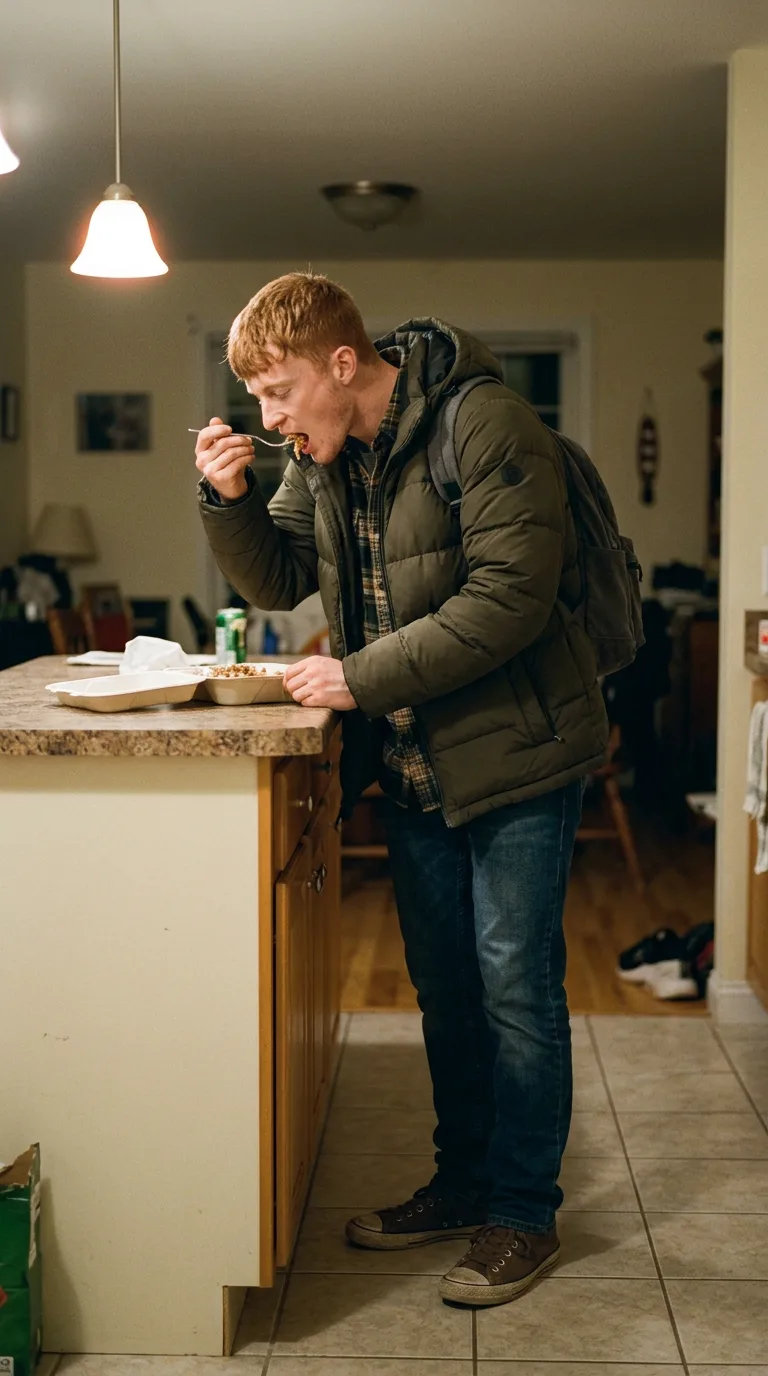
Rarest thing about him: Red — rare, 1 in 21
Season 0seed 1522588681 · engine v10
Character card
lineage OZ80W3
His body-swap story
@colby.marchetti, wearing Gary Nowak, rolled the wheel on and woke up as Colby Marchetti, spent 6 hours in him, then spun the wheel and woke up as Gary Tomczak
The radio on Gary Nowak's dresser is still going, some late call about a domestic two streets over, and you are not listening to it. You are looking at his hands on the bedspread, thick-knuckled, a class ring gone tight on the finger, and you are thinking about how heavy this one is to carry around. Fifty-one years in a body that aches getting out of the cruiser. Twenty-two years on the job, and every one of those years is in the shoulders now, a low grinding thing that never turns off. You did something with those hands earlier tonight that you are not going to think about again — a call, a man face-down on his own porch, Gary's baton doing what Gary's training told it to do and you just along for it, steering a boat you didn't build. It worked. It always works. But it sits in you sideways, a meal you shouldn't have eaten, and midnight in Atlanta is a bad hour to sit still with that. So you don't. You open the laptop, you go to the page with the wheel on it, and you tell yourself this one's just to clear your head.
The wheel turns and you are not choosing where it stops. You never do. That's most of the pleasure of it.
The fork is an inch from your mouth and then it isn't; it is on the counter, and the hand that put it there is thin-wristed and freckled and not Gary's hand at all, and it is *cold* in a way Atlanta in December never gets — a cold that has clearly been standing outside a door for a while before it came in. You shrug a coat off shoulders that carry nothing like Gary's weight, and you sit, because something under you wants to sit, and you eat the rest of a styrofoam container of what turns out to be your own reheated fried rice in even, mechanical bites, looking at a window that has gone black and mirrors the kitchen back at you: pendant light, a backpack slumped in the doorway, a garbage bag of somebody's discarded blankets against the wall. You don't taste any of it yet. That comes later, or it doesn't come at all — depends what he left in the food.
The backpack strap is still hooked over one shoulder, canvas gone soft with handling, and touching it gives you a hallway — fluorescent, linoleum, a professor's door with office hours taped to it in a font too small to read from any distance — and a whole unfinished paper on lobster population models due Monday that you feel as a small, specific dread low in the stomach, nothing like Gary's dread, younger, more embarrassed. The zipper pull is scratched from being worried at with a thumbnail during some exam. You feel that thumbnail motion happen once, faint, an old habit surfacing in a hand that isn't doing anything anxious right now.
The jacket. Puffer, green-black, unzipped, and the memory in it is immediate and warm before it's anything else: her hands doing up the top snap for him this morning as a joke, both of them laughing at the dorm door, breath showing white, her saying *you look like you're going ice fishing* and him saying *I am, kind of,* meaning the walk to the truck across a frozen dooryard. Her name arrives with the coat the way names arrive with people you've kissed a hundred times — Marisol, easy, already there — and under that, further down the sleeve, the coat remembers its own morning: pulling it off a hook by the door of the shingled house, his mother's voice somewhere upstairs, the smell of the mudroom, brine and old rubber from the traps stacked outside, his father three years dead and the traps still out there anyway because nobody in that family throws away a thing that still holds its shape.
The flannel under the coat is his father's, actually — you get that from the collar, worn thin at the fold, a smell of woodsmoke laundered out of it a hundred times and never all the way. He wears it because it still fits and because wearing it is easier than talking about why he kept it.
The jeans know the drive from campus better than he consciously does — two hours, coastal road, the heater in a ten-year-old Corolla that only blows warm if you baby the dial, three different playlists that turn into one long blur of the same forty songs. The sneakers, canvas gone soft and gray at the toe, know a dorm floor, a quad lawn in September with the laptop balanced on his knees, sun that felt like it might be the last of the year. Calluses on the heel of his right hand from something you can't quite place until the fork — still in reach, cooling — gives it to you sideways: gripping a paddle, gripping traps hauled hand over hand off his uncle's boat two summers running, money for tuition, salt drying white on his forearms. Strong there. Nowhere else particularly. Twenty years old and every ache in this body is from use, not age, and that alone is a kind of luxury you'd forgotten existed, wearing Gary.
A pouch of nicotine sits half-crushed in the coat pocket, and just touching the tin brings back a specific classroom, a specific boring lecture, his tongue against his lip under the desk so the TA wouldn't see. Small, forgivable. Nothing here is heavy. Nothing here needed a baton.
You look at your hands — his hands — pale, long-fingered, a faint white rime of salt at the cuticle that no amount of dorm-sink washing gets out anymore, fork-grip loosened now, nothing in them at all. You turn one over slowly in the black window's reflection, like you're checking it's real, and lift your eyes up into the glass, into your own face looking back out of the dark.
"There you are," you say, to no one, in a voice that isn't Gary's gravel anymore — lighter, younger, faint Maine flatten on the vowels — and you don't know yet if you'll still be behind it tomorrow.