Cody Branham
Fictional. Generated by AI — not a real person, and no likeness of one is intended.
27, lifeguard in Eastern Kentucky · rolled by @rohan.bhatt · card — no film
History
who has worn him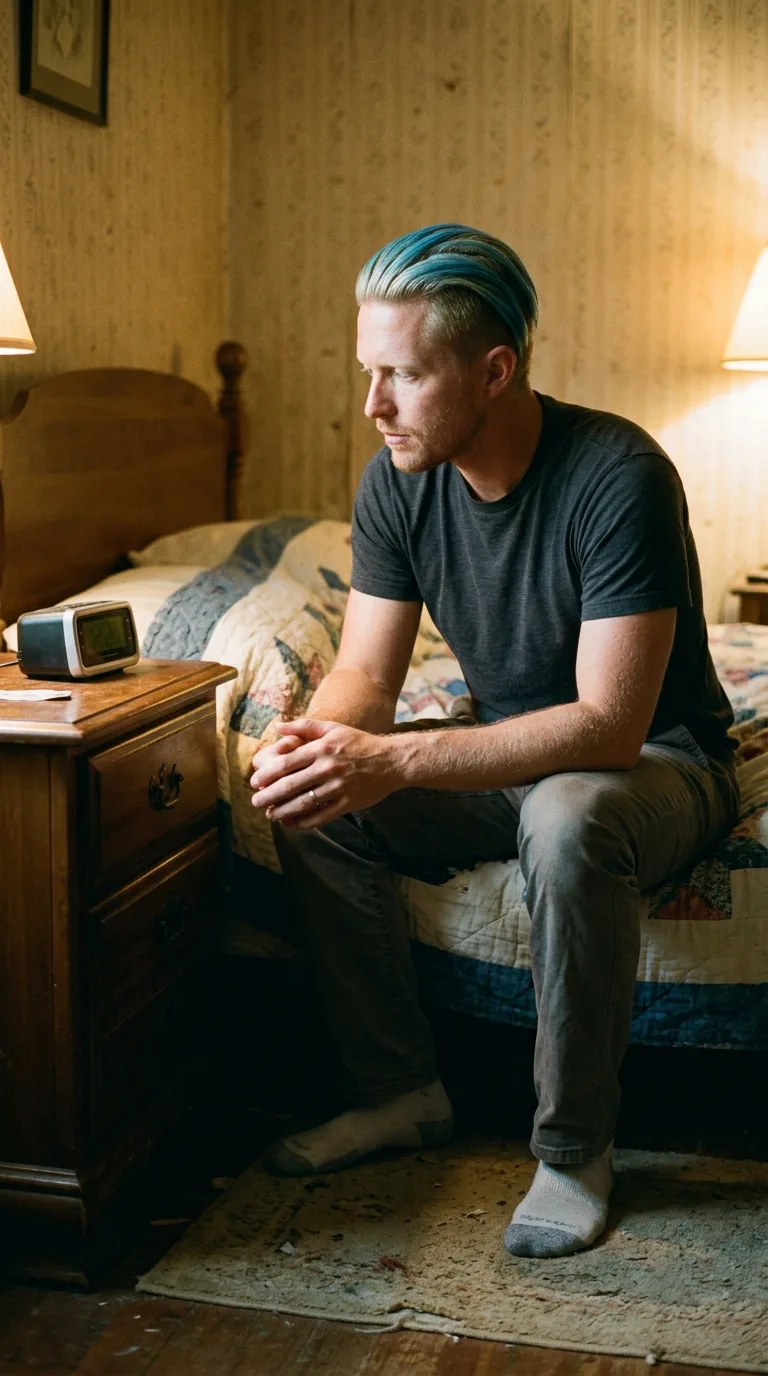
Rarest thing about him: Fashion color — epic, 1 in 56
Season 0seed 837798089 · engine v10
Character card
lineage SBZ9UF
His body-swap story
@rohan.bhatt, wearing Dale Herriman, rolled the wheel on and woke up as Cody Branham
You are pushing a mower across the third fairway, and it is the smell that finally does it — cut grass, gas exhaust, Dale Herriman's whole life folded into that one green stink, and you cannot take one more afternoon of it. Fifty-six years old, muscular under all that fat, a body that aches in the shoulders by ten a.m. and doesn't stop until the ibuprofen kicks in around two. Blue eyes that aren't yours, gray hair slicked with sweat, a beauty mark on a jaw you've caught in truck mirrors and never once gotten used to. You've been him less than a minute, by the clock, and that's the joke of it — the wheel gave him to you fresh and you are already elsewhere in your head, thinking about the site, the card, the spin, because Dale is fine, Dale is nothing wrong with him, and that is exactly the problem. He is a body that works and does not surprise you. You cut the engine mid-row. You take out your phone with his thick fingers, and you go to vessel.cards, and you pay, and you spin, because eleven men in you have learned that the wanting doesn't wait for a reason good enough to say out loud.
The wheel stops turning and there is a bed under you, a quilt with a diamond pattern gone soft with age, and your knees are pressed into it and your hands are loosely laced in front of your chest and somebody's voice is just finishing amen. You feel yourself start to rise — a small, private laugh already in the throat — and then the knees fold back down on their own, not yours to command, forehead dropping to the bedspread like a man remembering he forgot something. The room smells like cedar and an oscillating fan. Afternoon light coming low and gold through curtains that have never once been replaced.
The t-shirt is what opens first — gray, thin at the collar, worn soft from a hundred washes — and it gives you a Sunday, him buttoning a different shirt, a church one, in a mirror that made him look thinner than he is, his mother-in-law's voice downstairs saying something about deviled eggs. Then the sheets under your knees give you a whole marriage: a woman's laugh from a kitchen two rooms from here, the specific weight of her sleeping against your side, an argument about money that ended with him holding her foot in his lap out of some instinct neither of them named. Her name comes up in you like water finding its level — Ashley — and with it a wedding four years back, a justice of the peace because her father wouldn't come to a church one, and how little that had mattered in the end.
The nightstand clock gives you shift work — not tonight's, but the pattern of it, the beach two miles from this house, the stand, the whistle sweating against his sternum all June, kids he's pulled by the arm out of undertow that looked like nothing from shore. His body remembers that job in the shoulders, in a permanent readiness that never fully switches off, muscle that doesn't look like much but moves fast when it has to. You feel how his hands, even now, folded in prayer, want to be doing something — tapping the mattress, picking at a thread — and how it takes an act of will to keep them still enough to talk to God.
The going-under gives you the whole morning: waking at eleven because last night's shift ran past midnight and this afternoon's starts at three, pulling on these exact gray pants standing one-legged on the rag rug, the sock static-clinging to his ankle, deciding — half a joke to himself, half not — that he ought to actually pray instead of just kneeling there thinking about the water conditions. He is not a serious man about it. He believes the way he swims: automatically, competently, without much drama, a habit from a childhood church that never left him and that he has never examined too hard. He does not smoke today; he smoked two nights ago on the porch after a beer he didn't have, because he doesn't drink, hasn't in three years, but the cigarette still finds his hand sometimes when something in him is unquiet. Nothing is unquiet today. That's what makes the forehead-to-the-bedspread stillness his own — a man who got to the end of a prayer early and came back down into it, embarrassed at his own hurry.
The ring is the last thing, plain gold, worn to a soft shine, and it gives you nothing dramatic — just her hand over his at a diner counter, ordinary, years of it ahead that he fully expects to have.
You lift your head off the quilt. You look down at his hands — blunt, sun-browned, a thin white line where a wave once caught a whistle cord wrong — and turn one over like it might tell you something the shirt and the sheets didn't.
"Guess I got to it faster than I meant to," you say, out loud, to the empty room, and you don't know yet if that's true for one more minute or for all the ones after it.