Carlos Verduzco
Fictional. Generated by AI — not a real person, and no likeness of one is intended.
46, mechanic in Los Angeles · rolled by @colby.marsh · card — no film
History
who has worn him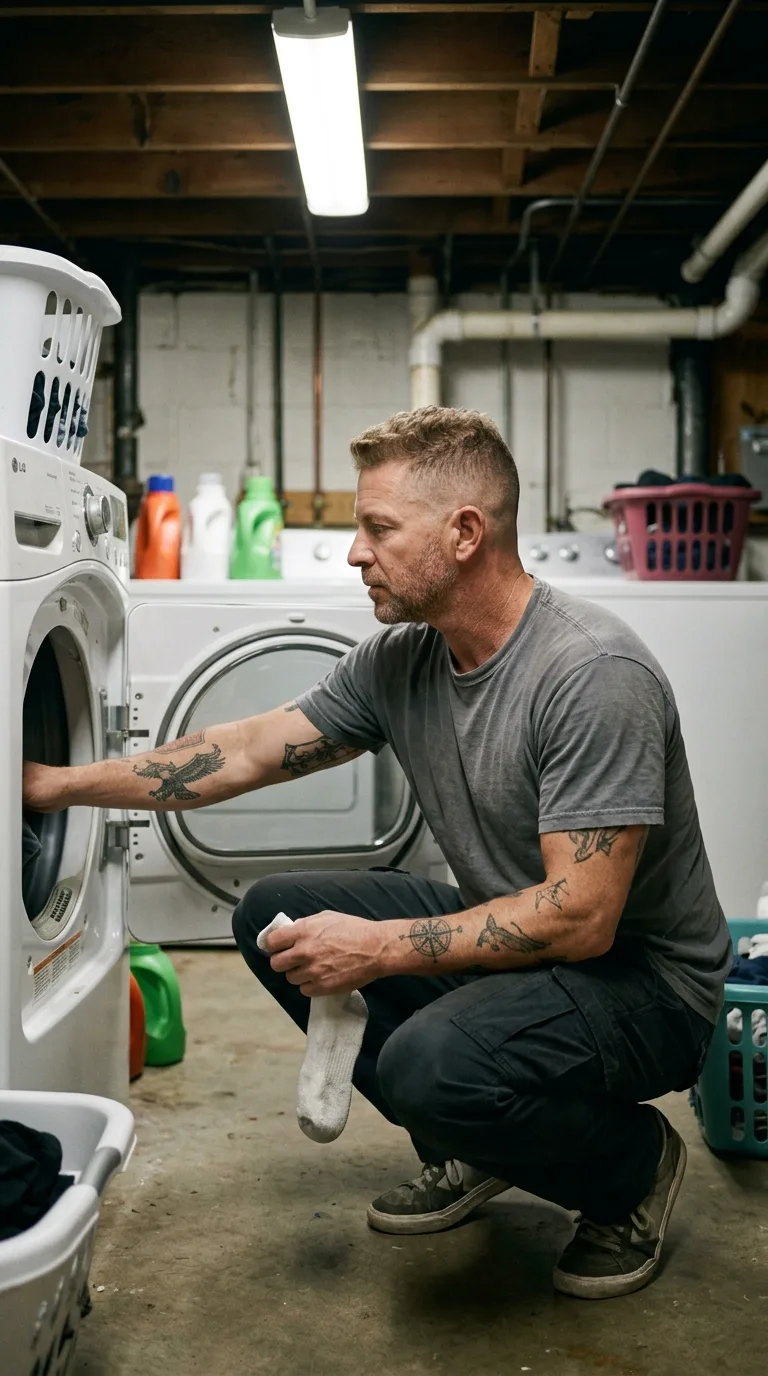
Rarest thing about him: Gray — epic, 1 in 80
Season 0seed 432188788 · engine v10
Character card
lineage PYNCV3
His body-swap story
@colby.marsh (admin), wearing Sami Haddad, rolled the wheel on and woke up as Carlos Verduzco, spent 16 minutes in him, then spun the wheel and woke up as Marco Villalpando
---
Sami Haddad's knees ache from standing all day on concrete, and that is not why you're leaving him.
You're leaving because at six hours and twenty-seven minutes he had started to be a routine. Big body, twenty-three years old, a chest that made doorways feel narrow, and the shift ended at ten and there was nothing in the apartment but a mattress on the floor and a duffel bag and a phone with a lockscreen photo of a girl who had already stopped answering. You ate his food standing up. You looked in his mirror for a while and it stopped being interesting. Six hours in and his height had become just the distance to the ceiling. Six hours in and you were bored in a way that felt like hunger, sitting on his mattress in Phoenix with the swamp cooler ticking and the phone light on his face and the wheel already loaded on the screen, and the thing you would not say out loud is that you spent them all being twenty-three and doing nothing with it, and that the waste of it made you want to throw the whole body away rather than admit it.
His thumb — long, warm, gray-eyed man's thumb — presses the button.
—and the ceiling is low and there's a fluorescent tube humming two feet over your head and you are crouched.
Down on your heels on a cold concrete floor in a basement, one arm still in the mouth of a dryer, palm flat against a drum full of heat. A white tube sock in your other hand, warm as bread. Knees folded up under you tight and they hold — they hold, but they're loud about it, a fine grinding somewhere in the right one, and there's a ribbon of stiffness down the low back that has been there for years and knows exactly how to be crouched anyway. You are shorter. The whole room sits closer. Your shoulders are narrower and the arms coming out of the gray T-shirt sleeves are ropier, older, forearms marked up with old ink gone soft and blue-green under the tube light. Breath moves easy. Nose full of hot cotton and dryer sheet and the mineral smell of a damp basement and, faint under it, gasoline that lives in the skin.
There's something in your teeth. A toothpick. Wood, chewed flat at one end, parked in the corner of your mouth, and your jaw is already working it without asking you.
The sock does it first.
Not the sock — the warmth of it, the give of the cotton, the automatic way the thumb finds the heel seam. And then you're standing in a two-bay garage on a Tuesday with your socks soaked through because the drain backed up and Reyes hosed the floor anyway, and the whole day walking around in wet feet, and how at the end of it you drove home and stood in the shower with the water hot and the relief was so complete you laughed out loud in the steam, alone, forty-six years old, laughing at your own feet. And that is his feeling arriving in you: not funny, exactly. Grateful. He is a man who is grateful for small mechanical repairs to his own comfort, and that is most of what pleasure is for him.
Your palm is still on the inside of the drum. You take it off, and the heat leaving it opens the rest.
*Carlos.* Stitched in white on a navy patch over the left pocket. CITY AUTO on the right. You know the weight of that shirt, how it hangs heavier on the side where the pen and the tire gauge go, how the collar goes soft after a hundred washes and how the black grease never fully comes out of the cuffs so you roll them, always, up past the elbow, two folds, and that little discipline is thirty years old.
The T-shirt against your back is damp at the spine and it hands you this morning, sleeve by sleeve. Ten o'clock at night is his morning. He works graveyard three nights out of seven — the shop takes fleet vans and they come in at eleven and go out at six so the routes don't miss, and Sunday is the heavy one. So the day started at nine at night in a stucco apartment with the last of the sun gone and the palms out in the courtyard going dry and scraping in the dark. Alarm on the nightstand, not the phone. Sat on the edof the bed a minute with both feet on the floor, which is a thing he does — a minute of just sitting, hands on knees, no thoughts, because a doctor told him fifteen years ago that the minute counts and it turned out to be true. Then the pill from the amber bottle in the medicine cabinet, the small white one, taken with tap water in a plastic cup, and the door of the cabinet shut and his own face swinging back at him in the mirror and no reaction to it at all. Then the gray T-shirt off the top of the folded stack — folded, squared, sleeves in, because that stack is a stack he made and he makes it right. Then the black work pants off the hook, one leg then the other, and the sit-back-down to put the sneakers on, and the toothpick out of the little box on the counter, and the last thing before the door: two fingers dipped in a plastic font of holy water nailed by the frame, forehead, chest, shoulder, shoulder, fast enough that it would look like nothing to anyone watching, and there's never anyone watching. Padre nuestro all the way through in his head while he locked up, out of the muscle of it, the way you'd hum.
And now these clothes are on you, and it's near midnight, and he came down to the basement because Sunday night before the shift is when the machines are free.
Your knees shift and the concrete comes up through the balls of your feet and the floor gives you the courtyard: 1998, the same building, and he'd been in the unit nine months and the manager's kid had a Buick that wouldn't turn over and he fixed it on the asphalt with a flashlight in his mouth for the goodwill of it, and that turned into everybody in the building, and that turned into a reputation, and the reputation turned into a shop where he was the man they called when the diagnostic computer said nothing. Twenty-eight years of hands in engines. Half a million dollars sitting quiet in accounts he checks once a month at the kitchen table with a calculator, because he never learned to trust a screen with a number that big and because he never spent anything. That's the whole trick. Two-bay garage, no wife, no kids, no ex worth the word, one truck he keeps eleven years, no cigarettes ever, four beers a year at somebody's birthday, and money just accretes on a man like that the way rust accretes on everything else. Nobody at the shop knows. His hands smell like solvent and he wears boots with the sole coming loose and there is enough in the bank to buy the building he's standing under.
The tattoos come in through the skin itself, the tightness of it over the muscle: the crest on the right forearm at nineteen, done in a strip mall in Van Nuys with his cousin waiting outside, and the swelling and the plastic wrap and how his mother saw it and said nothing at all, which was worse. The rest of them are just years. Compass, wings, small dark shapes he stopped explaining a long time ago.
The rag. There's no rag in these pockets, these are house pants, but the memory of the back pocket is in the pants anyway — the weight of a shop rag there, the reaching for it without looking, four hundred thousand times, wipe the hands, back in the pocket. Your right hand knows how to break a lug nut loose. It knows the exact angle where a wrench stops being a lever and becomes an extension of the arm. It knows the feel of a thread catching wrong two turns in and it stops before the head does. That's what's in this body: not strength particularly, a five-nine average-built forty-six-year-old with a bad right knee, but twenty-eight years of knowledge sunk down below the level of thinking, and you can feel it sitting there in the hands like water in a full glass.
And under all of it, quiet, the thing he carries. Not sadness. A low hum, like the tube light overhead. It's been treated. It's been managed for fifteen years by a small white pill and a minute on the edge of the bed and by keeping his hands busy and his drawers organized and by turning up for the eleven o'clock shift on a Sunday, and it lives in him the way the ache lives in his knee — present, negotiated with, no longer news. It is the reason he folds like this. Corners squared. Order is a medicine you can hold.
He has eight crumpled shirts in the drawer upstairs, shoved in on a bad week in March and never fixed, and the shame of that drawer is a small live thing.
You take your arm the rest of the way out of the dryer, get the load out in one heap — warm, heavy, smelling like the box on the shelf — and drop it in the basket, and then you fold. Fast. Faster than you have ever done anything with hands of your own. Shake, snap, sleeve in, sleeve in, half, half, and it's not you doing it, it's the twenty-eight years, and the pile squares itself up under your fingers like the stack in the medicine-cabinet mirror morning.
Then you stop, halfway through a towel, and look at your hands.
Wide across the knuckles. Grease worked permanently into the creases so the lines of the palm read black. A nail on the middle finger gone thick and ridged from a hood dropping on it in 2011. You turn the right one over. Old ink at the wrist. The toothpick moves in your teeth, once, on its own.
"Okay," you say, out loud, to a basement in Los Angeles, in his voice, which comes out lower and drier than you expected and which will now be the voice you have. "Okay."
And the hum overhead goes on and the concrete is cold under your feet and there is a shift starting in an hour that his hands could do without you, and somewhere behind all of it, the same as always, small as a light left on in another room: the wanting isn't here yet. It was six hours and twenty-seven minutes last time. Nobody tells you when.