Callan Reilly Doyle
Fictional. Generated by AI — not a real person, and no likeness of one is intended.
22, freight handler in San Francisco · rolled by @tyler.brandon.kessler · card — no film
History
who has worn him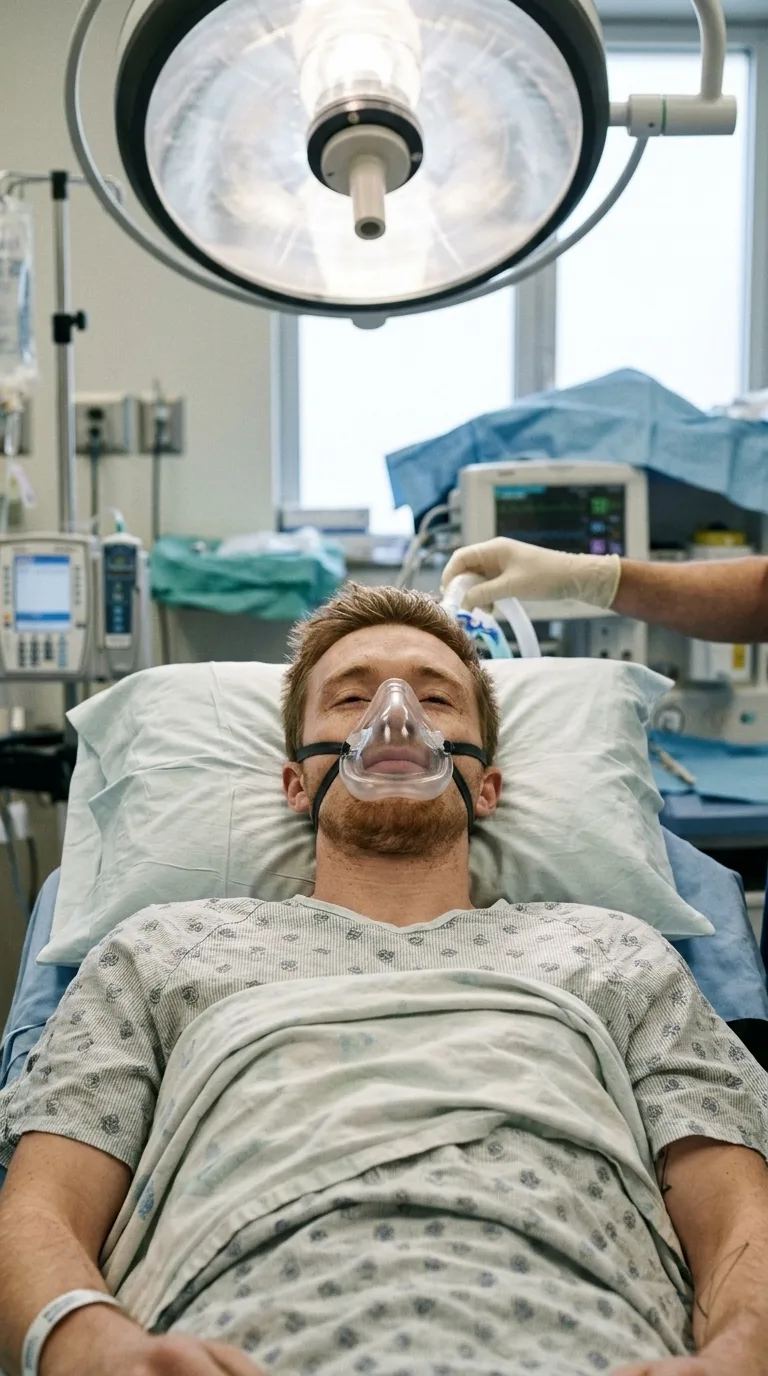
Rarest thing about him: Under anaesthetic — uncommon, 1 in 132
Face-off rating 1500 · not ranked yet
Season 1seed 149010277 · engine v11
Character card
lineage OZ80W3
His body-swap story
@tyler.brandon.kessler, wearing Anil Kurian Mathew, rolled the wheel on and woke up as Callan Reilly Doyle
You are Anil Kurian Mathew, and you have been him for less than a minute, and already you are bored of how carefully he stands. He is a good body. Small, tidy, a moustache that wants trimming, a unibrow you keep feeling with your tongue-tip frown. The kitchen in Houston smells of someone's cardamom. The afternoon sits flat on the window. His laptop is open on a ticket he'd have known how to close, and you don't, and that is the whole of it. He knows things. You are standing in a man who knows things, and every one is locked behind the fact that you can't use any of them. You keep reaching for his skill and getting his coffee mug. So you open the page, the wheel already turning in your mind, and you pay, and you spin.
Then there is a lamp.
It is white and enormous above you, and you are flat, and something clear sits over your mouth and nose, breathing cold sweetness into you. The number is still in your mouth. Seven. It stops there like a coin on its edge. Under your lids your eyes go left to right once, checking the room, and your hand on the table opens, closes, opens, closes. Two times. Fingers: yes. Fingers: his.
He is twenty-two. You feel it first as weight: a long frame, six foot one laid out on a narrow table, the shoulders wide against the padded edge, the legs heavy and warm and entirely willing. Nothing in him aches except the dull arrival of a drug that is already losing its argument. Your chest rises more than Anil's did. Everything is bigger and quieter.
The gown is the first thing. Thin cotton against the shoulders, and under it, the memory of what he took off: a black hoodie with the zip that sticks halfway, pulled off over spiked hair in a bright cold room while a nurse said *you can fold it, hon.* He folded it. He folded it small, the way he stacks boxes, corners true. His hands remember the fold. A hoodie, then, and under it a gray shirt washed so many times it has gone soft as skin. He put it on this morning in a garage below a bay window, steep driveway outside, white San Francisco light coming down through glass at the wrong angle, and he stood barefoot on cold concrete clicking a pen against his thumb because he was nervous and did not want to say so.
The pen. Your fingers are already doing it against the table, click, click, and with it comes a whole afternoon: a loading door, a trailer mouth open to the fog, boxes coming off the belt at him one after another, forty pounds, sixty, a pallet jack's handle cold through the glove. He likes it. That surprises you. He likes the arithmetic of a full trailer, the way a wall of cartons goes up flush and nobody has to talk. His back knows it. His thighs know it. Something in the lower left of him, he's been favoring it for months, and this is why he's here, and the lamp is how it ends. A small repair. He was afraid and did not tell anyone, because there was no one to tell.
The wristband is tight. Against it, a different morning: a meeting in a church basement, folding chairs, bad coffee he held but did not drink. Sober by choice, two years in spring. Nobody made him. He did it standing in his own kitchen with a bottle in his hand, and the feeling that arrives is not pride but a kind of quiet gripping, like holding a rail. It is the proudest thing about him and he has told nobody. A little money put away, tens of thousands, counted every month in a notebook like a prayer, though he'd say he isn't religious, only that he believes something is listening when the fog comes in.
Along the upper arm, under the gown's sleeve, the skin tingles where the fine-line geometry is inked, angles inside angles. He drew it himself first, on a napkin. Another flash, fast: a needle's buzz, a stranger's glove, and the hope that lines this clean could mean a person had their life in order.
No one waits for him. There is no name on the wristband you'd want to say aloud twice. Just a stranger's whole life, folded small, and now yours to carry out of this room.
The drug thins. The lamp swims. You lift your hand into the white and turn it over, freckled at the wrist, knuckles scraped from work, a hand that has stacked a thousand trailers and never once been yours. The fingers curl. They obey.
You look up, and you say it out loud, voice rough from the mask, to whoever is watching: "Huh. Hi."
And underneath, already, the question, quiet as the monitor: how long is this one. Whether the wanting comes back by dinner, or never, or while someone is still saying the number eight.