Brian Sandoval
Fictional. Generated by AI — not a real person, and no likeness of one is intended.
40, stay-at-home dad in Los Angeles · rolled by @connor.waskiewicz · card — no film
History
who has worn him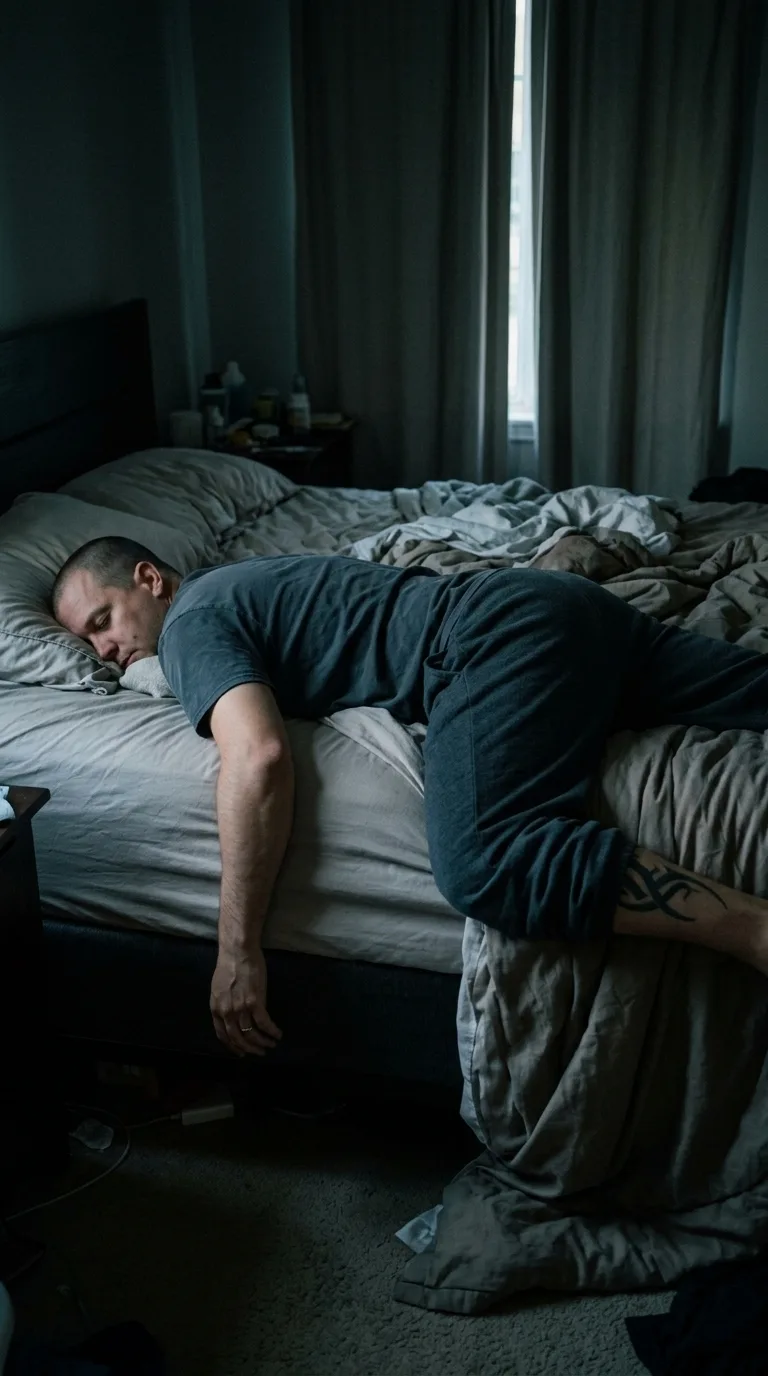
Rarest thing about him: Leg — common, 1 in 54
Season 1seed 1376978820 · engine v11
Character card
lineage 2NZHHJ
His body-swap story
@connor.waskiewicz, wearing Curtis Lanham, rolled the wheel on and woke up as Brian Sandoval, spent under a minute in him, then spun the wheel and woke up as Oscar Benítez
You are Curtis Lanham, still, for a few more seconds. The cab of his life is a kitchen in Atlanta, and everyone in the house is asleep. His knees ache from the linoleum, and his stubble is gray against your palm. Fifty-one years of diesel and bad coffee sit in his back. He is a good body, and you have had him less than a minute.
But there was the refrigerator hum, and on the door a magnet with a daughter's school picture, a girl who looked at the camera the way people look at someone they expect to leave. You felt the wanting go out of him and into the room like a draft. You did not want to be looked at that way. So you open the page with the wheel. You do not say why, even to yourself. You pay and you spin.
Then the floor is gone, the kitchen is gone, and you are lying face-down in a dark room.
Your cheek is pressed to a pillow that smells of someone else's hair. One arm hangs off the mattress, the blood gone thin in it, and the fingers are cold. Your breath comes ragged and then even, and you do not know whose lungs those were. Streetlight cuts through a gap in the curtains. The arm draws itself up, the body rolls onto its back, and the hands fold on your chest, a posture he has never once slept in.
The sheet under you is a tangle, and when your fingers close on it, it opens. A flash: a Sunday, a wife laughing at the stove, flour on her wrist. His feeling is a plain, enormous thankfulness, the kind that embarrasses a man. The T-shirt at your ribs, soft and gone gray from washing, gives you the morning he pulled it on. He did it in the dark so he would not wake her, one arm and then the other, and the cotton caught on his scalp. He rubbed the buzzed head and smiled at nothing. The sweatpants give you the gathered ankles and the child who tugged them. The backpack with the cartoon monsters is somewhere under the bed, and you feel him dread it: a shoe lost, a lunch forgotten, the long hours with nobody to say he is doing it right.
Your leg wants to bounce even lying down, a tremor in the calf under the black tribal ink. His body is soft in the middle and thin in the arms, forty years old and a little tired. A ring presses your finger. Under it is another woman, the one who got away, a porch light and a car door. He keeps her in a drawer and never opens it. You do not open it either.
His faith comes up through the cold ring: a pew, a hymn he half knows, his mother's hand on his back. The savings come as a number he checks late at night and does not tell anyone, a small safe thing. The dimples tighten in your cheeks without your asking, because he is a man who smiles when he is afraid.
You lift your hands into the streetlight and turn them over. They are his, and they are yours now.
You look up and say into the dark, "Okay. Hello, Brian."
Somewhere under the question is the next spin. How long does this one last? When does the wanting come back? Are you still him tomorrow?