Brett Halvorsen
Fictional. Generated by AI — not a real person, and no likeness of one is intended.
37, janitor in San Francisco · rolled by @tyler.iverson · card — no film
History
who has worn him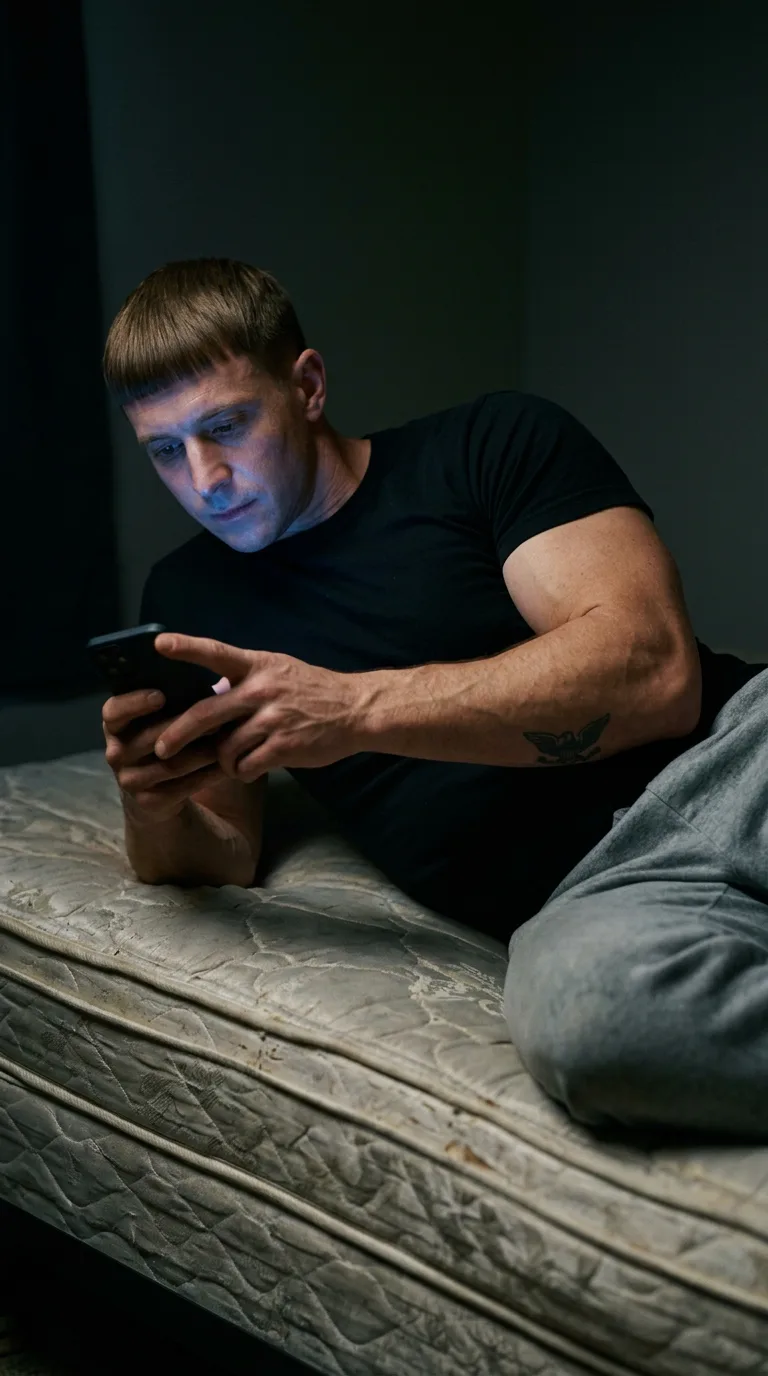
Rarest thing about him: Bisexual — epic, 1 in 29
Season 0seed 1284014690 · engine v10
Character card
lineage 9IC4OB
His body-swap story
@tyler.iverson, wearing Colton Wexley, rolled the wheel on and woke up as Brett Halvorsen, spent 4 minutes in him, then spun the wheel and woke up as Garrett Wexley
Colton Wexley's mouth tastes like the coffee he made him drink two hours ago, and none of it is worth staying for. The dental office is closed, the hygienist gone home, and you are sitting in his car in the parking garage with his phone in your borrowed hand, looking at a face in the visor mirror that is twenty-five years old and freckled and not remotely a problem — bald by choice, blue-eyed, built like he swims — and none of it matters, because Colton, whoever he really was underneath, left behind a habit of checking his bank balance every hour like it might have changed by magic, and that habit is yours now too, and it is boring you to death. Four hours and twenty minutes of a good body doing nothing you wanted. You open the site instead. The wheel again. Not hunger exactly — closer to the itch of a hotel room you've already seen every corner of.
You spin.
The mattress comes up under you first — bare ticking, no sheet, cool through a t-shirt — and then the weight of an arm that is heavier than the one you had, thick through the forearm, and a phone six inches from a face that is no longer Colton's. Your thumb is already moving on the glass, faster than it was a half-second ago, flicking through a feed some other man had stopped scrolling to look at. The room is dark except for the screen. Somewhere outside, muffled, cars are climbing a hill.
The tattoo comes first, because your arm brushes it against the mattress — an eagle, worked into skin gone tight over hard muscle, and with it: a barracks smell, floor wax, a younger face than this one shouting cadence, and the particular pride of getting something inked that means unit and not self, that says I was there and you weren't. It fades into the ache that's always lived in that forearm since — nothing dramatic, just the low complaint of a joint that carried weight for years and hasn't fully forgiven him.
The phone in your hand gives you more: three months of a job app half-written and abandoned, a passage of scripture screenshotted and never sent to anyone, a woman's name and a man's name both starred in contacts and neither one called this year. Brett doesn't reach out first. Never has. It isn't pride, it's the shape depression takes when it's been treated long enough to be livable — quiet, contained, mostly a Tuesday-afternoon feeling now instead of a Tuesday-morning one, managed with a prescription bottle you can feel the memory of on a nightstand somewhere close, rattled twice a day like a habit older than faith.
The t-shirt against your back — his back, wide, cut from years of pushing a mop bucket eight hours a night — brings the morning. Not this morning; a morning, one of hundreds, indistinguishable and comforting for it: waking at two in the afternoon in the garage apartment under the bay window, cold light coming down the steep driveway outside, pulling this same black shirt over his head one arm at a time because the right shoulder's stiffer these days, stepping into the gray uniform pants, threading the belt, clipping the keys on, tying the boots twice because the laces are old. Then the drive to the school. Then six hours of quiet halls, waxed floors reflecting emergency exit signs, a radio low in one ear, the particular peace of a building with nobody in it but him. He likes it there more than he'd ever say out loud at the church potluck. He clicks a pen without meaning to, over and over, a tic left from some classroom desk he used to sit at, and you feel your — his — thumb already looking for one on the nightstand out of pure reflex, finding nothing, settling for the phone's power button instead.
There's an ex-boyfriend three years gone who doesn't cross his mind anymore, not really, and a woman before that who mattered less, and no ring, no ex "who still matters," just a savings account he's proud of in a way he'd call unbecoming if a pastor asked him about it. He gave up drinking sometime in his late twenties without a story attached, the way some men just stop. He gave up cigarettes the same year. What's left is discipline applied to a life nobody's watching — muscle kept because it feels like the one thing fully his, sleep taken in the afternoon because the night belongs to the mops and the empty corridors and the sound of his own boots on linoleum, which he has never told anyone he loves.
You feel all thirty-seven years of him sitting still in that dark garage room, patient, ordinary, waiting on nothing.
You look at the hand holding the phone — his hand, blunt-nailed, a callus along the side of the thumb from gripping a mop handle wrong for a decade — and you turn it over slowly like it might not hold.
"Okay," you say, to the dark, to nobody. "Okay, let's see what a Monday looks like."