Brendan Okafor-Lutz
Fictional. Generated by AI — not a real person, and no likeness of one is intended.
20, social worker in Los Angeles · rolled by @brendan.okafor.lutz · card — no film
History
who has worn him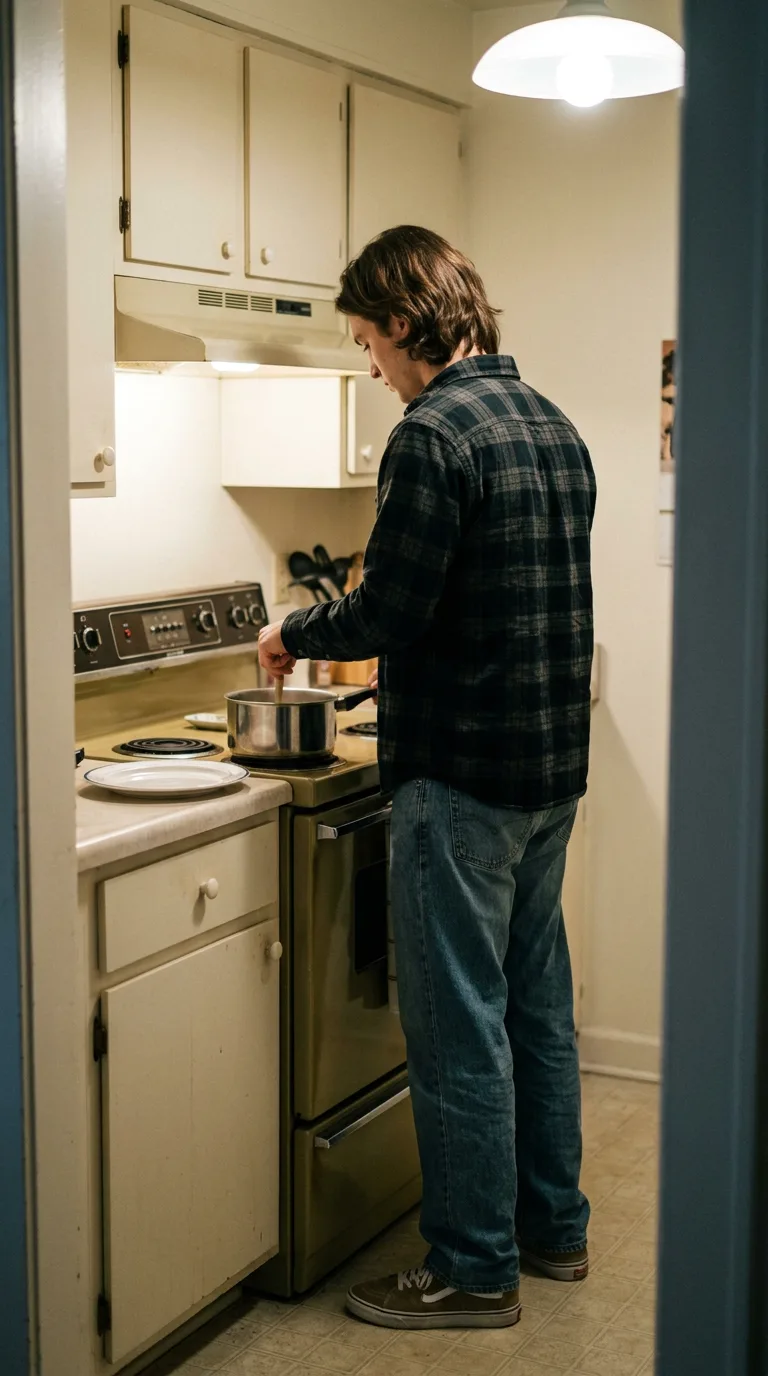
Rarest thing about him: An autoimmune condition — rare, 1 in 62
Season 0seed 809434410 · engine v10
Character card
lineage 57DLQH
His body-swap story
@brendan.okafor.lutz rolled the wheel on and woke up as Brendan Okafor-Lutz — their first
The screen has been the only light in the room for an hour. Sunday, deep in it, the hour with no name where today and tomorrow touch. You have scrolled through everything you already saw once. You have had this itch since you were a teenager watching a man wake up in another man's bed in some cheap movie and feeling something in your chest turn over like a key. Body swap. Possession. The idea of it, not the fear of it — waking up behind a different face, a different weather. You have wanted it the ordinary amount for years, which is to say completely, and there has never been anywhere to spend that wanting until a link, an ad, a dumb little wheel rendered in gold on a page called vessel.cards. You do not believe it. You pay anyway. The wheel spins the way wheels spin in videos, too smooth, too certain, and it stops, and there is no countdown, no ceremony. There is just the other thing.
Steam, first. A pan under your hand, a wooden spoon in your fist, your arm mid-circle. The stirring stops. It restarts the other direction, because whoever is doing it now doesn't know which way it was going and doesn't care. Salt falls into the pan in a rough line, more than the recipe wanted, and nobody tastes it. A cupboard door. A second plate, white, chipped at one edge, set down next to the first on a counter the color of old butter.
The kitchen smells like garlic gone slightly too far and like a cigarette someone smoked out the window an hour ago that the exhaust fan never fully caught. There is a flannel shirt against your back, soft in the way flannel gets after two years of washing, and touching it — no, being in it — brings something up the way a wave brings up a bottle: Brendan, seven this morning, pulling this exact shirt off a doorknob in the dark so he wouldn't wake Priya, one arm and then the other, the collar catching for a second on damp hair because he'd showered and not dried it right, his mind already on nothing, on coffee, on the drive to the Figueroa building he covers on Saturdays because the agency is short-staffed and the overtime helps. The jeans came from the floor. The shoes, low canvas ones with a stripe he stopped noticing years ago, from beside the bed, laced already, slid on rather than tied.
The body underneath all of it is twenty and does not know yet what twenty feels like from outside, only from in — light, quick to tire in a way it blames on the joints, a stiffness in the knuckles some mornings that a doctor has a name for and Brendan has mostly stopped listening to. There's a toothpick worn soft at one end tucked in the shirt pocket, and your jaw wants it before you've decided anything, wants the chew of it the way a habit wants itself, no thought involved. There's a can of something waiting in the fridge door, already opened last night, already half gone, because he drinks more than the doctor likes and doesn't say so at appointments. A little tin in the jeans pocket, mint, worn corners — pouch already tucked under his lip from an hour ago, gone faintly stale.
More comes, unbidden, the way water comes through a cracked window: the apartment block on Saturdays, walking the open corridor in the flat afternoon light with a folder of somebody else's paperwork against his ribs, waiting outside a door that might or might not open, the particular fatigue of caring about people whose lives you can only touch at the edges. A woman's laugh from another room — not here, a memory, Priya at the sink last week, elbowing him for something he said. The two of them do the trade-off where whoever's not working nights cooks, and this week that's him, badly, from a recipe she likes better than he does. The second plate is for her. She's asleep still, or getting up, somewhere past this doorway he hasn't looked through yet.
The hand on the spoon is not the hand you came in with — you came in with nothing, no hand of your own ever, and this is the first one you've ever worn. You feel its calluses, thin ones, more office than labor, the nail on the thumb a little too short from a habit he has and doesn't notice. You feel how the shoulder sits a little forward, how the whole frame runs to average in a way that asks nothing of a room.
You look down at it. Turn it, spoon still in it, over the pan, watching the light catch differently on the same knuckles.
"Hey," you say, to no one, to the empty kitchen doorway, to whoever might be waking up down the hall, "I think I put too much salt in."