Brendan Cullity
Fictional. Generated by AI — not a real person, and no likeness of one is intended.
22, warehouse picker in Boston · rolled by @declan.michael.farrow · card — no film
History
who has worn him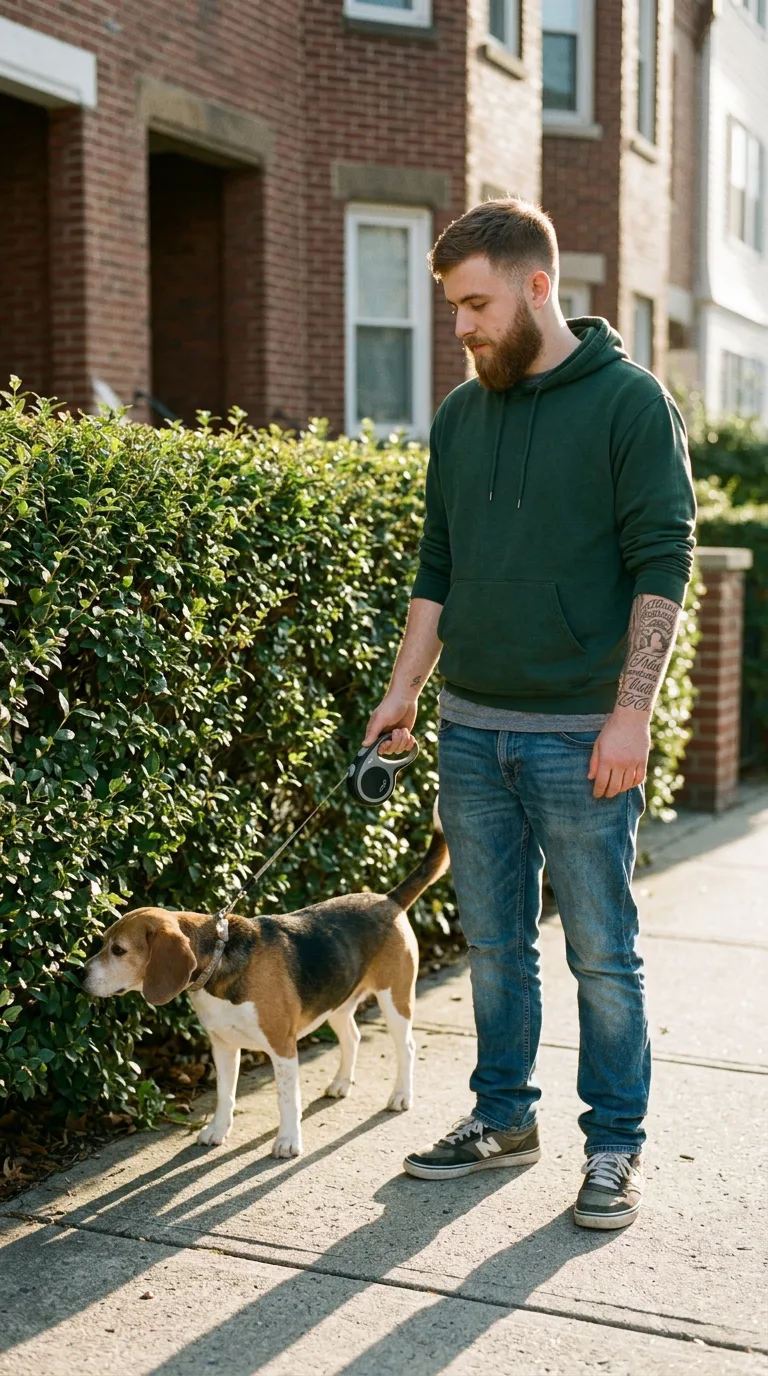
Rarest thing about him: Full sleeve — common, 1 in 53
Season 1seed 2688780 · engine v11
Character card
lineage 5OR92V
His body-swap story
@declan.michael.farrow, wearing Terrence Oyelaran, rolled the wheel on and woke up as Brendan Cullity, spent 2 minutes in him, then spun the wheel and woke up as Gordon Mah
You are standing in Terrence's kitchen with a wrench you don't remember picking up. The afternoon light comes through the window over the sink. You have been him for less than a minute. He is a good body: heavy in the shoulders and warm, with a mechanic's grip, freckles you can feel when you frown. And already you are bored of the way it all holds still. A man with a trade, a shop, a Tuesday full of things he knows how to do. None of it is the point. You came for the drop, for the second when the floor goes and someone else's whole evening is in your mouth. You open the page. The wheel is already turning, and you pay.
Hedge. Sidewalk. The plastic handle of the leash is in your fist, the cord running out ahead of you to a dog with its nose in the leaves. Cold air and wood smoke. Early evening, the end of someone's day, and you are in the middle of it. Your feet have stopped, and you did not stop them. The dog looks up past the hedge at you, ears back, and the cord goes slack. You wind it twice around your hand.
Then the handle talks. The grip is worn smooth where a thumb has pressed the lock button ten thousand times, and the memory comes up through it: this same walk in the dark, rain on the hood, the dog, a beagle, pulling toward every bin. He calls her Maple. He named her with a girl, standing in a shelter, arguing over it until it was funny. The girl is gone now. Three weeks. The leash is the last thing in the house they both bought, and he walks the dog twice as long as he used to, because the apartment is too quiet.
The hoodie, green and thick, smells of smoke. As soon as you register it the morning arrives: his hands pulling it off a chair, one sleeve and then the other, the cuff catching on the tattoo's edge. A name in script, a date. His grandmother, the date she died, the hospital's hallway light. He had it done at nineteen, and it hurt all the way up the inside of the arm. The jeans come next, stiff, last night's, a lighter still in the right pocket. Your fingers find it without asking and flip it open, shut, open. The thumb knows the wheel of it. A pack a day, and the first one is overdue; the want sits behind your breastbone like a hook. Last night's whiskey sits under it, a dull ache behind the eyes. He drinks more since her.
The warehouse comes through the soles of the sneakers, through the arches that ache, twelve hours of concrete. The scanner on his wrist, the beeping forklift. The pay is fine. The savings are modest, a number he checks at night, some of it meant for a ring he never bought. The church is in there too, a plain white one, his mother in a pew, the hymn numbers on a board. He hasn't gone since the spring. It sits in him like a coat he can't take off.
The beard is thick against your collar. Twenty-two years sit easy in the knees. The dog whines once, low, and you look down at her.
You lift your right hand. The sleeve has ridden up and the lettering is there, a dead woman's name on your forearm. You turn the hand over. The lighter is warm in the fingers.
You raise your eyes and say, "Okay, Maple. Let's see where you want to go."
The dog doesn't move. She knows something is different. And somewhere under the wanting, already, is the question of how long this one lasts.