Ashok Ramaiya
Fictional. Generated by AI — not a real person, and no likeness of one is intended.
55, oil rig worker in New Orleans · rolled by @ashok.ramaiya · card — no film
History
who has worn him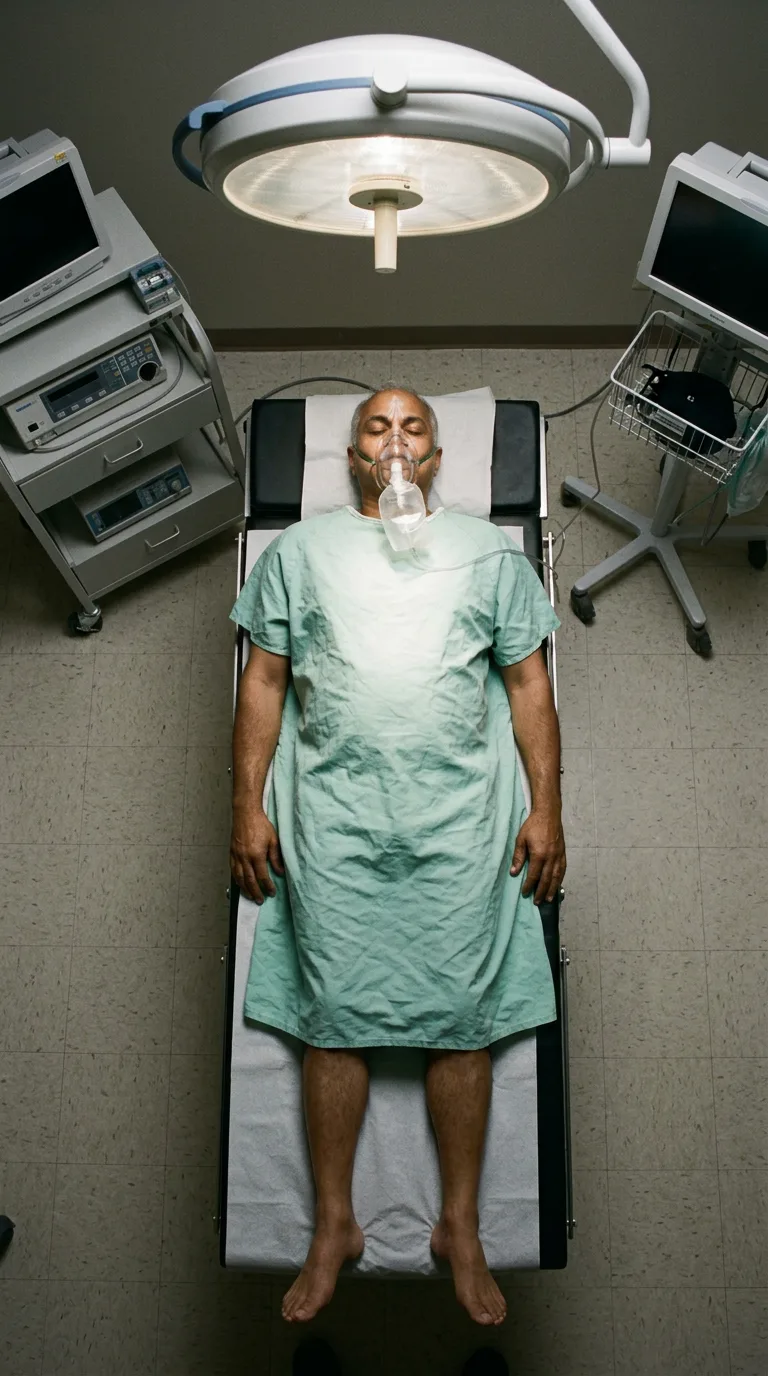
Rarest thing about him: A white streak in the hair — epic, 1 in 99
Season 0seed 1280199660 · engine v10
Character card
lineage AQEAIP
His body-swap story
@ashok.ramaiya rolled the wheel on and woke up as Ashok Ramaiya — their first
The article you'd read three times said "for entertainment purposes," which is the kind of sentence that means nothing and covers everything. It's a Tuesday that doesn't matter, deep in the part of the night where the apartment hums instead of sounds, and there's nothing on any screen worth the eyes you're giving it. You have wanted this since before you knew to call it wanting — every story where someone wakes up behind a stranger's face, every thread that argued about whether the old body waits for you somewhere. Never a way to actually do it. Now there's a wheel on a page, and a card number typed in with a strange calm, and a button that says SPIN in a font too friendly for what it's promising.
It stops.
There is no floor under you and then there is, and it is not a floor, it is the give of a padded table through a thin gown, and there is a mask on a face that is suddenly the only face there is, breath going in warm and coming back cold, fogging plastic. The light above is a flat white disc, too bright to look at, and you are not looking at it with your own eyes because you don't have eyes, you have his, and under his lids they move once, left to right, checking a room they already know. Somewhere below, a hand you didn't ask for opens on the table. Closes. Opens again. Testing. Nobody in scrubs looks up. The monitors keep their long slow rhythm like nothing in the room has changed, which, to them, is true.
It comes in through the gown first — thin cotton, worn soft, a hospital's idea of clothing — and it's not much, but it's enough: a flash of a locker room, gray metal doors, the particular ache of standing to strip out of coveralls stiff with dried mud and drilling fluid, a whole shift's weight coming off his shoulders at once. Then more. The tape on his wrist, a plastic band with his own name printed backward to him, gives a flicker of a clinic waiting room, fluorescent, a form with boxes for chest pain and family history that he filled out with a steadiness that took him years to learn to fake and then, later, to actually have — the pills on the counter at home, small and orange and unremarkable now, the year it took to stop being ashamed of needing them.
The oxygen mask against his face brings back cigarettes he quit nine years ago on a supply boat, staring at water, telling himself the shakes were the swell and not the wanting.
His body under the gown is fifty-five and knows exactly what that costs: a low ache low in the back that never fully leaves, from a ladder on a rig deck climbed ten thousand times, shoulders still thick and useful, forearms corded from wrenches and chain, a leg that starts bouncing the second there's nothing else for it to do, doing it now, faint under a paper sheet, a habit older than any of his fear and outliving most of it. Brown eyes. Under the crew cut, that one streak of white at the front he has stopped noticing in mirrors, though a woman once told him it made him look like he'd seen something. She's not around to say it anymore. He thinks of her sometimes on the long chopper ride out to the platform — an old ache, not sharp, worn round like a stone in a pocket. There's a son somewhere in a city he doesn't fly to enough, a birthday card signed in his own blocky hand, a phone call that ran eleven minutes and felt like both of them trying.
Church on the Sundays he's onshore, a folding chair, a voice around him singing louder than his does. A morning three weeks ago dressing for a flight out — undershirt, then the coveralls, one leg and then the other, the zip dragging up over a belly that isn't flat anymore and he's stopped fighting that too, gloves shoved in a back pocket he'll need in six hours and not before, boots double-knotted out of forty years of habit nobody taught him, just the water and the work teaching him slow.
Your — his — hand lifts off the table on its own, fingers spreading against the light, and you watch them the way you'd watch a stranger's, because that's exactly what they are and exactly what they aren't anymore.
"There you are," you say, out loud, to no one in the room who's listening, and the leg under the sheet keeps bouncing, his, yours, both, for however long that turns out to mean.