Arnold Whitebear
Fictional. Generated by AI — not a real person, and no likeness of one is intended.
57, plumber in Small-town Ohio · rolled by @toby.lankford · card — no film
History
who has worn him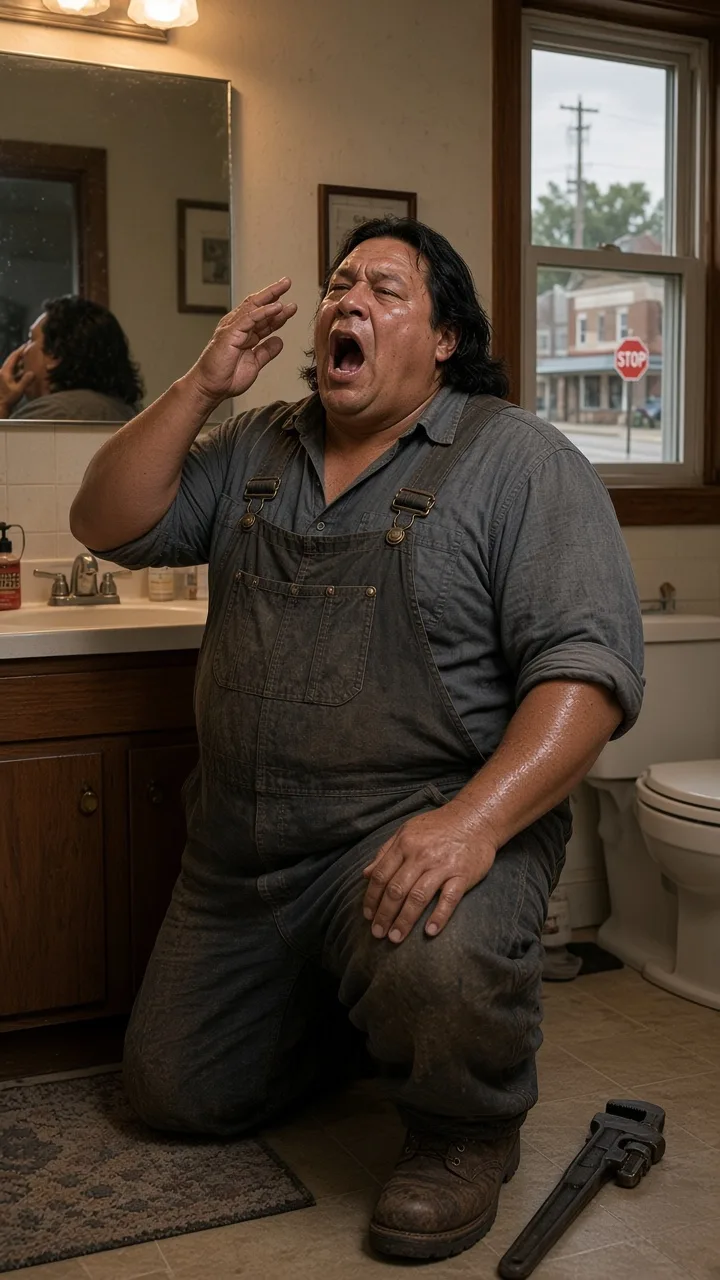
Rarest thing about him: Vapes socially — epic, 1 in 214
Legacyseed 515227023 · engine v8
Character card
His body-swap story
---
You have watched him from the porch across the road for eleven years, and in all that time he never once caught you doing it.
That's the part you want him to know, eventually. Not the wanting — he'd have laughed off the wanting, or worse, been kind about it. What you want him to know is that he lived beside a man who counted his mornings. Truck out at 6:40. Truck back sometime after four, engine ticking while he sat in the cab finishing whatever was on the radio. The porch light he never turned off because the switch had been painted over in 1994 and he'd never gotten around to it, him, a man who unclogged half the drains in the county. Two fingers of whiskey around eight, sometimes three. The vape only when Dell Hutchins came over, and only on the steps, like it was a bad habit he was borrowing.
You had your reasons. Everybody has reasons and most of them are shabby up close. Yours: he was the only person on this street who ever asked how you were and then stood there long enough to hear it. He'd stand in your driveway with the wrench hanging off his hand and let you talk about nothing and he never got restless. That's it. That's the whole engine of it. A man was patient with you and you decided you would rather be him than be beside him.
You don't know how you got in. Nobody knows. There was no bargain, no bad book, no light at the crossroads. You wanted it with your whole chest for eleven years in a town with one stoplight and a diner that closed the spring the Kroger came in, and something in the arrangement of things gave. That's all you'll ever have to tell.
—
You come up into him in the Kestler place on Third Street, eight-fifteen on a Tuesday. He's been kneeling under their bathroom sink for twenty minutes with a slip nut that's been on there since Nixon and the knees are screaming and he doesn't care, because they never have and complaining is a thing his father didn't do. The pipe wrench is on the floor behind him where he set it down. Nothing in his hands. Nothing at his back but the mirror.
He straightens up onto his heels and yawns, big, unguarded, the yawn of a man alone in a stranger's bathroom, jaw wide, one hand lifted toward his face. And you are the yawn. You are in it. You are the last third of it, the tapering part, the breath going out.
He finishes. He rubs his eye with the heel of his hand — his hand, still, that's still him, the last thing he ever does — and then the hand stops in the air.
Here is what you get, all at once, and nobody warned you:
Heartburn. A low burning column behind the breastbone that he has stopped registering the way you stop hearing a refrigerator. Fifty-seven years of weather in the skin of the forearms. Knees like wet gravel. A back that is not injured, only used. The left shoulder that reports in when he lifts above his head. The taste of morning coffee gone stale and the small stink of drain grease. Hair on his neck, warm from the vanity lights. He is five foot six and thick as a stump and there is more strength in the arms than you knew what to do with, real strength, the kind that comes from turning things that don't want to turn.
And under that, in the room where a man keeps himself: Dell. Dell Hutchins, who left for Columbus in 2007 and came back divorced in 2016 and lives eight miles out on Foltz Road and comes by maybe twice a month and they sit on the steps and don't talk about it. You get the whole shape of that. You get the fact that he never said it out loud to anyone in this town, not because he was ashamed but because he'd decided long ago that his business was his, and Ohio could keep its opinions. You get the number in the credit union that would surprise every person on this street — nearly four hundred thousand, built one water heater at a time, no debt, no children, nobody to leave it to. You get that he prays without calling it praying, standing out back in the dark before bed, looking at whatever's up there and saying thanks, generally, to no one in particular.
You get all of it and none of it belongs to him anymore.
The hand lowers.
And the eyes behind it are yours, and they go straight to the mirror, because that's the first thing anyone would do — you have to see. You have to see what you look like out of the inside.
He's in there. The face in the glass over the Kestlers' sink is his exactly: black hair to the collar, sweat-shine on the temples, the ordinary tired good face of a man who never had one single remarkable thing about him and never needed one. Nothing has changed. That's what stops your breath, or his breath, the breath you're using now — nothing changed. There's no seam. The mirror doesn't know. If Dell walked in this minute the mirror wouldn't tell him.
You lift the hand again, on purpose this time, and watch it come up. It obeys. Thick fingers, split nail on the middle one, calluses gone yellow at the base of each finger, a white line of drywall dust in the knuckle creases. You turn it over. Palm like a piece of tack. You hold it in the light and you cannot find the place where you end and he begins, and it occurs to you — kneeling on a bathroom rug in a house you've never been inside, with a slip nut half off and reflux burning quietly under a borrowed sternum — that you have never in your life been this warm.
There is no way back. There's no term on it. You didn't ask for a term.
You will finish the sink, because he would have. You'll take the ninety dollars and write it in the book in his handwriting, which comes to the hand easier than you'd feared. You'll drive his truck home at four and sit in the cab until the song ends. You'll pour two fingers at eight and it will hurt going down and you'll learn why he kept the chalky tablets in the glovebox. You'll leave the porch light on because the switch is painted over.
And in nine days Dell will pull in on a Saturday and come up the steps with two cans and say *Arnie* the way he's said it for forty years, and you will have to answer to it.
You'll answer to it.