Anil Joseph Whitehorse
Fictional. Generated by AI — not a real person, and no likeness of one is intended.
54, lawyer in Seattle · rolled by @declan.michael.farrow · card — no film
History
who has worn him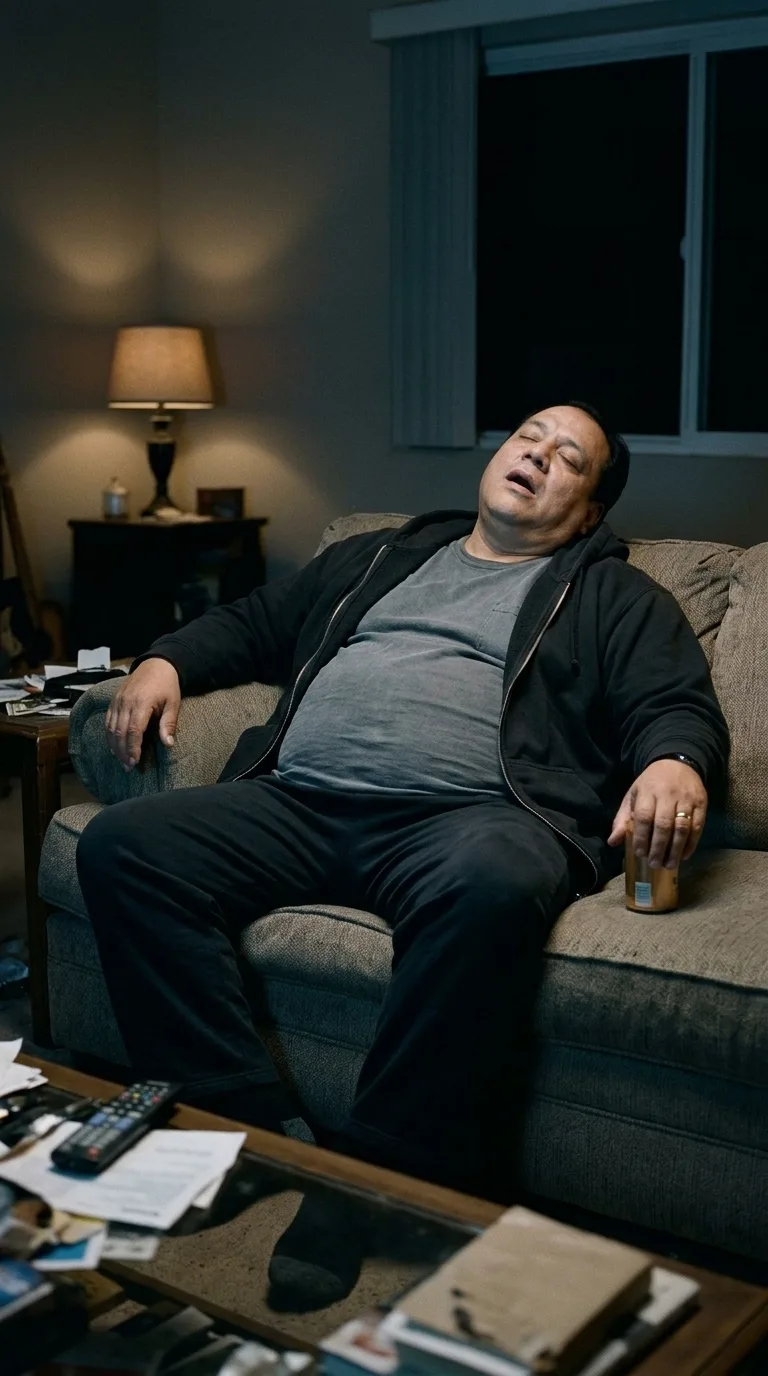
Rarest thing about him: An ancestral tradition — rare, 1 in 169
Face-off rating 1500 · not ranked yet
Season 1seed 910569982 · engine v11
Character card
lineage 5OR92V
His body-swap story
@declan.michael.farrow, wearing Daniel Reyes Costigan, rolled the wheel on and woke up as Anil Joseph Whitehorse, spent under a minute in him, then spun the wheel and woke up as Dale Michael Brunner
Daniel Reyes Costigan's house is dark and every clock in it agrees that nobody should be awake. You stand in the kitchen at the hour when the refrigerator is the loudest thing in Miami. His green eyes are dry. His once-broken nose whistles when you breathe through it. Down the hall a child turns over in sleep, and you know that child's name only because a drawing on the fridge says it.
You were a teacher for less than a minute. Tomorrow there would be thirty-one fourteen-year-olds and a lesson plan in a hand you can't read, and the whole day would be a performance of a man who has already left the building. Nothing is wrong with him. That is the trouble. He is a good body and a good job, and you stood at the counter and felt the long line of mornings that go with them. Then you opened the page with the wheel on it.
You pay. You spin.
The wheel clicks, slows, settles. There is no travel at all.
The goal is already over. Roaring comes from the television, then the replay, a slow wash of color across the room. You are sitting forward on a couch with your mouth dry and a warm can tipped in your left hand. Your thumb has found the volume on the remote, which must have been in your other hand, and it pressed exactly right. You are watching the ball and not the score. The weight of the belly sits on your thighs. Your knees ache the dull way of a man who has stood in hallways for thirty years.
The hoodie comes first. Your fingers close on the zipper pull, a small cold tooth, and you get a morning rather than a picture: a cheap lamp in a hotel, his own breath fogging a window in a rainy city, and the old gray T-shirt chosen because it was the one nobody would ever photograph. Sunday. His wife is upstairs asleep. He promised her he would come up at halftime and didn't. He feels guilty and tender about it, and that feeling is in your chest like warm water.
The can is not beer. Your thumb finds the ring and the cold sweat, and it is the near-beer he switched to years ago. The remembered night is a courthouse parking garage, a client's mother weeping against his car, and the oath he made himself afterward. Under the couch cushion, a flat tin. You find it without looking: nicotine pouches, the pale little pillows. The tongue wants one. He wanted one all week and spent it on the case.
The remote's plastic edges are worn smooth where his thumb lives. Your other hand has been clicking, clicking, and you find it holding a pen you didn't know was there, a black ballpoint from some firm's Christmas box. Click. Click. A memory rises with the sound: his father at a kitchen table in a small town, the mixed-up map of his family, a drum on the wall, a Hindu grandmother's brass lamp lit beside it on feast days. His father clicked a pen exactly this way before saying anything hard.
The wedding band is warm on your finger and a little tight. It has been tight since he gained the weight. His wife says nothing about it. The socks are damp at the heel. The carpet underfoot is thin and has a stain he knows the story of, a child's juice, six years ago, and he laughed instead of scolding.
The glass table is covered in paper he should have filed. Your eyes find a legal pad covered in his handwriting, small and upright. You remember writing that, how the sentence took him an hour, how he believed it.
The couch holds you like an old argument. Your lower back has a bright, patient ache. The heart under the shirt beats slow and big. Fifty-four years of it, and the pulse knows what it's doing.
You raise your right hand off the remote and turn it over. Thick fingers, brown, the ring biting. A hand that has signed things that mattered to strangers.
You look up at the screen's glow and say, to nobody, "Well. Let's see how long this one holds."
The replay ends. The game comes back, and somewhere in you the wanting is only asleep.