Andrés Beltrán
Fictional. Generated by AI — not a real person, and no likeness of one is intended.
21, nurse in Miami · rolled by @colin.hasbrook · card — no film
History
who has worn him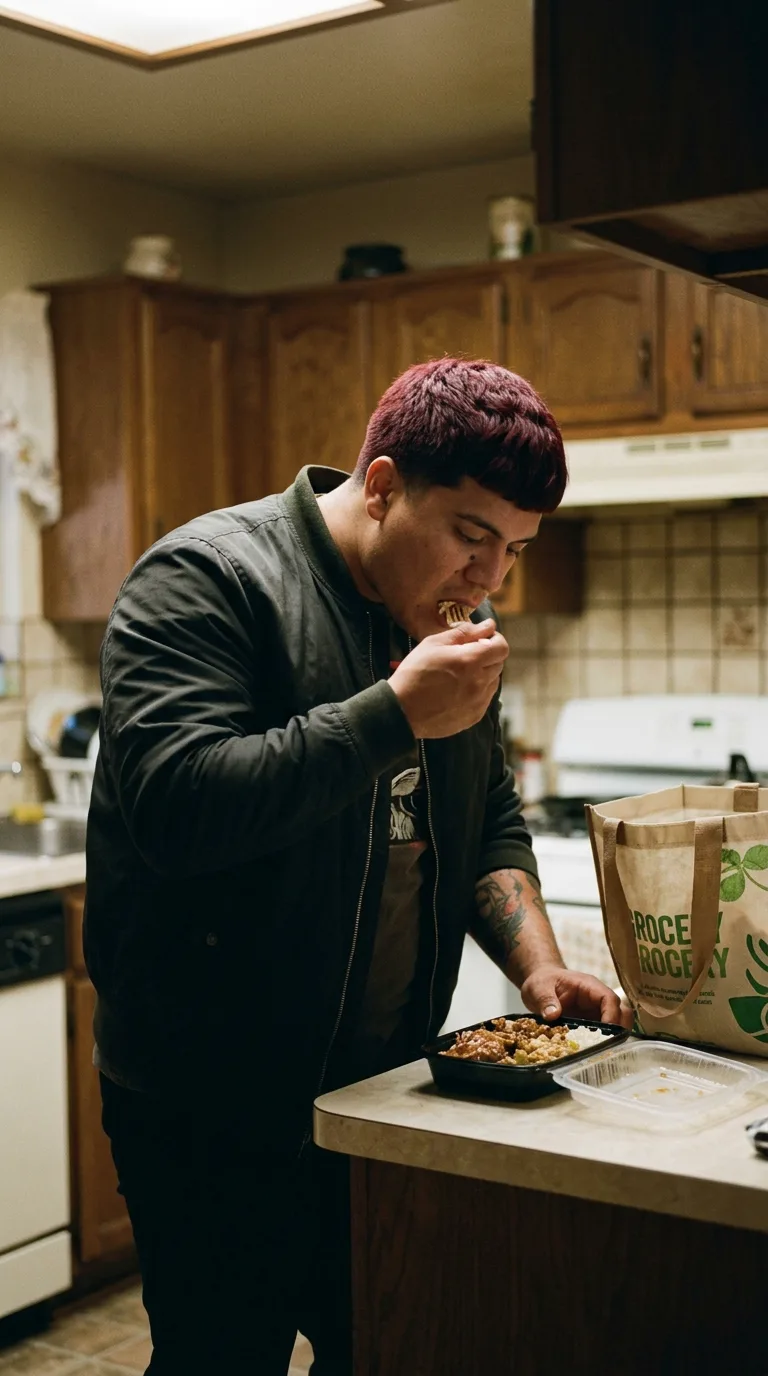
Rarest thing about him: Dyed red — epic, 1 in 94
Season 0seed 98866956 · engine v10
Character card
lineage 2NZHHJ
His body-swap story
@colin.hasbrook, wearing Frank Dellacroce, rolled the wheel on and woke up as Andrés Beltrán, spent 5 minutes in him, then spun the wheel and woke up as Ethan Vollmer
You are Frank Dellacroce for less than a minute, and already you know it was a mistake.
Not the body — the body is fine, better than fine, all that gray-haired brawn and forty years of knowing how to hold a hoof between your knees. But the smell hits you first: creosote and horse sweat and the particular ammonia sting of a barn at the end of a Monday, and your knees — his knees — throb with a specific, permanent ache that no amount of muscle ever fixes. Your back has a crick in it older than some of your other bodies put together. Somewhere behind Frank's hazel eyes there's a memory trying to surface, something about a ring size and a woman who left before the wheel ever found you, and you don't want it. You spun into a used man last time and you are standing in his kitchen, in his barn coat, holding a rasp you don't remember picking up, and the thought arrives clean and total: not this one, not tonight, again.
So you go back to the card. Vessel dot cards, the wheel spinning already behind your eyes before your thumb even reaches the screen. You pay. You spin.
The fork stops.
It was already halfway to a mouth that is not yours anymore — rice and beans and stewed chicken going cool in a black plastic container on a counter you've never stood at — and it comes back down. You set it there, feel the coat on shoulders that are shorter, softer under the muscle, a whole different weight distributed a whole different way. You shrug the coat off. Sit. You do not know yet why you're doing any of this — the body knows before you do, the way bodies do — and you finish the container in even mouthfuls, looking at nothing in a window gone black with night, ocean somewhere behind the glass, unseen.
The jacket lands over the back of the chair and the moment your palm brushes its lining, something comes up out of it: this morning, or some morning like it, pulling this same bomber jacket on over these same shoulders in an apartment that smells like salt and old paint, pastel walls flaking at the balcony rail, a neighbor's laundry cracking in the wind twelve floors down. Andrés. The name arrives with the sleeve, the way names do, sewn into a tag he never bothered to read but his fingers know by feel — *A. BELTRÁN* in laundry marker on the inside collar, a habit from nursing school, from the year everybody's scrubs disappeared into everybody else's laundry bags.
The scrubs. You're still in them under the jacket, the teal cotton gone soft with washing, and touching the hem of the shirt opens the hospital up whole: fluorescent light flattening every face at two a.m., the nurses' station humming with monitors, a stack of charts he'll finish before dawn because he always finishes them, because his abuela used to say if you're going to do something you do it all the way or you go home, and he never went home early once in three years. Night shift. That's the joke of it — his evening is the middle of somebody else's night, his tired is a tired that runs backwards against the sun, and right now, this very ordinary now, he should be clocking in, not standing in his mother's old kitchen eating cold takeout with his coat still on because he stopped here on the way, because she still leaves food out for him some Mondays even though he's twenty-one and grown and living twenty minutes from her in his own place with its own ocean haze on its own railing.
His hands remember the fork before you do — how many years of eating standing up, too tired to sit, too hungry to wait — and biting at what's left of a thumbnail between bites is a reflex so old it isn't even a thought, just a small violence he's done to himself since he was maybe nine, watching his father's hands do the same thing at this same counter.
The forearm ink surfaces next, warm under your own touch when your hand drifts across it without meaning to: a ship, bold-lined, faded the particular way traditional work fades, roses tangled at the wrist. He got it at nineteen with money he shouldn't have spent, a dare from a friend from nursing school who's dead now — car accident, eight months back — and some nights, charting under bad light, he catches the ship out of the corner of his eye and it still knocks the wind out of him a little, grief arriving sideways like that, uninvited, the way grief does.
He is not, has never really been, a man of vices. A beer at a cousin's quinceañera, maybe, a couple times a year. No cigarettes, not once, not even the curious drag everyone else took behind the gym in high school. He believes in something — doesn't have a word for it, wouldn't set foot in the church his mother still drags him to on Christmas — but he feels it sometimes at the nurses' station in the dead hour before dawn, some current running under all of it, holding a dying man's hand or a newborn's weight and knowing there's more happening than the monitors say.
Single. No one waiting on a text. No ex who left a mark deep enough to still ache. Nothing in the bank worth mentioning, nothing under the bed worth confessing. Just a body that works twelve-hour shifts on its feet and comes home hungry enough to eat standing up in his mother's kitchen with his coat still on, five foot six of muscle built by lifting patients twice his size, a mole high on his cheek his abuela used to touch when he was small and tell him it meant something, luck or God or nothing at all, and dyed red hair he'd chopped short two months ago on a whim he still isn't sure he regrets.
You finish the last bite. The container is empty in your — his — hand.
You look at it. Turn it, a little, the way you always do, checking a body's hands against its face like the two might not agree. They agree. Blunt fingers, one thumbnail bitten close to the quick, a ship sailing faded blue up the inside of the arm.
"Okay," you say, to the dark window, to no one. "Okay, mijo. Let's go to work."
Behind that — not yet, not urgent, just there, the way it's always there — is the wheel, waiting, patient as a held breath, for whenever the wanting comes back around.