Alan Petroski
Fictional. Generated by AI — not a real person, and no likeness of one is intended.
32, accountant in New York · rolled by @alan.petroski · card — no film
History
who has worn him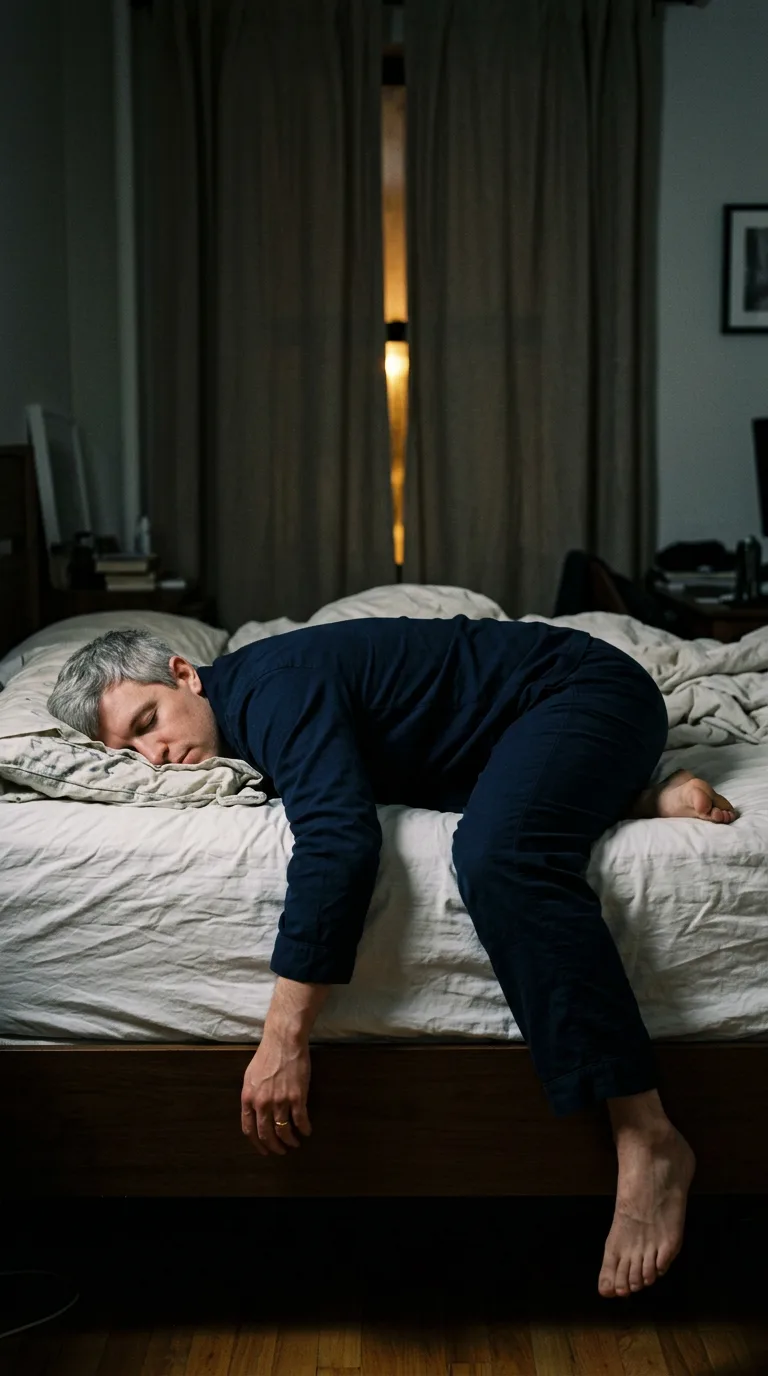
Rarest thing about him: Can't stand still — common, 1 in 51
Season 1seed 1600871879 · engine v11
Character card
lineage BI36AF
His body-swap story
@alan.petroski rolled the wheel on and woke up as Alan Petroski — their first
The tab has been open for forty minutes. You keep almost closing it and then not closing it, the way you've almost-not-closed a hundred tabs like it over the years — the forums at 2 a.m., the stories you read twice, the question that has lived in you since before you can date it: what would it be like, to be someone else, really, not in a book, not in a dream. vessel.cards doesn't look like much. A wheel, a price, a button that says SPIN. You tell yourself it's a joke site, a skin, a scam, and you pay anyway, because the wanting has always outlasted the telling-yourself. It's the middle of your day, nothing in it worth naming. You press spin.
There is no falling, no tunnel, no countdown. There is a breath that isn't yours going from ragged to even, and then it's the only breath there is. Weight arrives all at once — a body on its front, an arm hanging off a mattress into cooler air, bare feet, the specific gravity of someone 5'9" and unremarkable settling around you like a coat put on while already moving. You feel the arm lift itself before you decide to lift it. The body rolls onto its back. Hands fold at the chest. Somewhere underneath, a man named Alan Petroski has stopped existing in any way that will ever be found out, and you are wearing the last position he was ever in like a pose he didn't choose.
Streetlight comes through a gap in the curtain, orange-gray, city light, nothing like wherever you actually are in the part of the day that still belongs to you. It is deep night here. He should not be asleep in the usual way at this hour and he isn't, not exactly — the memory starts coming before you've asked for it, through the sheet under your folded hands, through the mattress under your back: he works a rotating audit cycle, closes two sets of books a quarter on West Coast time, and tonight was one of the nights he gets to actually lie down before four. Small mercy. He took it.
The wedding band is cool and then body-warm against your folded fingers and it opens first, because it's touching you and touch is the only door here. A woman's voice saying his name across a kitchen island, not angry, just tired in the specific way of someone counting a day's remaining patience. Her name arrives a half-second later — Dana — and with it a decade: a courthouse wedding neither set of parents fully forgave, two kids whose names come up out of the dark like a held breath — a boy's laugh in a car seat, a girl's hand gripping two of his fingers crossing Flatbush Avenue. He loves them with an intensity that has nowhere to go at midnight except into insomnia and the second drink and then the third, and that's in there too, low and unglamorous, the bottle in the cabinet above the fridge he tells himself is for guests.
The cardigan on the chair across the room isn't on you, but you can still feel its ghost — gray wool, soft at the elbows, a gift from Dana two Christmases back, worn so often it has become a kind of face he puts on over his actual face. Under your palm, the sheet gives you the shirt he had on yesterday morning: checked, buttoned from the bottom up because he always starts wrong and corrects, sleeves rolled twice, not once, because once never stays. His hands did that themselves, a thousand mornings, without him once looking down. Those hands are restless even now, folded at his chest only because this is not a shape he ever chooses — left alone a second longer they'd be picking at a thread, tapping the mattress, finding something to turn over.
The job comes through the mattress too, oddly, the firmness of it like the firmness of his desk chair: fluorescent light, two monitors, a reconciliation that wouldn't balance for three days running last spring until he found the decimal error at 1 a.m. and felt, absurdly, like he'd caught a fish with his hands. He is good at it. He has never once told anyone he is good at it. Church on Sunday, a pledge envelope he fills out faithfully and resents faithfully in the same motion, a youth pastor's voice from twenty years ago still narrating certain of his decisions. None of it he'd call a secret except the drinking, and even that isn't hidden so much as unaddressed, a bottle in a cabinet, a wife who has stopped asking and started just watching the level.
You feel all of it the way you feel a stranger's coat settle onto your shoulders — his, not yours, borrowed completely. The body underneath is thirty-two and unhurt and ordinary: no bad knee, no old injury, just the mild ambient tiredness of a man who works too many nights and sleeps badly on the ones he doesn't. Smooth jaw against the pillow, freshly shaved yesterday morning and nothing's grown since. Gray hair that isn't age so much as genetics arrived early, pressed flat on one side where the pillow took it.
You open your eyes.
The curtain-light hasn't moved. Your own hand — his hand — comes up off your chest, and you turn it over in the dark, slow, the ring catching one thin line of orange from the street. Fingers that can't ever quite go still, already starting to flex.
"Okay," you say, to the dark, to the sleeping house, to no one. "Okay — that's — okay."
You don't know yet how long you keep him. You don't know when the wanting comes back, the itch toward the wheel, toward someone else's ordinary Tuesday. For now there is only this: his ceiling, his ring, his restless hand turning in a stranger's light.