Adrian Torres
Fictional. Generated by AI — not a real person, and no likeness of one is intended.
30, wrestling coach in Detroit · rolled by @colin.hasbrook · card — no film
History
who has worn him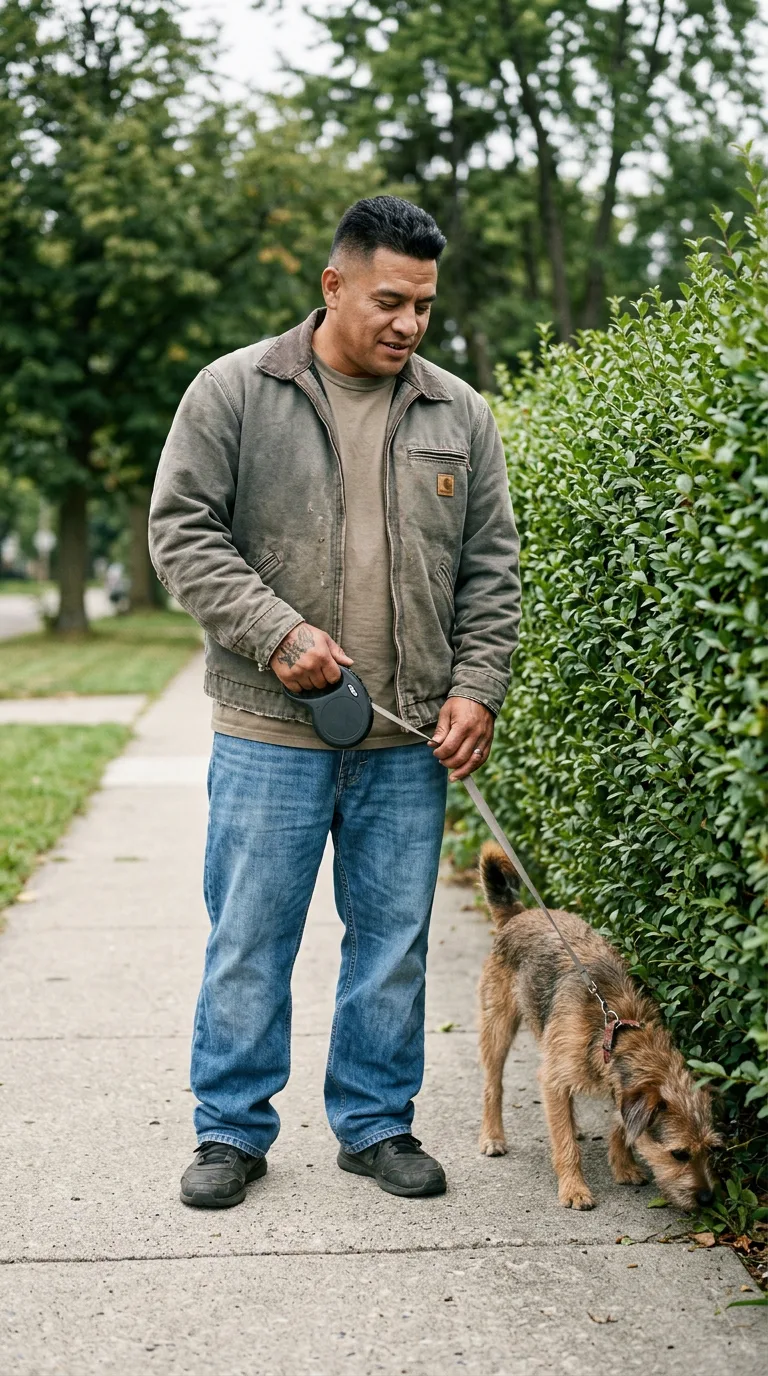
Rarest thing about him: Latter-day Saint — rare, 1 in 34
Season 0seed 1541597337 · engine v10
Character card
lineage 2NZHHJ
His body-swap story
@colin.hasbrook, wearing Patrick Malinowski, rolled the wheel on and woke up as Adrian Torres, spent under a minute in him, then spun the wheel and woke up as Rafael Guanzon
Patrick Malinowski's hands smell like cut grass and diesel from the mower, and they are shaking a little, which is not from age or cold. It's from the last three hours spent standing in a dead man's — no, not dead, just emptied — groundskeeper's shed in Philadelphia, running a thumb along a rake handle he doesn't remember buying, trying to feel anything in it and feeling nothing, because Patrick was only worn thirty-one hours and there isn't much of him left to surface. That's the thing nobody warns you about the wheel: the bodies go quiet fast. You wear a man empty. You've done it two hundred eighty-nine times and the two-ninetieth itch is already climbing up through Patrick's borrowed spine like a phone buzzing in another room. Boredom isn't even the right word. It's more like hunger that doesn't know yet what it wants to eat. Patrick is standing in his own garage, phone propped against a gas can, thumb over the wheel on vessel.cards, and some small true part of him — the part that is you, that is always you no matter whose knees you're bending — thinks: one more, then I'll stop for the night. He's thought that two hundred eighty-nine times.
The wheel spins. It always takes less time than it should.
The leash goes slack in your hand and you feel it before you understand it — the weight at the end of it easing, the dog's nose still buried in the hedge, and your own body a full size wrong under you: shorter, denser, a gut you didn't have a second ago pressing against a hoodie's drawstring. Late afternoon light the color of a Tuesday nobody will remember. You wind the leash twice around your fist without deciding to — his hand does it before you do, muscle memory outrunning you — and start walking, and the dog has to trot to catch the new rhythm of a stride it doesn't recognize.
The jacket is what opens first. Canvas, broken-in, a smear of old paint on the cuff you didn't put there. You feel him arrive in pieces, the way cold water finds every gap in a shirt: this morning, this exact jacket, off the hook by the door, and the small furious pleasure of shrugging into something that already knows the shape of your shoulders. Adrian Torres. The name comes with the smell of the collar, laundry soap and a little sweat baked in from every practice he's ever run. Whistle around his neck at work, left on the hook at home, and even off duty his hand keeps drifting to his sternum checking for it, an old tic, twelve years of teaching fourteen-year-olds how to fall.
The wedding band is the second door. Plain, worn thin on the underside where it's rubbed against grip tape and mat and a hundred other men's forearms in the clinch. Marisol. Her name comes with a kitchen, dishes half done, her laugh at something stupid he said about the dog eating a sock, four years married and the fights are never about anything that matters and the making up always is. And under that, further down, an old ache he doesn't examine much: Bethany, college, the one who left for Chicago and a job and didn't ask him to follow, and some Tuesdays — a Tuesday like this one, maybe — he still catches himself doing the math on what that life would have looked like. He loves Marisol uncomplicatedly. The other thing isn't a wound, just a room he doesn't go into, and his hand tightening on the leash is not about her at all.
His daughter is three. The thought of her arrives through nothing he's touching — just there, the way weather is there — Lucia asleep right now probably, or not asleep, refusing it, and the specific tired-good feeling of a man who coaches other people's sons all day and comes home to a girl who doesn't care what any of them think of him.
The jeans, worn at the knee from kneeling on mats. The gap in his teeth, which he stopped being self-conscious about around age twenty-six and now barely thinks of except when a wrestler mimics his voice and whistles a little through the space where Adrian does without meaning to. His body: thick through the middle, strong through the shoulders and forearms in the specific way of a man who spent a decade being thrown and throwing, both knees a little wrecked, a lower back that announces itself getting out of bed and never during practice, like it knows better. Church on Sunday, mostly, when the tournament schedule allows it — a quiet, uncomplicated faith, more habit than fire, but real. He does not drink except at his brother-in-law's Fourth of July, has never smoked, has never needed to; his vices, if he has any, are small and boring — one more helping, one more hour at the gym instead of home, a temper he keeps on a very short leash in a much more literal sense than the one twisted twice around this hand right now.
The dog — Cooper, some scruffy mutt Lucia named — finally pulls free of the hedge and looks up, ears back, sensing before understanding, the way animals sometimes do a half-second ahead of everyone else in the room.
You look down at your hand on the leash. It's not your hand. It's shorter, browner, a plain band catching the gray light, a gap-toothed reflection of nothing in particular passing through your mind that isn't a mind you're used to living in yet.
You say, out loud, to no one, in a voice that surprises you with how easily it comes:
"Okay. Come on, then."
And you don't know yet if that's Adrian talking to the dog, or you talking to the next two hundred ninety.