Adrian Mejía
Fictional. Generated by AI — not a real person, and no likeness of one is intended.
20, retail sales associate in Denver · rolled by @connor.waskiewicz · card — no film
History
who has worn him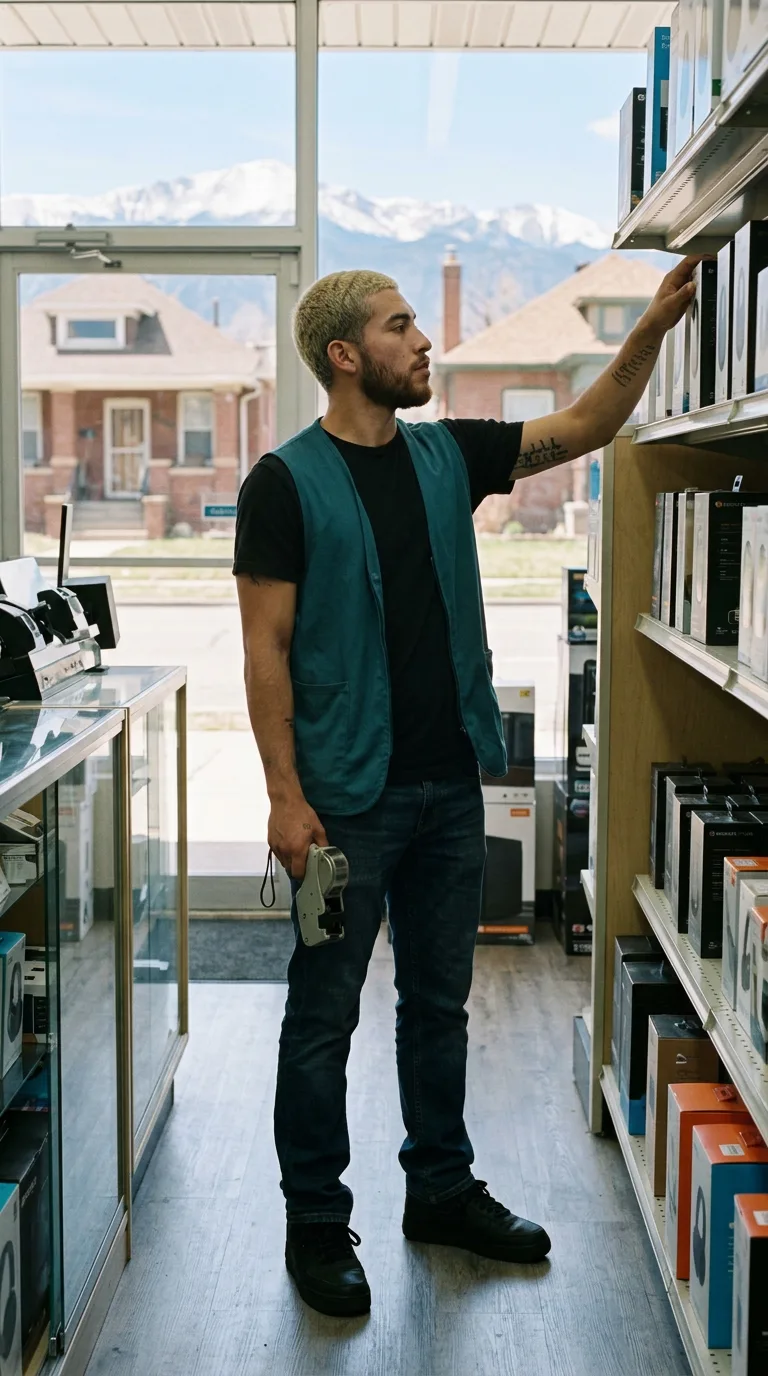
Rarest thing about him: Bleached blond — common, 1 in 54
Season 1seed 1744374680 · engine v11
Character card
lineage 2NZHHJ
His body-swap story
@connor.waskiewicz, wearing Cody Rawlins, rolled the wheel on and woke up as Adrian Mejía, spent 6 minutes in him, then spun the wheel and woke up as Tony Ferrante
You are Cody Rawlins for less than a minute, and the first thing you learn is that the cab is too quiet. Diesel ticks as it cools. The sun lies on the dash. Cody's thumb is already rubbing the cleft of his chin, a habit he has had all his life and you have had for ninety seconds. The truck is parked in a lot outside El Paso, and the whole Tuesday morning is his and sits wrong on you. His knees complain when he shifts. His belly presses the wheel. Cody has a life with a dispatcher and a daughter's birthday in it, and you can feel all of it humming under the skin like a refrigerator in another room.
None of it is a complaint. He works fine, and that is the trouble. He works so well that nothing in him is hungry, and you came back to the page already hungry. Something Cody did in the first minute, a small thing, a laugh at the radio that was not yours, sent your thumb to the screen. You would not say what it was. You pay. The wheel turns.
Then you are standing, and the floor is level and cool through the soles, and your right arm is straight up over your head with the fingers flat on a cardboard box.
Denver's air is thin and dry. A breath goes in and stops short of where you expect it to end. The left hand holds something heavy and cold, a price gun, its cord looped around the wrist. Your leg is bouncing. You did not tell it to. The heel drums and the knee jumps, and the whole body hums like a wire.
You were halfway through a motion, and the motion went wrong. The box slid a quarter inch off true. You set it right slowly, then again, checking each one down the shelf. Headphone boxes, orange and black, square to the lip. It is a job that has not needed checking in years, and you check it anyway, because you do not know this body's hands yet.
The vest is rough cotton, washed soft, and it brings him in. Sleeve by sleeve: a bedroom with the blinds half shut, the black shirt pulled over his head, the vest off a hook by the door because the zipper sticks. His mother used to iron the collar, and he stopped letting her. The jeans come next, with the left knee thin and a nickel's worth of coins in the pocket. Under them are the black shoes he bought for work and for everything else. The memory is in his feeling: money counted on a bed. It is never enough, and he is never angry about it, only careful. No beer. His father drank. A tin of pouches sits in the vest pocket, and your tongue wants the sting before you know why. Late afternoons, the porch of a small house, mountains stacked behind the rooflines going violet, him alone with the leg going, content with that.
The beard is neat under your fingers, close to the jaw, and the cut hair has waves brushed in. They are his small vanity, done with a brush every morning. His shoulders are strong and his back is tight from lifting. Twenty years old. Everything hurts a little and recovers fast.
Through the glass, a brick bungalow and snow on the peaks.
You lower the arm. You turn the right hand over and look at the palm, at calluses from box edges and tape, at lines that are his and not yours. Then you lift your eyes.
"Okay," you say, in a voice that is lighter than you expected. "Okay. You're new."
The leg keeps bouncing. You do not know how long he lasts, or when the wanting comes back.