Accountant in New York
Fictional. Generated by AI — not a real person, and no likeness of one is intended.
60, accountant in New York · rolled by @colin.hasbrook · card — no film
History
who has worn him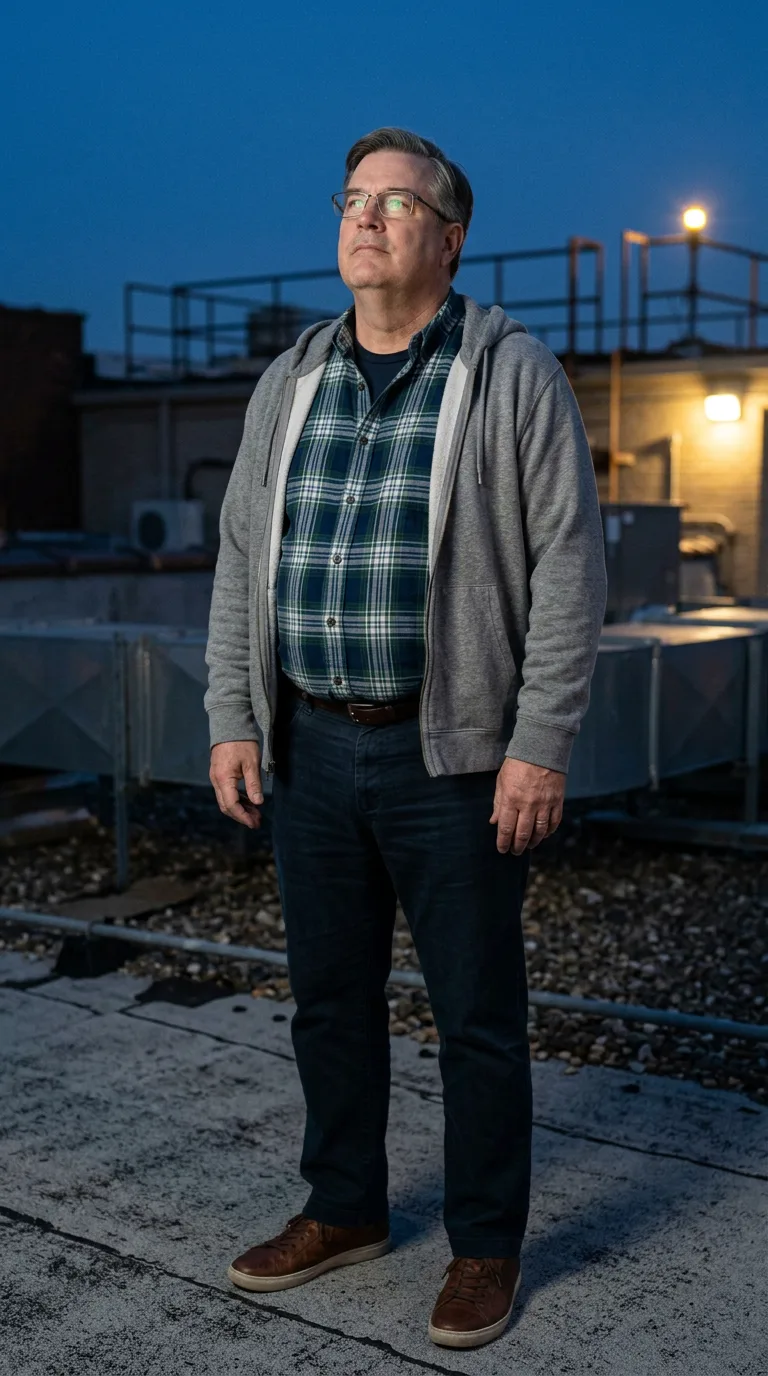
Rarest thing about him: A lazy eye — common, 1 in 66
Season 1seed 322760684 · engine v11
Character card
lineage 2NZHHJ
His body-swap story
@colin.hasbrook, wearing Malcolm Dessalines, rolled the wheel on and woke up as an unnamed body, spent under a minute in him, then spun the wheel and woke up as Dallin Redcloud
You are standing on a stoop in Brooklyn, in Malcolm's black skin and Malcolm's short beard, and the wet concrete is cold enough to feel through his shoes, though he barely notices it, because Malcolm has been Malcolm for less than a minute and you have already decided you are done with him. It isn't his face. It isn't even really about him — he's fine, he's young, he has dimples a stranger would call charming. It's that twenty minutes ago, standing in his kitchen, you opened his phone with his thumb and found a text thread with a woman named Priya that made your stomach — his stomach, whatever, the one you're borrowing — drop in a way you recognize from six hundred bodies ago: the particular ache of being asked to feel something you have no history to back up. Grief that isn't yours is unbearable. You want out before it lands. You want someone plain. Someone with nothing in him you'll have to carry.
So you go up the stoop steps two at a time, Malcolm's knees good for it, and you take out your phone — his phone — and open vessel.cards, and the wheel spins under your thumb, and somewhere the site does whatever it does, and —
The air smells like tar paper and rust and the cooling metal of a rooftop AC unit. Your head is tilted back. There is a light dying in the sky above you, a long white scratch already fading at both ends, and your mouth is open, mid-word, the last of a sentence you didn't choose and don't yet own: *someone else.* Your knees are heavier than they were a half-second ago in a way that has nothing to do with age and everything to do with mass — more of you now, softer through the middle, a gut pressing gently against a waistband. Glasses sit on your nose, cool, slightly greasy at the hinge. You bring your head down slowly. The street below hums with a sound you don't recognize yet as an air handler two buildings over.
The hoodie is unzipped and the flannel under it is buttoned to the second-from-top, and the second your chin dips and your chest brushes the collar, something opens — an ordinary Tuesday, six years back, the smell of this exact hoodie fresh out of the dryer, a gift from Diane for a birthday he pretended to forget was coming. *You didn't have to,* he'd said, and she'd said, *I know,* and kissed the top of his head where the hair is thinning now under a hard side part he still combs the same way his father combed his. The flannel is older — a decade, easy — soft at the elbows from filing, a green-and-navy plaid he bought two of because he liked it enough to be embarrassed about it. Under your feet, the gravel roofing crunches, and that brings back every Sunday he's climbed up here since they moved into the building, not to smoke — he never did — but to get above the noise of dinner dishes and homework arguments and, more lately, the quiet where those used to be.
His hands know things without asking: the muscle memory of a keyboard, two decades of a ten-key by feel, the particular flick of a wrist turning a steering wheel into a tight parking spot on Adelphi Street. The wedding band on the left hand is loose enough to spin, worn thin at the bottom where it rests against the knuckle, and touching it — just brushing it with the opposite thumb — brings back a hospital hallway, fluorescent, and a nurse handing him a bundle that turned out to be six pounds nine ounces of the reason he stopped going out on Friday nights. One child, one long labor, one name they fought about for three days and then both loved. And under that, further back, a girl named Renee who he was going to marry before he wasn't, whose laugh he can still hear better than he can remember her face, who left a mark on him the shape of every fight he and Diane have never quite had the same way twice.
This morning — no, evening, his evening, the one that led here — he stood in the bedroom and put on this exact flannel sleeve by sleeve, the second button always the hard one because his fingers are getting thick, and Diane called up the stairs something about the Kesslers coming Friday and he called back something that wasn't really an answer, and he came up here after, like always, to get five minutes before dinner where nobody needed anything from him. He is sixty. His lower back complains when he's been at the desk too long. His right eye drifts, has since childhood, and he's stopped correcting it in photos. He made a wish just now — you can still feel the shape of it in the muscles of his throat, the words already spoken and already gone — a wish to be, for one evening, someone other than the man who does the same commute, the same numbers, the same Sunday roof, forever.
You look down. His hands, spotted faintly at the knuckles, softer than Malcolm's, the ring catching what's left of the sodium light off the parapet.
"Well," you say, out loud, to no one, in his voice, which is lower and slower than you expected. "Careful what you wish for."