Aaron Melnick
Fictional. Generated by AI — not a real person, and no likeness of one is intended.
37, farmer in Anchorage · rolled by @tyler.iverson · card — no film
History
who has worn him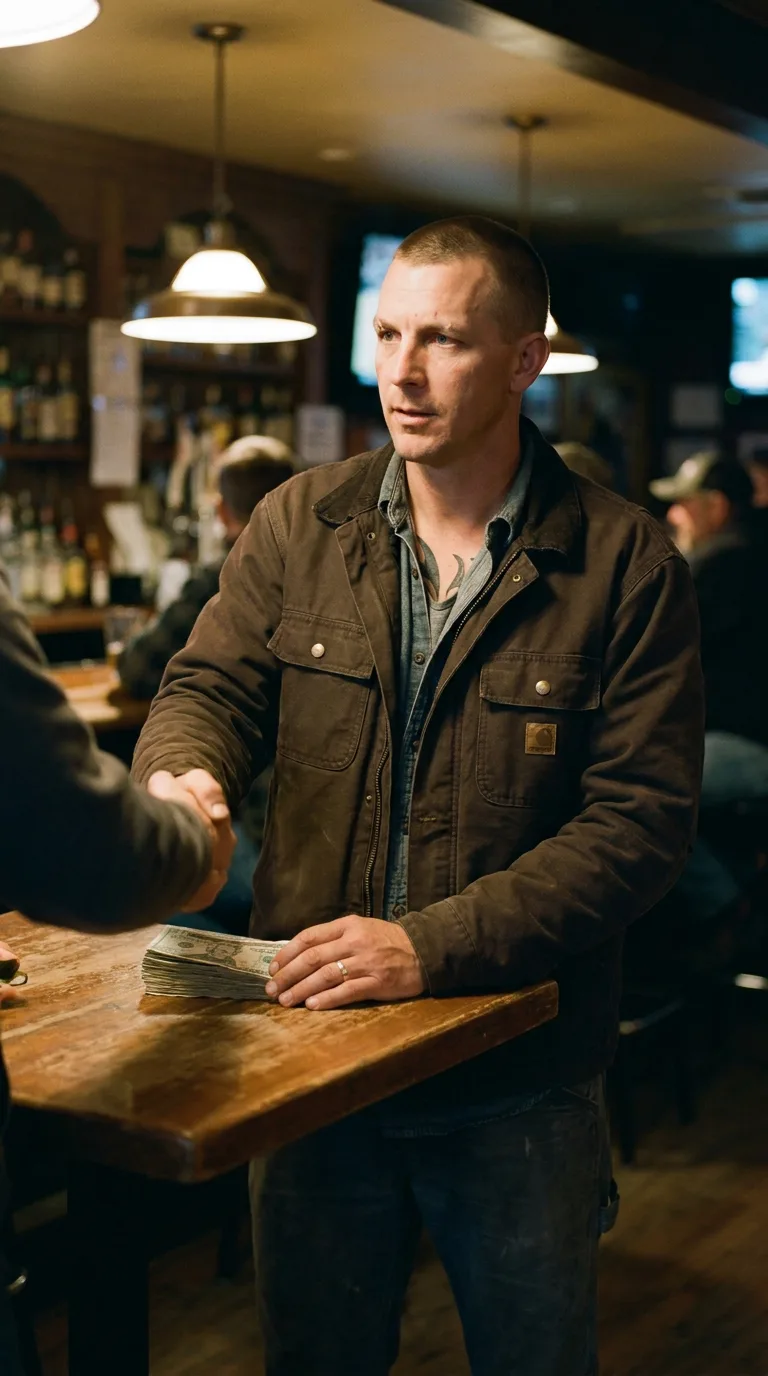
Rarest thing about him: Jewish — rare, 1 in 37
Legacyseed 614249681 · engine v8
Character card
His body-swap story
---
You have watched him for eleven days and you know almost nothing about him, which is the way it should be. A stranger keeps better. Nothing of yours snags on him. There's no old grievance in it, no debt, no hunger for one particular life over another. You just needed a body that worked, and his does — thin, wiry, the kind that gets up at four without arguing about it.
You learned the small things by looking. That's all. He chews a toothpick when his hands have nothing to hold, and the toothpick migrates from one corner of his mouth to the other while he thinks. He wears a plain band on his left hand and turns it with his thumb without knowing he does it. There's black tribal ink at the base of his throat, some of it showing above the collar of the work shirt, the sort of thing a man gets at twenty-two and stops seeing by thirty. And the scar: a pale line straight through one eyebrow, splitting the hair, so that when he raises it the break shows white. You noticed it the first minute. You'll notice it every day now, in every mirror, forever.
He farms up here, which people from Outside always find funny. Cabbage and potatoes and hay in the valley, a season short enough to make a man superstitious. In the picture you keep of him in your head he is standing at the field gate with the light going long and amber across the rows, one boot on the bottom rail, jaw working the toothpick, doing arithmetic he doesn't write down. Behind his house there is plywood siding and a snowmobile under a blue tarp, tied at the corners with orange cord, and that tarp is the most honest thing about him: a man with a machine he can't use for eight months and won't sell.
He has a wife. He has three kids, maybe four — you never got a clean count, they moved too fast through the yard. He has something like fifty thousand dollars put by, which up here is not comfort, it is nerve. He drinks one or two most evenings and no more. He quit smoking however many years ago and still reaches for the pocket that used to hold them. He has reflux, which means the small sour burn behind the sternum after supper, the third pillow, the pack of chalky tablets in the truck console. He is a Jew in Anchorage, which means the congregation is small and everybody knows whose kids are whose, and it means he says a blessing over bread and doesn't make a production of it.
That's the ledger. That's the whole of him as you had it. It's not enough to be a person. It's exactly enough to be a set of hands.
The bet was his idea. Understand that. You didn't push. You sat across a bar table in a place with pendant lamps hung too low and bottles ranked up behind the bar and a TV nobody was watching, and you set a proposition in front of him the way you set out a jar of coins for a kid to guess. He laughed at first. Then he stopped laughing and looked at you a while, and the toothpick went still, and you watched him decide that if you were crazy it cost him nothing and if you weren't it was the best money he'd ever make. He counted the bills himself. Fifteen hundred, folded once, the fold going soft. He put his hand flat on the stack and said, *Shake on it,* and there it was — a deal, freely made, no gun and no knife and nobody's arm behind anybody's back.
You took his hand. His palm was dry and hard-ridged. He was still talking when it happened; his mouth was open on a word, and his eyes were on you, and then his eyes were nothing at all.
The hands parted. The bills slid toward the edge of the table and you did not reach for them, because you did not need them anymore, and because your arm was on the other side of the table now and it was his arm.
Here's what nobody tells you about arriving. It isn't the seeing or the hearing. It's the taste — copper and cheap beer and, underneath, the sour coming up behind the sternum, the reflux, his one small daily punishment. And the toothpick. Splintered wood between two molars, wet, sitting where he'd parked it, and your tongue moved it without being asked, and you understood that some of him is in the wiring and will be in the wiring for good.
You sat back. You felt the muscle of the face pull and you let it, and it came out as a grin, and anybody watching would have said: that's a man who just won something.
He did. He won fifteen hundred dollars and a bet he thought was free, and I have the rest. There is no way back and there was never a term on it. Nobody set one because nobody who sets one means it.
The gold band is warm on the left hand. The wife will be up when this body comes through the door, and she will say a name, and I know the name — I looked it up long before I needed it. Three kids at least, and I will learn their faces in the morning, in daylight, the way a father does.
Two fingers go up to the eyebrow. The scar sits under them, a small smooth valley in the hair, and I press it the way you'd press a stamp to make sure it's stuck.
It's mine now. All of it. The gate, the amber light, the tarp with the orange cord.
I'll keep the tarp tied.