Aaron Beckwith
Fictional. Generated by AI — not a real person, and no likeness of one is intended.
23, contractor in Eastern Kentucky · rolled by @malik.overton · card — no film
History
who has worn him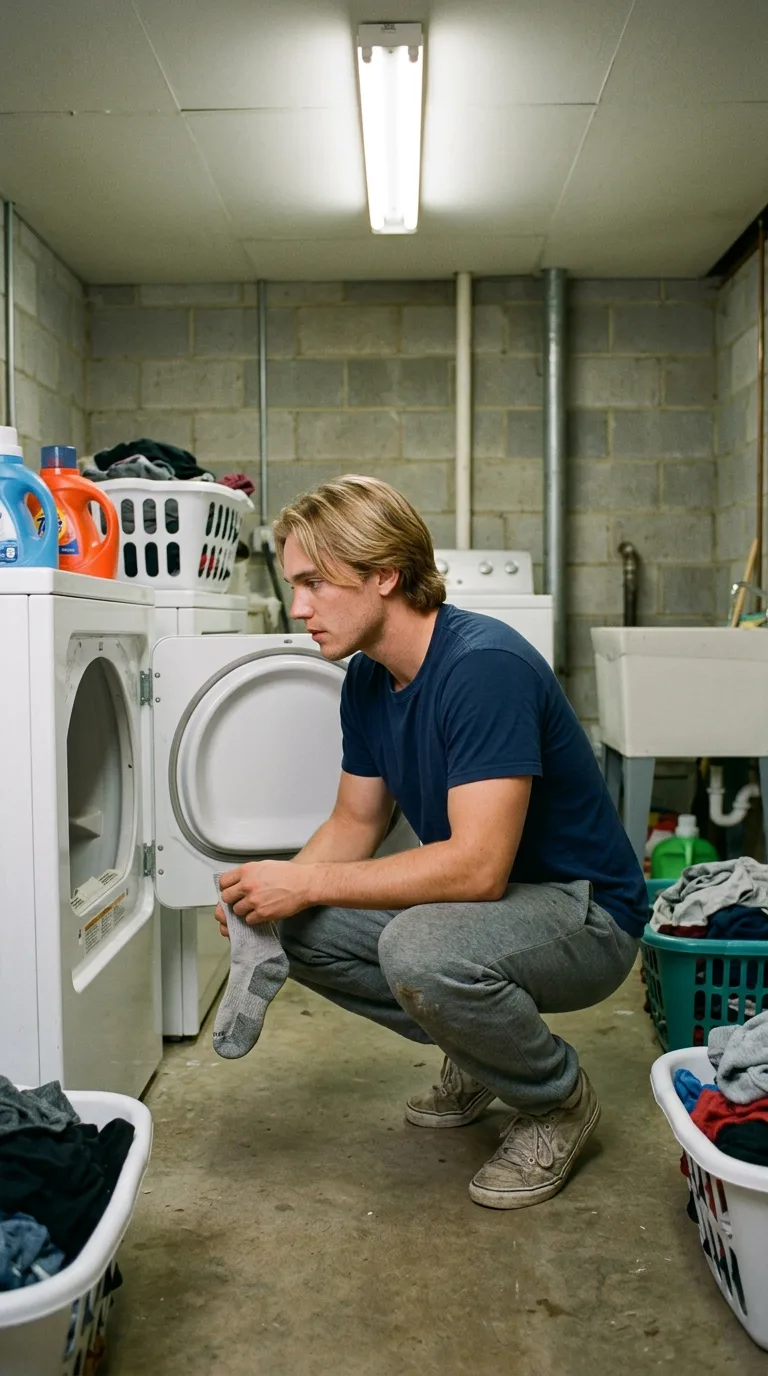
Rarest thing about him: Smokes when he drinks — rare, 1 in 32
Season 0seed 338563734 · engine v10
Character card
lineage WV6PBZ
His body-swap story
@malik.overton, wearing Colby Stennett, rolled the wheel on and woke up as Aaron Beckwith, spent under a minute in him, then spun the wheel and woke up as Max Tillery
The griddle is still ticking when you feel it, that itch behind the sternum that has nothing to do with grease burns or the dinner rush queuing up on the ticket rail. Colby Stennett's hands — your hands, for now — flip a burger without looking, and you hate that they know how to do that better than you do. Six months a line cook and you still catch yourself surprised by his own competence, like wearing a coat that already knows how to fight.
It isn't boredom exactly. It's Thursday, the light through the kitchen's back door doing that long orange thing it does in Rural Texas in early evening, and you have a break coming, and the phone in Colby's apron pocket has the site bookmarked the way another man might keep a flask. Nineteen men. Colby is the newest and least interesting of them, average in every direction, and there's a small mean pleasure in that thought, in knowing you can leave him mid-shift the way you'd leave a coat on a chair. You wipe your palms — his palms — on the apron, duck out back by the dumpsters, thumb the browser open before you've even decided to. The wheel is already spinning by the time you've decided anything.
—
The fluorescent tube is buzzing above you before you have a self to notice it with. There's a sock in your hand, damp-warm, one thin cotton sock with a hole starting at the heel, and your body — his body, taller than Colby's, leaner through the shoulder, crouched low with knees that pop faintly as the weight settles into them — is already reaching for the dryer's dark drum. Green shade from a window somewhere above throws a dim underwater light down the concrete steps. You did not walk here. You are simply here, mid-crouch, mid-reach, a stranger's hand finishing a stranger's motion.
—
The sock goes into the basket and that's the first key — not much, just a name surfacing like a bubble: Aaron. It comes with the smell of fabric softener and the false-spring warmth off the dryer vent, and then more, because your fingers are already sorting, and sorting is his, sorting is a thing his hands have done ten thousand times without his mind attending to it.
You pull the rest of the load and the folding starts, and it startles you how fast it goes — corners squared, sleeves crossed at the chest, seams lined before they hit the basket, a T-shirt every four seconds — nothing like whatever mess waits folded-badly in a drawer upstairs where you're not, yet, thinking about. This precision came from a mother, you understand suddenly, holding up towels in a kitchen years ago, saying like this, Aaron, like this, and a boy learning it the way boys learn things they don't know they'll keep.
The shirt on your back — his shirt, navy, thin at the collar from washings — gives you the morning it went on: pulling it over his head half-asleep, the truck already running outside with the heater ticking, a granola bar eaten standing at the counter, boots by the door still damp from yesterday's rain. Underneath that, more mornings, stacked like the shirt itself was worn a hundred times before and each wearing left a groove. Sawdust in a fold of the collar that never fully washed out. The smell of framing lumber, green and sweet, and the particular ache low in the shoulders that comes from swinging a hammer since seven a.m., an ache this body carries like furniture, familiar, almost fond.
There's a woman in this — of course there's a woman — and she comes through the terrycloth in the basket, one of her old sweatshirts that somehow never made it back to her, that he still washes with his own loads like it might matter to keep it soft. Her name comes slower than his own did, cautious, the way anything still tender arrives slow: Casey. Two years back. Something about her leaving for Lexington and asking him, once, quietly, to come with her, and him saying no because his father needed him on the crew, and regretting the no for longer than the two years the yes would have cost him. He never told anyone that. It sits in him now the way an old splinter sits under skin, forgotten until pressed.
The concrete floor is cold under sneakers that have paint and joint compound ground into the canvas past cleaning. Your knees — his knees, twenty-three years old, nothing wrong with them yet, nothing wrong with any of it yet — hold the crouch easy, the low good strength of a body that swings tools all day and doesn't think about it. Gum, flavorless by now, sits forgotten at the back of a molar; jaw works it without command, the way it always does, the way it did through three years of high school and every job site since.
The basket fills. Somewhere above, a full house of two empty beers waits by a recliner, a habit as unremarked as breathing, the pack of cigarettes he only touches with the beers, the low mainline hymn hum he doesn't examine much but wouldn't disown either, faith worn like the flannel, useful, unquestioned, there when needed.
You are close to done here, and something in you — the part that is still faintly Colby, still faintly eighteen other men before him — knows this is the good part, the part worth staying in for exactly as long as it lasts and not one second longer.
—
The basket is heavy and warm against your forearms, and you set it down on the folding table to look at your hands — his hands, blond-haired at the wrist, a callus riding the base of each finger, a thin white scar-line of nothing, no ring, no watch, nothing on them but work. You turn them over once, like you're checking they're real, like they might not hold.
Then you look up into the low fluorescent light, into nothing in particular, the way a man looks up when he's about to say something to an empty room.
"Didn't think it'd be this one," you say, out loud, to no one, and the gum sits still in your jaw for once, and you don't yet know how long this one gets to run.